

Quick summary: Starting a tree service business in the US takes hands-on climbing or ground experience, a decision about which services you offer first, roughly $10,000 to $50,000 in startup capital depending on that decision, general liability and workers’ compensation coverage, and state and local registration. A trimming-only crew is the cheapest way in. Removal and rigging is the most expensive, because the iron and the insurance both get heavier.
Key entities: LLC, EIN, general liability, workers’ compensation, ISA Certified Arborist, ANSI Z133, chipper truck, stump grinder.
Most guides on how to start a tree service business hand you a 13-step checklist and call it a plan. The trouble is that a checklist treats every step as equal, and they aren’t. One early decision, which services you sell on day one, sets your equipment list, your insurance class, your crew size and how much cash you burn before the first invoice clears. Get that call right and the rest falls into place. Get it wrong and you end up making payments on a chipper truck that sits in the yard three days a week.
This guide follows that decision path. Each section is short and points to a deeper ArboStar page when you need the full breakdown.
The Short Version: How to Start a Tree Service Business
If you only read one section, read this one.
- Get real field time first. Climbing, rigging and felling are learned on a crew, not on YouTube. The ISA Certified Arborist credential alone requires three years of full-time experience in arboriculture (less with a related degree).
- Pick your starting services. Trimming and pruning is the cheapest door in. Removal and rigging costs the most, in gear and in premiums.
- Budget by path, not by average. Plan on roughly $10,000 to $30,000 for a trimming-only start if you already own a pickup, and $25,000 to $50,000 in cash for a removal outfit that finances or buys used.
- Cover the legal minimum. Form an LLC, get a free EIN from the IRS, check state and city licensing, and bind general liability and workers’ compensation before the first job.
- Run safety like a system. Build your crew habits around ANSI Z133, the industry’s safety standard, from the first week.
- Price from your real costs, not from the guy down the road.
- Hire when the work proves it, and set up estimating, scheduling and job costing before the phone gets busy.
Choose Your Starting Services First
Ask ten owners “What do I need to start a tree service business?” and you’ll get ten different gear lists. That’s because they started with different services. Decide what you’ll sell first, and the equipment and the budget follow from it.
Trimming and Pruning Only
This is the lean way in, and it’s how most people learn how to start a tree trimming business without betting the house. The core kit is a 50 to 60 cc saw like the Stihl MS 261, a top-handle saw like the MS 201 T, a pole saw, a climbing system and PPE for every person on the job. Brush can go into a dump trailer, and you rent a chipper by the day when the pile gets out of hand.
The ceiling is real, though. Pruning tickets are smaller than removals, and you’ll walk away from the big oak that leans over the house. Plenty of owners are fine with that for year one. Trimming builds cash, reviews and a customer list without the heaviest insurance class or a truck payment.
Removal and Rigging
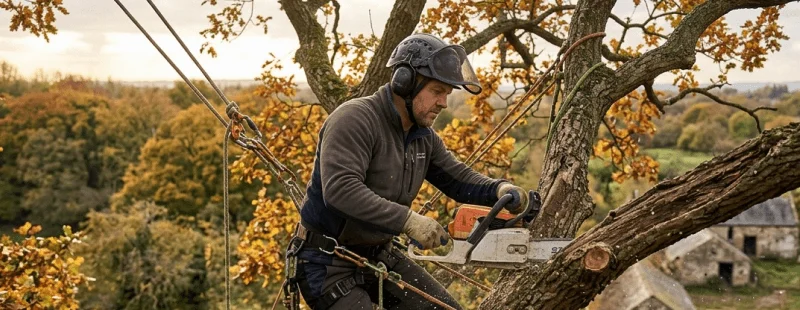
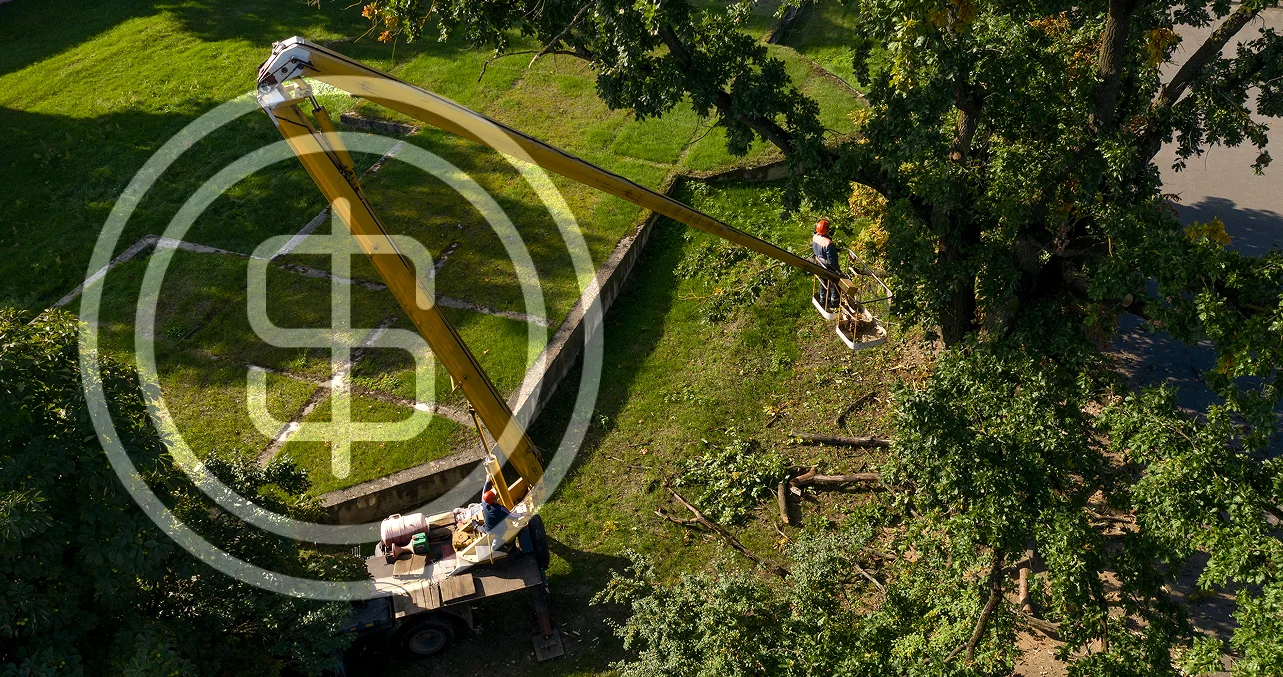
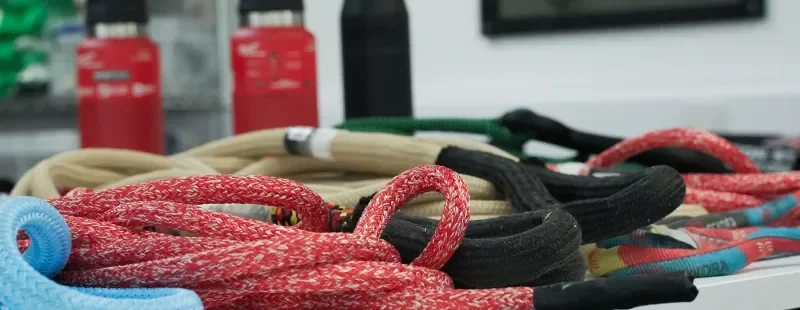
Removals pay more per job, and they ask more of you on every front. Once you’re taking down trees near structures, you need rigging gear, a lowering device, a chipper that can keep up with a crew, and a way to haul chips and wood. Your premiums climb, and you can’t run the job alone. If you’re figuring out how to start a tree cutting business that focuses on takedowns, our tree removal business plan walks through that model step by step.
Add-Ons: Stump Grinding, Plant Health Care, Storm Work
Add-ons stack on top of either path. Stump grinding is the easiest upsell, since nearly every removal leaves a stump behind, and you can rent a grinder before you buy one. Plant health care (fertilization, insect and disease treatment) carries some of the best margins in the trade, but spraying or injecting pesticides for hire requires a state pesticide applicator license in most states. Storm work pays a premium, yet it needs removal capability, a cash cushion and a crew willing to work long, ugly days on short notice.
The diagram below shows how each choice flows into cost and equipment.
| 1. Services you sell | 2. Startup cash | 3. Equipment you need |
|---|---|---|
| Trimming and pruning cheapest start, smaller tickets | $10,000 to $30,000 assumes you own a pickup | Saws, climbing kit, PPE chipper rented by the day |
| Removal and rigging financed or used equipment | $25,000 to $50,000 cash needed at start | Chipper, truck, rigging on payments, plus a groundworker |
| Removal, bought outright no equipment payments | $80,000 and up before the first estimate | Owned chipper and truck mid-size chipper, chip truck |
| Add-ons stumps, plant health, storms | $0 to $16,000 rent first, buy at volume | Grinder, spray license plus a storm cash reserve |
Read each row left to right: the services you sell first decide the cash you need, and the cash decides which machines you own versus rent.
What Each Starting Path Costs in the US
A trimming-only start can open for about $10,000. A removal outfit that buys its iron outright can blow past $80,000 before the first estimate. Same industry, very different checks. Here’s how the paths compare, using 2026 US price ranges from our tree service equipment cost list, where every item is priced line by line.
| Starting path | Startup cash (planning range) | Main cost drivers | What you can rent instead |
|---|---|---|---|
| Trimming and pruning only | $10,000 to $30,000, assuming you already own a pickup | PPE at $1,300 to $2,600 per person; saw kit at $2,600 to $4,800; climbing setup at $1,600 to $3,000; a 16 to 20 ft trailer at $8,000 to $15,000 if you buy one | Small chipper at $200 to $300 a day |
| Removal and rigging, financed or used | $25,000 to $50,000 | Down payments on a chipper and chip truck, rigging rope and hardware, higher premiums, a second person on every job | Bucket truck at $500 to $750 a day; crane at $900 to $1,800 a day |
| Removal and rigging, bought outright | $80,000 and up | Mid-size chipper at $22,000 to $42,000; chip truck at $55,000 to $95,000 | Same as above |
| Stump grinding add-on | $0 to $16,000 | Walk-behind grinder at $9,500 to $16,000; tracked units at $25,000 to $55,000 | Walk-behind grinder at $180 to $280 a day |
| Plant health care add-on | Varies by state | Pesticide applicator license, sprayer or injection gear, product inventory | Not usually rented |
Why the Published Numbers Don’t Agree
Search this topic and you’ll find startup estimates from $10,000 to well past $50,000, sometimes with another $20,000 tacked on for operating costs. Nobody is lying. They’re measuring different businesses. Four things explain most of the spread:
- Owned, financed or rented. A chip truck you buy, finance or rent by the day changes the opening check by tens of thousands of dollars.
- Service mix. A trimming crew and a removal crew need different machines and sit in different insurance classes.
- Working capital. Some estimates count only gear. Others add a cash reserve for fuel, payroll and payments while early invoices sit unpaid. Holding back about three months of fixed costs is a sensible floor.
- Insurance bundle. A general liability policy alone costs a fraction of liability plus workers’ comp plus commercial auto.
Fix those four variables for your own plan and your number stops being a guess.
Know What Every Machine Really Costs You
Track trucks, chippers and tools with GPS, schedule maintenance and tie each machine to the crews and jobs it serves.
The Legal and Insurance Minimum Before Your First Job
The paperwork isn’t glamorous, but skipping it is how one bad drop turns into a lawsuit that comes after your house. Here’s the floor.
Entity and tax ID. Most owners form an LLC to keep business debts and claims away from personal assets. State filing fees range from $35 in Montana to $500 in Massachusetts. California charges $70 to file, then an $800 minimum franchise tax every year. Your EIN is free from the IRS and takes minutes online, so never pay a third party for it.
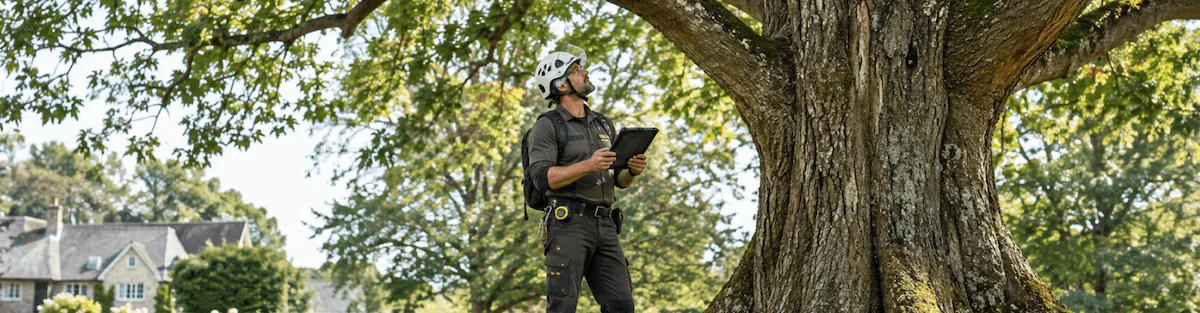
Licensing. There’s no national tree service license, and the rules swing hard by state. California requires the C-49 Tree and Palm Contractor license, which replaced the old C-61/D-49 for new applicants on January 1, 2024, for any job over $1,000, any job that needs a permit, or any job where you hire help. New Jersey makes every tree care company register with its Board of Tree Experts and employ at least one Licensed Tree Expert or Licensed Tree Care Operator. Maryland has licensed tree experts since the 1950s, and Connecticut licenses arborists too. Check your city as well, since many issue their own tree contractor permits. Keep in mind that the ISA Certified Arborist credential is a certification, not a license; our guide on arborist license vs. certification breaks down which one your state actually asks for.
General liability. Few states mandate a GL limit for tree work, but your customers will. Expect $1 million per occurrence and $2 million aggregate as the baseline, with commercial and municipal clients often asking for more. Small operations commonly pay $500 to $2,500 a year.
Workers’ compensation. This is where quotes get wild. Tree work rates under NCCI class code 0106, and broker-compiled 2026 base rates run from about $2 per $100 of payroll in Texas’s most competitive market to more than $40 in California’s state fund pricing. Climbing payroll costs far more to cover than documented ground payroll. Texas lets private employers opt out of coverage entirely. California goes the other way: tree service is one of a handful of license classes that must carry workers’ comp even with zero employees, and the rule extends to every contractor on January 1, 2028. Our workers’ comp guide for tree climbers shows how class codes and your EMod set the final premium.
So when one source quotes $750 a year for insurance and another quotes $3,800, look at what’s inside the policy. GL alone, GL plus comp, and GL plus comp plus commercial auto and inland marine coverage for your saws and chipper are three very different bills. The full breakdown by coverage type lives in our tree service insurance requirements guide.
Safety Systems From Day One
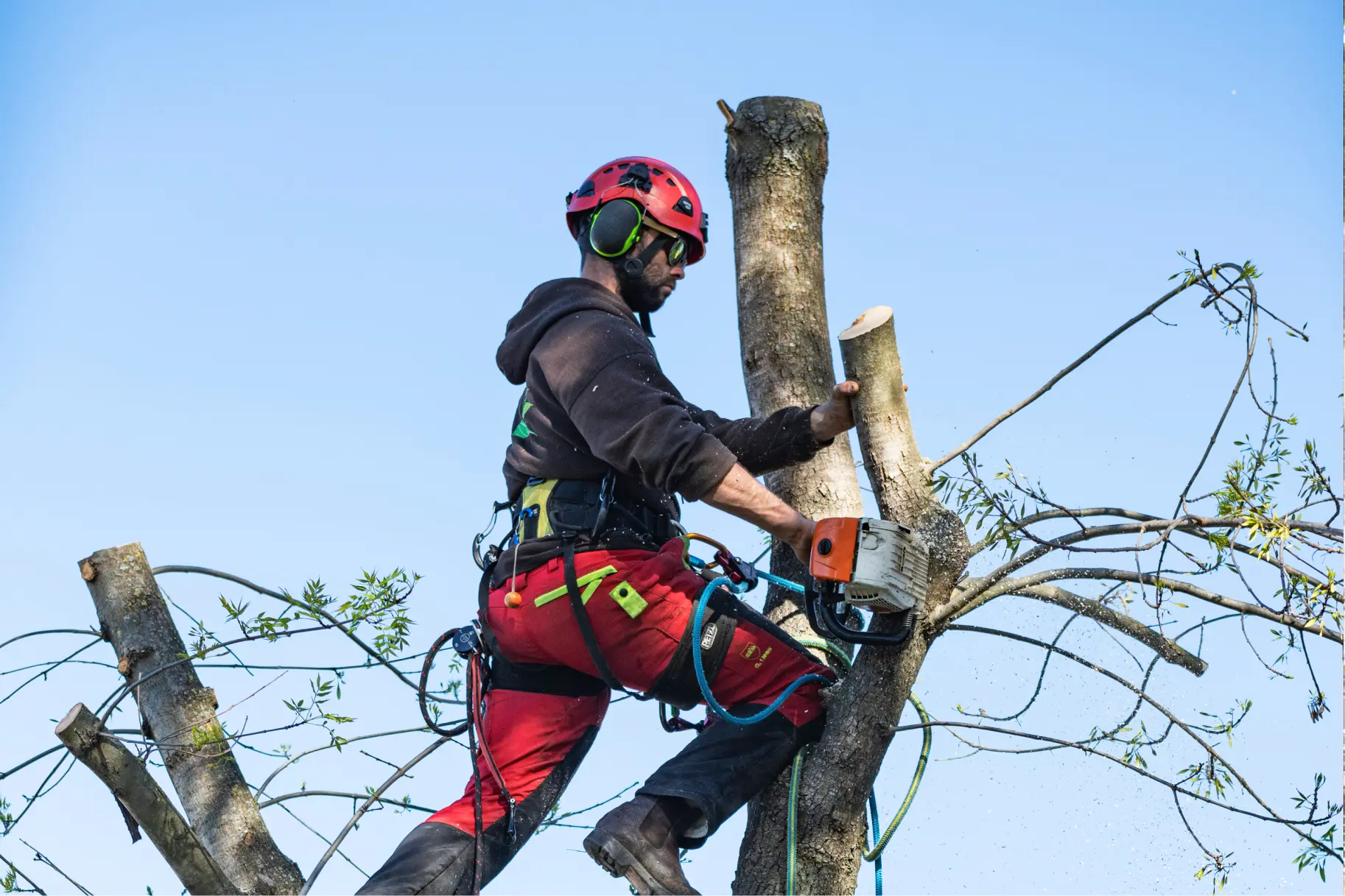
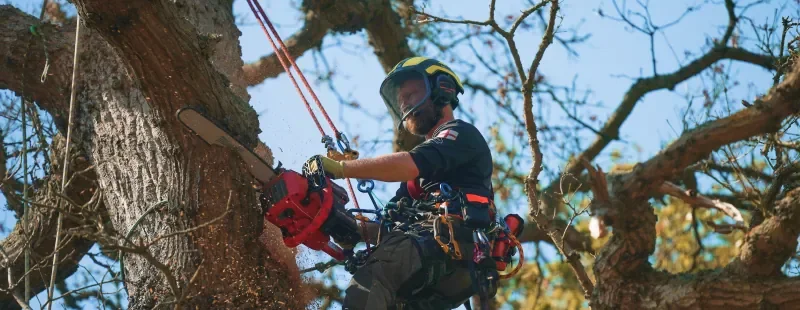
Tree work kills people at a rate that should make any new owner sit up. TCIA counted 243 fatal tree care incidents from 2020 through 2023, about 61 a year. Struck-by events caused roughly 38% of them, falls about 21%, electrical contact about 15%, and getting caught in or under equipment about 13%, including seven brush chipper deaths. TCIA’s estimated fatality rate for the trade lands somewhere between 30 and 41 per 100,000 workers, up to 11 times the all-industry average.
Safety isn’t a binder you buy later. It’s a startup step, like the LLC.
OSHA has no standard written just for tree care. Instead, the OSHA tree care standards page points to general industry rules on aerial lifts, electrical safety, PPE, walking and working surfaces and first aid. The industry’s own rulebook is ANSI Z133, and the new Z133-2026 edition replaced the 2017 version in May 2026. ISA offers the digital copy as a free PDF for individual use, so there’s no excuse not to own it.
What a day-one safety system looks like on a small crew:
- A job briefing at every site: hazards, the work plan, who does what, and where the drop zone ends.
- A minimum approach distance plan for power lines, with line clearance left to qualified line clearance arborists.
- Chipper rules everybody can recite, feeding from the side and never reaching past the infeed.
- An aerial rescue plan, with a second trained person on site whenever someone is working aloft.
- PPE checks before the first cut: helmet, eye and hearing protection, chaps and cut-resistant boots.
Insurers notice this, too. A clean claims record pulls your EMod down, and that one number can move your workers’ comp premium by thousands a year. For the field rules themselves, see our list of essential safety rules every arborist should know.
Pricing Your First Jobs
New owners almost always lowball. They price against what they think the market pays, not against what a crew hour actually costs them. The gap is bigger than it looks. Many owners figure a three-person crew costs $60 to $70 an hour, while a full count of loaded labor, equipment and overhead puts it closer to $180 to $200.
Market data gives you a sanity check, not a price list. Angi’s 2026 figures put the national average tree removal at about $750, with a typical range of $200 to well over $2,000, and trees over 80 feet running $1,000 to $2,000 plus around $500 when a crane is needed. Those averages hide a lot of access, risk and cleanup differences, so treat them as the edges of the field, not the target.
Build every quote from your cost per crew hour, then divide by one minus your target margin rather than tacking on a markup. A 25% markup only gets you a 20% margin, and that difference eats seasons. Our guide to pricing your tree service right walks through the full formula with a worked removal example.
Turn Your Crew Hour Cost Into a Quote
Use a free printable estimate template for removal, trimming, pruning and stump grinding. PDF, no signup.
Getting Your First Customers
The first 20 customers rarely come from a slick website. They come from being findable, fast and visible in the neighborhoods you work.
Start with a fully built Google Business Profile: service area, real job photos and a review request sent two or three days after each job. Speed matters more than polish on paid leads, since conversion drops off sharply once a lead sits longer than 10 to 15 minutes. Offline still works in this trade, too. Yard signs at active jobs, lettered trucks and door hangers after a storm put your name in front of the neighbors who just watched you work. Landscapers, property managers and general contractors send steady referrals once they trust you to show up. Platforms like Thumbtack, Angi and Yelp can fill gaps, but many of those leads go to several companies at once. For the full channel breakdown, see our tree service lead generation guide.
When to Hire Your First Employee
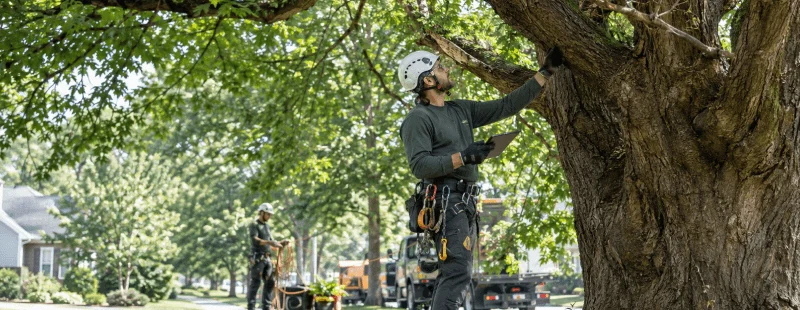
If you climb, you can’t really work alone. ANSI Z133 calls for a second person trained in aerial rescue to be within voice or visual contact whenever someone is working aloft. That’s why the first hire for most climbers is a groundworker, and why starting a tree service business as a true one-person show only works for ground-level pruning and consulting.
The math matters more than the job title. BLS puts the median wage for tree trimmers and pruners at $24.50 an hour as of May 2025. Here’s a simple illustration for a groundworker at $22 an hour:
- Wages for 2,000 hours: $44,000
- Employer Social Security and Medicare at 7.65%: $3,366
- Federal unemployment tax: up to $42
- Workers’ comp at an illustrative $8 per $100 of payroll: $3,520
That’s roughly $50,900 before state unemployment tax, training, gear and downtime. The extra work that person lets you sell has to cover that bill before it adds a dime of profit.
So watch for signals, not feelings. A backlog that keeps stretching past two or three weeks, removals you keep turning down because you’re short a set of hands, and estimates you’re writing at 10 p.m. are all signs the work has outgrown you. Hire when the calendar proves it, not when the first good month hits.
Setting Up Your Systems Early
Spreadsheets and a paper calendar work for the first 30 jobs. They break around the time you add a second crew member and a second truck. Three systems are worth setting up before that point:
- Estimating that pulls from your real crew hour cost, so every quote starts from the same math.
- Scheduling that groups jobs by area and equipment, so you’re not dragging the chipper across the county twice in one day.
- Job costing that compares estimated hours against actual hours on every ticket.
That last one is the one most owners skip, and it’s the one that tells you which jobs actually make money. A busy schedule can still lose cash, a trap we cover in why revenue is not profit. Tree care software like ArboStar puts estimating, crew scheduling and job costing in one place, so the numbers from the field land next to the numbers on the quote.
Frequently Asked Questions
Is a tree service business profitable?
It can be, but revenue and profit are different animals. Healthy tree care companies generally keep 10% to 20% of revenue as profit, with plant health care and storm work often running fatter margins than routine removals. Underpricing and idle equipment are the usual profit killers. See how much tree service companies make for figures by company size.
Do you need a license to start a tree service business?
It depends on your state and city. California requires the C-49 license for jobs over $1,000, New Jersey requires company registration and a licensed tree expert or operator on staff, and Maryland and Connecticut license tree professionals as well. Many other states have no tree-specific license, but cities may require permits, and spraying for hire needs a pesticide applicator license almost everywhere.
What equipment do you need to start a tree service business?
For a trimming crew: professional and top-handle chainsaws, a pole saw, a climbing system, full PPE for each person and a way to haul brush. Add a chipper, chip truck and rigging gear for removals, and a stump grinder if you sell grinding. Our equipment cost list prices each item.
How much does it cost to start a tree service business?
Roughly $10,000 to $30,000 for a trimming-only start with your own pickup, $25,000 to $50,000 in cash for a removal operation that finances or buys used, and $80,000 or more if you buy a chipper and chip truck outright. Add working capital and insurance on top.
Can you start a tree service business on your own?
You can start the company solo, but you can’t safely climb solo. ANSI Z133 calls for a second person trained in aerial rescue within voice or visual contact during work aloft, so most owner-climbers bring on a groundworker early, even part-time.
Conclusion
The smartest way to approach how to start a tree service business is to make the big decision first. Choose your starting services, let that choice set your budget and equipment list, then lock in the legal and insurance minimum before you take a single deposit. Build safety and pricing on real numbers, and let your backlog, not your gut, tell you when to hire. Each step has a dedicated guide linked above when you’re ready to go deeper. And once the jobs start stacking up, tools like ArboStar keep job costing and crew scheduling tied together, so you know which work is paying the bills. Start lean, track everything and grow into the heavy iron.
See Which Jobs Actually Make Money
Custom dashboards and reports across jobs, revenue and costs show your margin on every job.