

Arborist Job Outlook & Career Guide 2026: Salary, Growth, and How to Break In
Quick summary: The arborist job outlook for 2026 is steady rather than explosive: median pay for the occupation BLS classifies as Tree Trimmers and Pruners sits around $49,000 a year, with roughly 3–4% projected employment growth through 2034 – about average for all US occupations, but backed by demand that doesn’t go away: aging urban tree canopies, more frequent storm damage, and ongoing utility line-clearing work. The real ceiling on pay comes from certification and specialization, not just time on the job.
What Does an Arborist Actually Do?
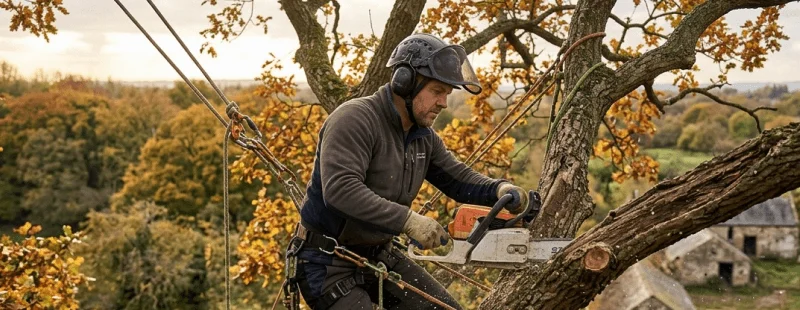
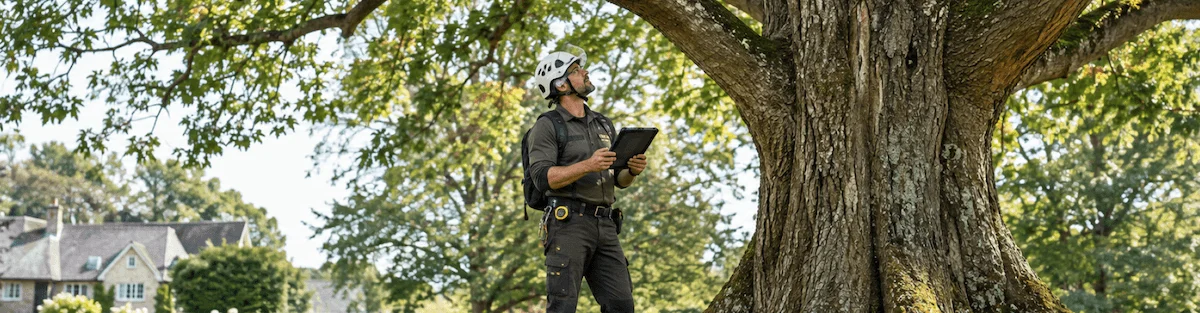
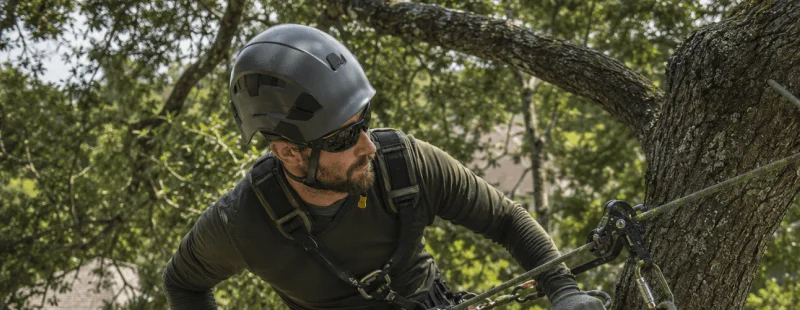
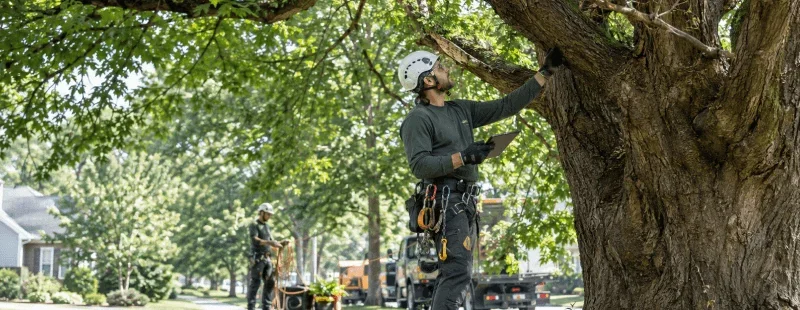
An arborist is a tree-care specialist trained to prune, remove, diagnose, and maintain trees using climbing, rigging, and increasingly aerial-lift techniques – not the same thing as a general “tree guy” or a landscaper who occasionally trims a hedge. The work spans structural pruning, hazard tree removal, disease and pest diagnosis, cabling and bracing to support weak limbs, tree planting and transplanting, and formal risk assessment for property owners, municipalities, and utilities. What separates a certified arborist from an untrained climber with a chainsaw is training in tree biology and safe work practices – the difference between a cut that helps a tree recover and one that opens it to decay.
Arborist Job Outlook: What the Numbers Say for 2026
The Bureau of Labor Statistics groups this work under Tree Trimmers and Pruners (SOC 37-3013), and its most recent detailed wage survey counted roughly 50,270 people employed in the occupation nationally. Combined O*NET and BLS employment-projection data put growth at 3% to 4% from 2024 to 2034 – classified as “average” against all US occupations — with about 7,400 job openings projected over that decade from a mix of new positions and replacement needs. None of that reads as a boom, and it isn’t one; it reads as a trade with steady, structural demand rather than one riding a temporary wave.
That demand comes from a few durable sources rather than a single trend. Urban and suburban tree canopies are aging, and aging trees need more pruning, cabling, and eventual removal than young ones. Storm frequency and severity – hurricanes, ice storms, derechos – create recurring surges of emergency tree work that utilities and municipalities can’t staff around fully in advance. Utility vegetation management around power lines is a permanent, recurring need rather than a project that finishes. And the workforce itself skews older in places, so a portion of the projected openings are simply replacing arborists who retire, not net-new positions.
On the automation question competitors like to raise: climbing, chainsaw work, and judgment calls about which limb to cut first are genuinely hard to automate, and nothing on the near horizon changes that. Remote-sensing tools can flag which trees need attention faster than a human survey crew, but someone still has to climb up and make the cut. That’s a real point in the trade’s favor when comparing it to occupations facing heavier displacement risk.
How Much Do Arborists Make?
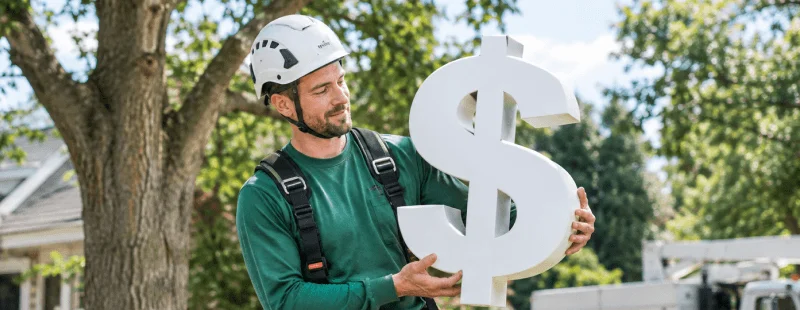
BLS wage data for Tree Trimmers and Pruners puts the national median annual wage at roughly $49,070, with a mean of about $52,850 (around $25.41 an hour) – figures pulled straight from the BLS Occupational Employment and Wage Statistics profile for the occupation. A more recent aggregate estimate puts 2025 median pay slightly higher, near $50,960 a year, which tracks with ordinary wage growth rather than a change in the underlying trend. Pay varies sharply by region: California posts a mean wage around $31.45 an hour, well above the national average, largely reflecting cost of living and a dense urban forestry sector.
Those national medians tell only part of the story, since where an arborist sits on the experience-and-certification ladder moves pay more than almost anything else.
Salary by Experience Level
The numbers below are aggregated ranges from career and industry sources rather than a single BLS series, since BLS doesn’t break wages out by certification status – treat them as a directional guide rather than a guarantee for any specific market.
| Career stage | Typical annual pay range | What usually changes |
|---|---|---|
| Entry-level / ground crew | $32,000 – $35,000 | Ground work, chipper, hauling; little to no climbing yet |
| Climbing arborist, 2–5 years | $40,000 – $55,000 | Independent climbing, pruning, small removals |
| ISA Certified Arborist | $50,000 – $70,000 | Certification, more complex jobs, some crew lead work |
| Senior / specialist / crew lead | $65,000 – $90,000 | Utility or consulting specialization, crew supervision |
| Owner-operator | $70,000 – $120,000+ | Runs the business; income depends on the business, not a wage |
Certification is the clearest single lever in that table, but it’s not the only one that moves the needle on pay.
What Moves an Arborist’s Pay
Becoming an ISA Certified Arborist is the single credential that shows up most consistently across pay-range data, since it signals a verified baseline of tree biology and safety knowledge to employers and clients alike. Beyond certification, specialization matters: utility line-clearance work tends to pay more than general residential pruning because of the additional electrical-safety training and risk involved, and consulting arborists who do appraisal and litigation-support work bill at rates closer to a licensed professional than a tree crew. Region matters too – California and parts of the Northeast consistently post higher wages, partly cost of living and partly union density in some markets. Self-employment is the other major fork: running your own crew removes the wage ceiling entirely, for better and worse, since income then depends on the business rather than an hourly rate.
Types of Arborists (and Which Pays Best)
“Arborist” covers several distinct jobs that share a skill base but differ meaningfully in pay and lifestyle. A climbing or ground-crew arborist handles the bulk of day-to-day pruning and removal work for a tree service company – physically demanding, seasonal in many regions, and the most common entry point into the trade. A municipal arborist manages public trees for a city or parks department, trading some field time for administrative and public-facing responsibilities, usually with steadier hours and public-sector benefits.
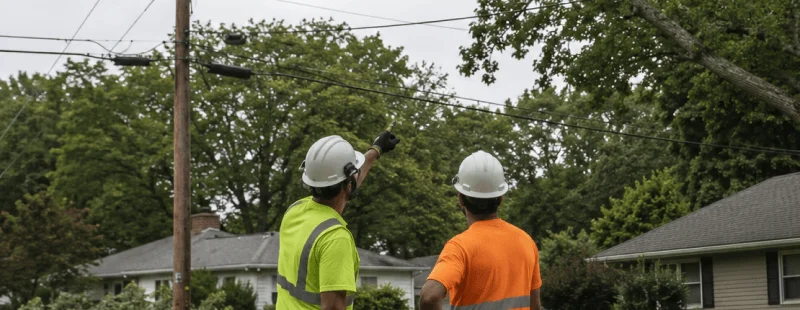
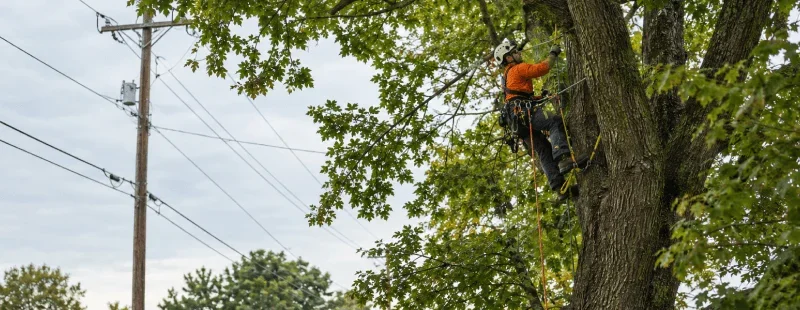
A utility arborist clears vegetation around power lines for a utility company or contractor – generally the highest-paying field role, reflecting the additional electrical hazard and specialized training required. A commercial arborist works for a private tree-care company serving residential and commercial clients directly. And a consulting arborist, often holding the Registered Consulting Arborist (RCA) credential, performs tree appraisals, risk assessments, and expert testimony rather than climbing daily – lower physical demand, higher billing rates, and a career stage most consultants reach after years of field experience.
How to Become an Arborist: The Career Path
Most arborists don’t start with a credential – they start with a chainsaw and a ground crew, and build toward certification from there.
-
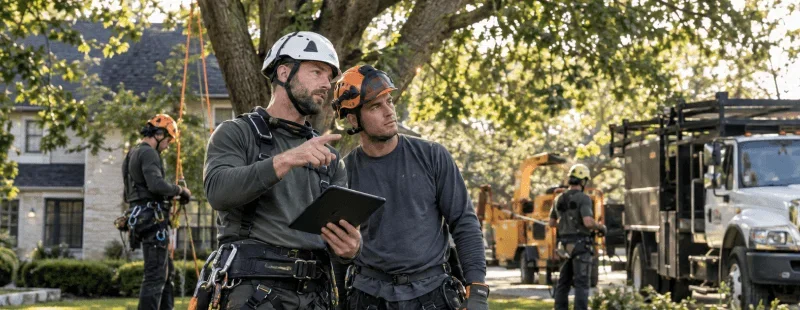
Entry-level ground work. Most arborists start here: feeding the chipper, hauling brush, and learning how a job site runs before ever putting on a saddle.
-
Field experience and climbing. Time in the tree – under supervision – builds the physical skill and judgment no classroom can substitute for.
-
Formal training. Options range from employer-provided on-the-job training to standalone certificate programs and, less commonly, associate or bachelor’s degrees in urban forestry or arboriculture.
-
ISA Certified Arborist exam. A 200-question, multiple-choice exam covering ten domains of tree biology, risk assessment, and safe work practices, requiring roughly three years of documented full-time experience to sit for it. Fees run roughly $200 to $420 depending on ISA membership status and application fees – worth checking current pricing directly with ISA before budgeting for it.
-
Advanced credentials. From there, the path can lead to TCIA’s Certified Treecare Safety Professional (CTSP) designation or the ISA Board Certified Master Arborist credential, both aimed at supervisors and senior specialists rather than entry-level climbers.
ANSI Z133 safety training runs alongside all of this rather than after it – it’s the industry safety standard for tree care operations and shows up in training from day one, not just at the certification stage. For a fuller walk-through of the education paths and timelines, see ArboStar’s How to Become an Arborist hub page.
Is Arborist a Good Career? Pros and Cons
The honest answer is: it depends what you’re optimizing for, and the trade has real costs alongside real upside.
What’s genuinely good about it: outdoor, physical work for people who don’t want a desk; a clear, respected certification ladder rather than a vague promotion track; low near-term automation risk compared to many blue-collar and white-collar jobs alike; a well-worn path to eventually owning a business rather than staying an employee forever; and demand that isn’t going away, since trees keep growing and storms keep happening regardless of the economy.
What’s genuinely hard about it: the work is physically demanding in a way that catches up with people over a career – backs, knees, and shoulders take a toll. Tree work carries real injury risk; falls and struck-by incidents are the two leading causes of serious injury in the trade, and safety training is not optional. Work is often seasonal and weather-dependent in colder climates, which can mean inconsistent income for part of the year. And entry-level median pay is modest – this is not a career where the first few years pay particularly well, and the return really shows up after certification and specialization, not before.
Where the Career Can Lead: From Climber to Business Owner
The long game in this trade is one competitors rarely spell out clearly: a large share of tree service company owners started as climbers, not as business-school graduates. Years on a crew build the technical judgment to run jobs; ISA certification and a track record build client trust; and eventually, many arborists who reach senior crew-lead or specialist status make the jump to running their own operation rather than working for one. It’s a slower path than a typical corporate ladder, but it’s a genuinely open one, and it’s part of what makes the trade attractive to people who want a ceiling they can push past rather than one set by someone else’s org chart. ArboStar’s education hub and business tools are built with that long arc in mind, for arborists who eventually want to run their own crew rather than stay on someone else’s.
FAQ
A few questions come up more than any others when people are actually deciding whether to pursue this trade.
Is arborist a good career in 2026?
For people who want outdoor, physical work with a real certification path and low automation risk, yes – with the caveat that entry-level pay is modest and the physical toll is real. It rewards people willing to certify and specialize more than it rewards simply showing up for years.
How much do arborists make?
BLS data puts the national median for Tree Trimmers and Pruners at roughly $49,000 a year, with entry-level workers closer to $32,000–$35,000 and ISA-certified, specialized, or business-owner arborists often reaching $70,000–$120,000 or more. Region and certification status drive most of that spread.
Is the arborist job outlook growing?
Yes, modestly – BLS and O*NET projections put growth around 3% to 4% from 2024 to 2034, categorized as average across all occupations, with roughly 7,400 openings projected over the decade from a mix of new demand and workforce replacement.
Do you need a degree to become an arborist?
No. Most arborists enter through on-the-job training and field experience rather than a degree, though certificate programs and, less commonly, associate or bachelor’s programs in urban forestry exist for people who want a more structured education path. ISA certification, not a degree, is the credential employers and clients actually look for.
How long does it take to become a certified arborist?
The ISA Certified Arborist credential generally requires about three years of documented full-time arboriculture experience before you’re eligible to sit for the exam, on top of whatever time you spend studying the ten exam domains. Total time from first ground-crew day to certification is commonly three to four years for someone working steadily in the field.
Is being an arborist dangerous?
It’s one of the more hazardous trades in the country – falls from height and being struck by falling wood are the leading causes of serious injury – which is exactly why ANSI Z133 safety training and proper certification aren’t optional extras. The risk is real, but it’s also well understood and substantially reduced by proper training, equipment, and crew practices.
The Bottom Line on the Arborist Job Outlook
The numbers point to a skilled trade with steady, unglamorous demand rather than explosive growth – and that’s arguably the more honest sell than a hype cycle that fades. Arborist job growth sits around average for all US occupations, median pay is solid but not spectacular at the entry level, and the real payoff comes from certification, specialization, and – for a meaningful number of people in the trade – eventually owning the business rather than working for one. If you’re weighing whether arboriculture is worth pursuing, the honest answer is that it rewards people who stick with it long enough to certify and specialize, more than it rewards simply showing up.
If you’re mapping out the next step, ArboStar’s education hub has more detail on how to become an arborist and what the certification path looks like in practice.
See how ArboStar can run your tree care business
Quoting, scheduling, crews and invoicing in one place. Book a short demo and see it with your own jobs.