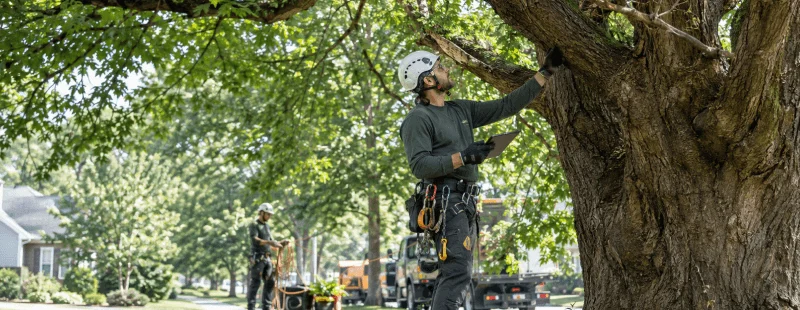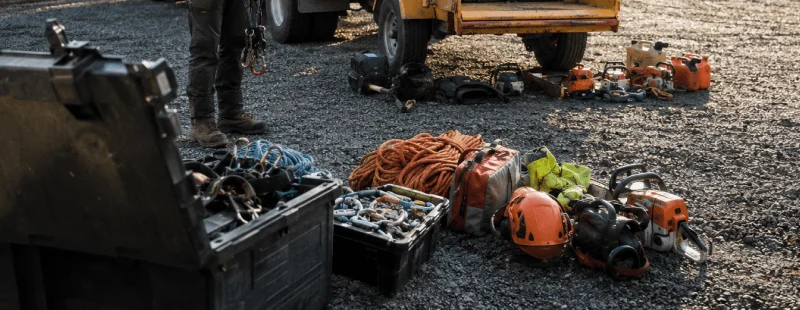


The full equipment list for a professional tree service business with 2–20 crews falls into five core categories: safety PPE, cutting tools, climbing and rigging gear, ground machinery, and vehicles/aerial access.
Most established operations with multiple crews invest $80,000–$180,000 in owned equipment to run efficiently. Full commercial fleets handling large contracts often exceed $250,000. Smart owners buy safety gear and cutting tools outright, while renting heavy machinery (chippers, stump grinders, bucket trucks) until weekly volume clearly justifies ownership.
Why Equipment Costs Vary
Scaling a profitable tree service business requires disciplined investment in the right equipment at the right time. Total owned equipment costs for a 2–10 crew operation typically range from $80,000 to $180,000, while larger 10–20 crew fleets with multiple aerial units can push well beyond $250,000.
Costs depend on several key factors that directly impact your margins:
-
Number of active crews and job mix (steady residential pruning vs. high-volume commercial removals and storm work)
-
Services you prioritize (climbing gear arborist cost only vs. full mechanical removal with aerial support package)
-
Buy vs. rent vs. lease strategy for capital-intensive items
-
New vs. well-maintained used equipment decisions
There is no universal equipment list that fits every tree care company. A 2-crew residential-focused operation has very different needs and tree service startup equipment budget realities than a 10+ crew business bidding on large commercial and municipal contracts.
This 2026 guide gives you a clear, practical breakdown of essential professional tree service equipment, organized into the five categories above. Use the realistic professional tree service equipment cost list ranges and buy/rent guidance to build a tighter budget, protect your cash flow, and avoid buying equipment before your workload supports it.
Category 1 – Safety & PPE
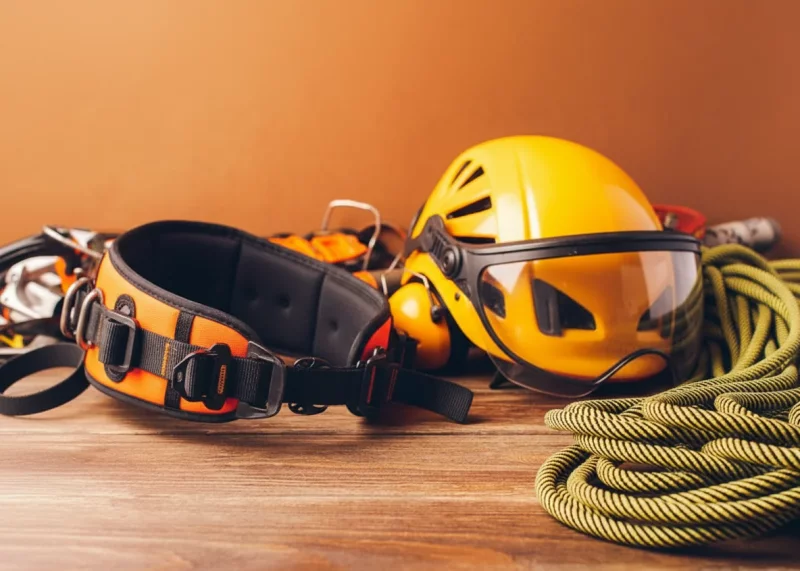
So, how much does tree service equipment cost? Your safety gear is the most important investment for any multi-crew tree service operation. Cutting corners on Personal Protective Equipment risks serious injuries, higher insurance premiums, failed safety audits, and potential legal liability. In 2026, full compliance with ISA / ANSI Z133 equipment standards is mandatory for professional arborists.
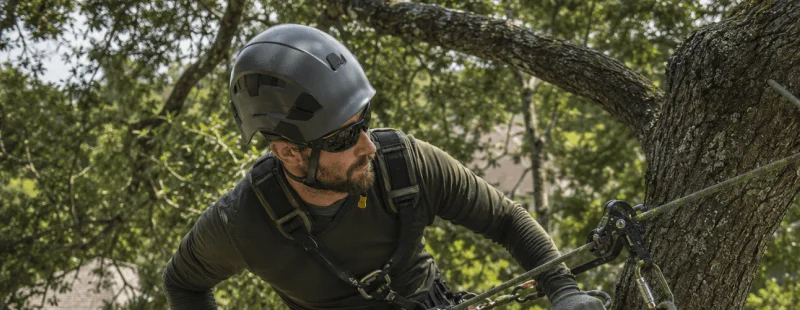
A properly equipped crew of 2–5 people starts with high-quality, certified gear that protects against chainsaw cuts, falls, and flying debris. Here is a realistic breakdown of essential Safety & PPE costs in 2026 (per arborist):
| Item | Description | Price Range (USD) | Notes |
|---|---|---|---|
| Helmet with Face Shield & Earmuffs | ANSI Z89.1 certified, vented | $180 – $450 | Must include hearing and face protection |
| Chainsaw Protective Chaps | Type A or C, 360° protection | $220 – $430 | Replace every 2–3 years |
| Full-Body Climbing Harness | With quick-release buckles | $400 – $750 | Must meet ANSI Z133 standards |
| Safety Glasses & Cut-Resistant Gloves | High-impact lenses + level 5 cut protection | $50 – $120 | Multiple pairs per crew member |
| Fall Arrest System (Lanyards + Carabiners) | Shock-absorbing lanyard + steel carabiners | $180 – $380 | Critical for aerial rescue |
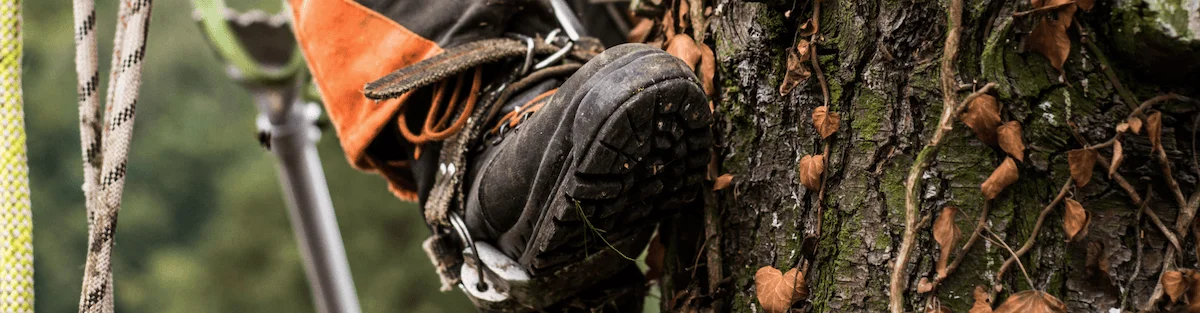
| Steel-Toe Boots with Chainsaw Protection | Waterproof, cut-resistant | $220 – $490 | Essential for ground crew |
Total estimated investment per fully equipped arborist: $1,300 – $2,600
Equipping your entire crew with certified safety gear from day one protects your team, lowers long-term insurance costs, and signals to commercial clients that you run a professional, compliant operation. Cheap gear almost always costs more through injuries, downtime, or failed audits.
Track vehicles, tools, and equipment from one platform to optimize maintenance, reduce operational costs, and maximize ROI.

Category 2 – Cutting Tools
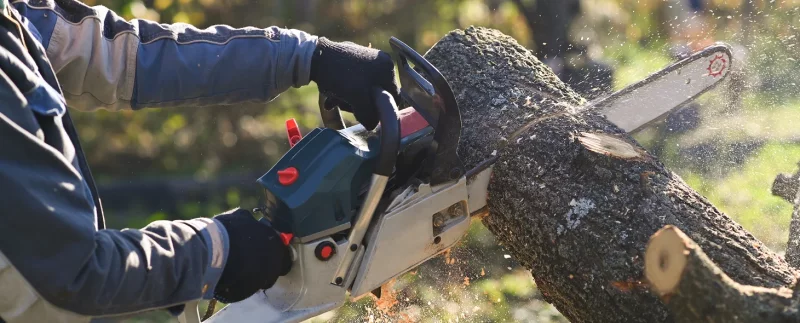
A reliable set of cutting tools sits at the core of every efficient multi-crew tree service operation. The right chainsaw for each job – ground work, climbing, or precision pruning – directly impacts productivity, safety, and job quality.
Most crews with 2+ teams quickly realize they need multiple saw types. Different jobs demand different power, weight, and reach. Chains, bars, and sprockets are consumables, so plan for ongoing maintenance in your job costing.
Below, you can find a practical overview of essential cutting tools and their 2026 costs (for one crew, including the chainsaw cost for tree service):
| Item | Description | Price Range (USD) | Notes |
|---|---|---|---|
| Professional Gas Chainsaw | 50–60 cc, 18–24" bar (ground work) | $720 – $1,200 | Workhorse for removals and heavy pruning (e.g. Stihl MS 261) |
| Top-Handle Chainsaw | Lightweight climbing saw, 25–40 cc | $820 – $1,050 | Essential for in-tree work (e.g. Stihl MS 201 T) |
| Battery/Electric Chainsaw | High-torque 56V+ models | $420 – $850 | Ideal for quieter residential jobs |
| Telescopic Pole Saw | Gas or battery, 10–15 ft reach | $480 – $1,100 | Perfect for high branches without climbing |
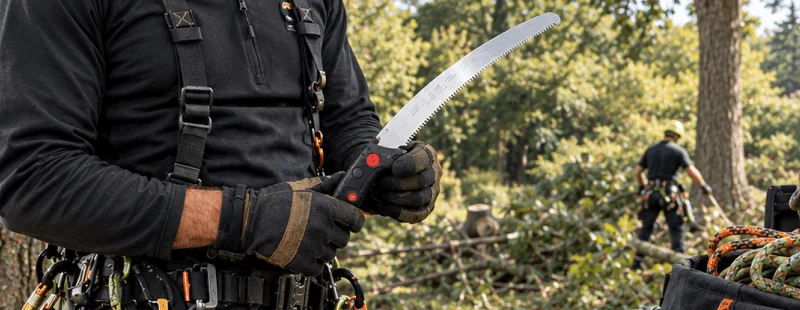
| Hand Pruning Saw | Curved blade, high-carbon steel | $45 – $110 | For precision finishing cuts |
| Heavy-Duty Loppers | Bypass or anvil style, telescopic handles | $70 – $150 | Useful for smaller branches |
Total estimated investment for a basic cutting tool kit (one crew): $2,600 – $4,800
Add $350–$700 per year per active saw for chains, bars, sharpening, and maintenance – this should be built into every job estimate. Investing in quality brands (Stihl, Husqvarna) upfront usually delivers lower total ownership costs because the tools last longer and perform better under daily professional use.
Category 3 – Climbing & Rigging Gear
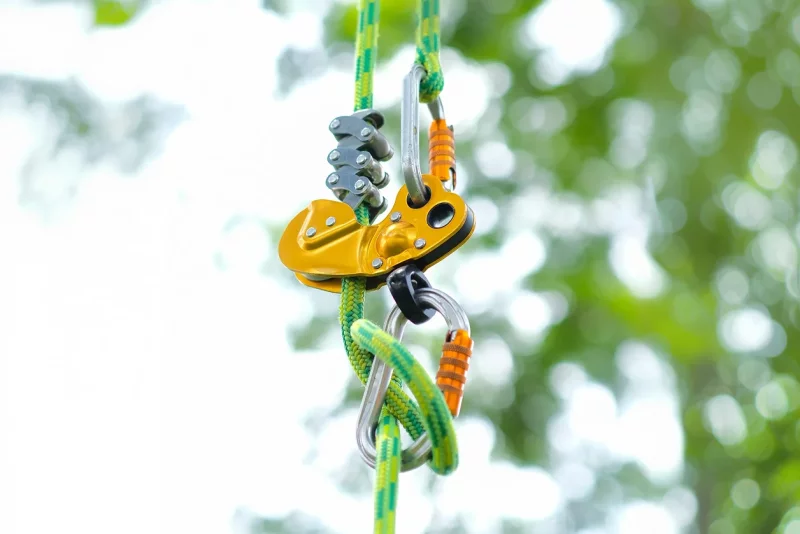
Climbing and rigging gear enables your crews to work safely and productively high in the canopy. The right setup turns slow, high-risk jobs into fast, controlled operations – directly improving your margins on complex removals and pruning.
Experienced multi-crew operations typically combine MRS (Moving Rope System) and SRS (Stationary Rope System). SRS is gaining popularity for faster ascents and less physical strain, but most crews keep both systems ready. Ropes and soft goods are consumables: climbing ropes usually last 1–5 years, while rigging ropes wear faster under heavy loads.
Here is a practical 2026 cost breakdown for one climber’s full rigging setup:
| Item | Description | Price Range (USD) | Notes |
|---|---|---|---|
| Climbing Rope (SRT/SRS) | 11–13 mm, 150–200 ft, low-stretch (e.g. Petzl Control) | $320 – $650 | Core of modern SRS system |
| Rigging/Lowering Rope | 12–16 mm, high-strength, 150–300 ft | $280 – $550 | For controlled branch lowering |
| Carabiners & Quick Links | Steel/alloy, arborist-rated (set of 8–12) | $220 – $420 | Must be rated for tree work |
| Mechanical Ascender & Descender | Petzl or ISC models | $380 – $720 | Speeds ascent/descent and reduces fatigue |
| Throw Line & Throw Bag | 1.5–2.0 mm line + weighted bag | $70 – $150 | Essential for setting lines in tall trees |
| Tree Climbing Spurs / Gaffs | Adjustable, sharp gaffs | $160 – $320 | Used when spur climbing is required |
Total estimated investment for one climber’s full rigging setup: $1,600 – $3,000
Quality climbing and rigging gear is a long-term investment. Good equipment reduces crew fatigue, improves safety records, and lowers replacement frequency. Track rope usage closely and retire gear per manufacturer and ISA guidelines – this protects your team and keeps insurance costs in check.
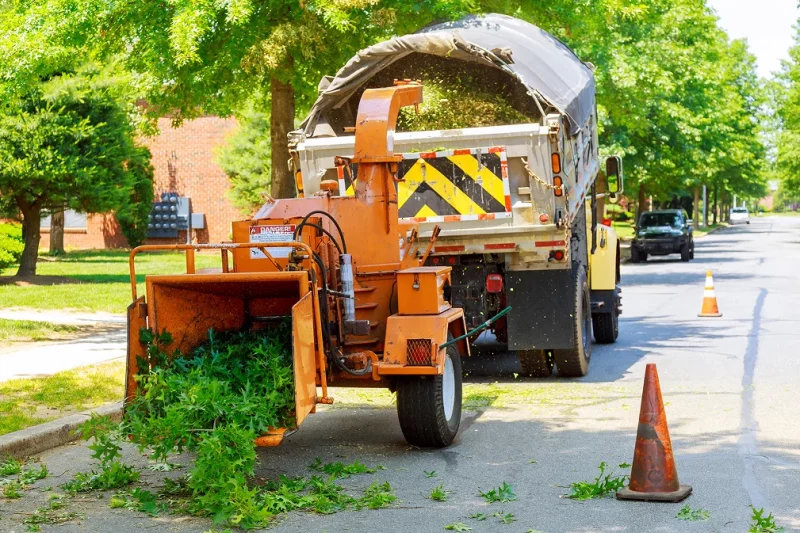
Category 4 – Ground Machinery
Ground machinery is one of the largest capital investments for growing tree service companies. These machines handle high-volume chipping, stump grinding, and debris movement – but they also carry significant purchase and maintenance costs.
The key decision for 2–20 crew operations: buy or rent? Rule of thumb – if a machine runs consistently 2–3 days per week, ownership usually pays for itself in 1–2 years through lower per-job costs. For irregular use, renting preserves cash flow while you scale.
Check the 2026 cost overview, including the wood chipper price for arborists:
| Item | Description | Purchase Price (USD) | Daily Rental Cost | Notes |
|---|---|---|---|---|
| Small Wood Chipper | 6–9 inch capacity, towable | $11,000 – $19,000 | $200 – $300 | Good entry point for residential work |
| Mid-Size Wood Chipper | 10–12 inch capacity (e.g. Vermeer/Bandit) | $22,000 – $42,000 | $300 – $450 | Most popular size for growing multi-crew operations |
| Stump Grinder (Walk-Behind) | 13–25 HP, self-propelled | $9,500 – $16,000 | $180 – $280 | Ideal for tight backyard access |
| Tracked Stump Grinder | 35–50 HP, high torque (e.g. Bandit/Rayco) | $25,000 – $55,000 | $400 – $600 | Best for commercial jobs and large stumps |
| Skid Steer Loader | With grapple and bucket attachments | $35,000 – $75,000 | $300 – $500 | Versatile for debris handling and site cleanup |
| Log Splitter | Hydraulic, 20–30 ton | $3,500 – $7,000 | $90 – $150 | Useful when preparing firewood as a value-add |
Total estimated investment for a full ground machinery setup: $85,000 – $150,000+
For most 2–10 crew businesses, rent chippers and stump grinders until your weekly volume justifies buying. Many owners start by carefully comparing stump grinder cost to buy or rent – daily rentals often run $180–$600 depending on size, while ownership becomes far more economical at higher utilization. This strategy keeps upfront capital low while you build consistent revenue and accurate job costing.
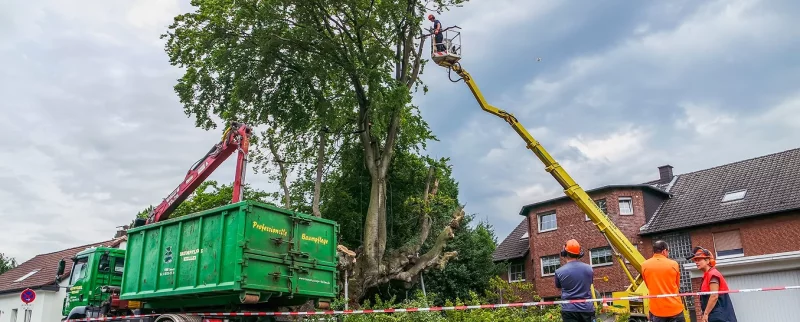
Category 5 – Vehicles & Aerial Access
Moving crews, tools, and debris efficiently to and from job sites is critical for profitability. Vehicles and aerial equipment often represent your single largest expense, but they can significantly boost daily output and safety – especially on commercial contracts or high-risk trees.
Climbing remains efficient for many jobs, but aerial units are the smarter, safer choice when trees have compromised structure, poor tie-in points, or proximity to power lines and buildings.
Here is what you can expect to pay in 2026 (with the bucket truck cost tree service, as well):
|
Item |
Description |
Purchase Price (USD) |
Daily/Weekly Rental |
Notes |
|
Chip Truck (with chip box) |
¾-ton or 1-ton with built-in chip body |
$55,000 – $95,000 |
$280 – $450 / day |
Essential for fast debris removal |
|
Flatbed Trailer |
Heavy-duty, 16–20 ft with ramps |
$8,000 – $15,000 |
$90 – $160 / day |
For hauling chippers and grinders |
|
Bucket Truck (Used) |
45–60 ft working height |
$75,000 – $130,000 |
$500 – $750 / day |
Reliable entry-level aerial option |
|
Bucket Truck (New) |
55–75 ft with modern safety features |
$160,000 – $260,000 |
– |
Best for high-volume commercial work |
|
Spider Lift / Tracked Lift |
Narrow access, compact design |
$45,000 – $85,000 |
$420 – $650 / day |
Excellent for tight urban backyards |
|
Crane Rental |
For large or hazardous tree removals |
– |
$900 – $1,800 / day |
Used when climbing or bucket truck is unsafe |
Total estimated investment for a complete vehicle & aerial fleet: $110,000 – $220,000+
Many successful 2–20 crew companies start with a solid chip truck and trailer, then add aerial equipment as job complexity and volume grow. Renting bucket trucks or spider lifts for specific jobs is often more cost-effective than owning too early.
Full Equipment Cost Summary Table
To help you quickly see the big picture, here is a complete summary of all five equipment categories with 2026 price ranges in USD. Use this table with a tree service equipment list to compare costs, decide what to buy versus rent, and plan your next purchase cycle.
| Category | Essential Items | Purchase Price Range (USD) | Daily Rental Option | Recommended For |
|---|---|---|---|---|
| 1. Safety & PPE | Helmet, chaps, harness, gloves, fall arrest system | $1,300 – $2,600 per arborist | No | All crews (mandatory) |
| 2. Cutting Tools | Gas saws, top-handle, pole saw, loppers | $2,600 – $4,800 per crew | Limited | Every active crew |
| 3. Climbing & Rigging Gear | Ropes, carabiners, ascenders, throw line, spurs | $1,600 – $3,000 per climber | Limited | Climbing crews |
| 4. Ground Machinery | Chippers, stump grinders, skid steer, log splitter | $85,000 – $150,000+ | Yes | Growing or commercial operations |
| 5. Vehicles & Aerial Access | Chip truck, trailer, bucket truck, spider lift | $110,000 – $220,000+ | Yes | Scaling businesses |
Total Estimated Investment (owned equipment):
-
2–3 Crew Operation: $80,000 – $160,000
-
4–10 Crew Growing Business: $150,000 – $280,000
-
10–20 Crew Full Commercial Fleet: $250,000 – $400,000+
This summary table is your quick-reference budgeting tool. Start with safety, cutting tools, and rigging for every crew, then add ground machinery and vehicles only when weekly job volume clearly supports ownership.
Equipment Investment Scenarios
You don’t need to buy everything at once. The smartest multi-crew operators scale equipment step by step, matching purchases to actual job volume and revenue. Here are three scenarios for 2026:
2–3 Crew Residential Operation
You have steady local work and want to stop renting heavy equipment. Own full safety gear and cutting tools for all crew members, one mid-size chipper, a chip truck with trailer, and basic rigging. Rent bucket trucks or spider lifts only when needed.
Typical investment: $80,000 – $130,000. Owning the chipper and truck usually pays for itself within the first 12–18 months.
4–10 Crew Growing Operation
Your business is scaling with more commercial contracts and storm work. Add a second chipper, tracked stump grinder, skid steer, and one used bucket truck. Keep aerial equipment flexible.
Typical investment: $150,000 – $250,000. At this size, owning the full ground fleet dramatically improves margins and scheduling control.
10–20 Crew Full Commercial Fleet
You handle large municipal and commercial contracts daily. Own multiple chippers, tracked grinders, two or more bucket trucks, spider lifts, and a dedicated chip truck fleet.
Typical investment: $250,000 – $400,000+. This level gives you maximum control, higher daily output, and the ability to take on the biggest jobs with confidence.
How to Manage Equipment Costs as You Scale
Don’t forget about real arborist equipment costs. Growing from 2 to 20 crews is exciting, but equipment can quietly erode profits if you treat it as a fixed cost instead of a revenue tool. The key is to make every machine earn its keep on every job.
Here are three practical ways successful tree service owners keep costs under control:
-
Track actual utilization of every piece of equipment on every job so you know exactly when renting stops making sense and buying becomes profitable.
-
Build the real daily ownership or rental cost of each machine directly into your job estimates instead of guessing margins at month-end.
-
Review equipment utilization monthly and sell or upgrade tools that sit idle too often.
The best-run operations don’t just buy more equipment as they grow – they make sure every machine pays for itself. ArboStar makes this much easier with its job costing and scheduling tools that show exactly how many hours each chipper, bucket truck, or chainsaw is used per job, giving you clear ROI visibility and smarter buy/rent decisions.
Conclusion
Building a profitable 2–20 crew tree service business comes down to making the right buy vs rent tree equipment decisions at the right time. Buy safety gear, cutting tools, and rigging for every crew immediately. Rent heavy machinery and aerial equipment until your weekly volume clearly justifies ownership. Always track the real cost per job.
The difference between average operations and highly profitable ones is simple: treat equipment as an investment that must deliver ROI, not just an expense. When you know exactly what each machine costs and earns, you can price jobs accurately, protect margins, and scale with confidence.
Ready to take the guesswork out of equipment costs and see exactly how your fleet impacts profitability? Book a free demo today and discover how ArboStar can support your growth from day one.