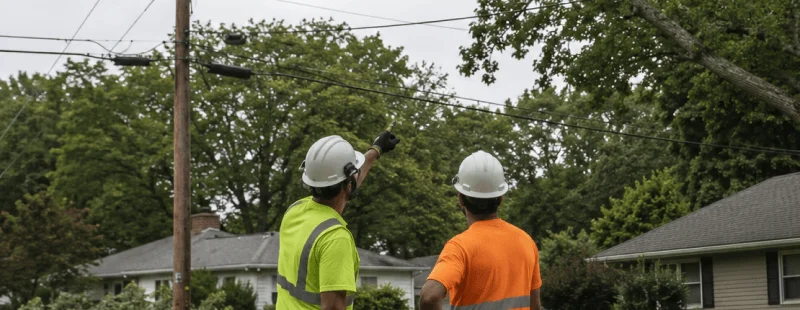


Quick summary: An arborist report is a written, professional assessment of a tree's health, structure, or risk, usually required for a removal permit, an insurance claim, or a construction project near trees. A basic single tree report costs 150 to 450 dollars, while a multi tree or development report runs 450 to 700 dollars or more. Reports are typically written by a certified or consulting arborist and stay valid for a limited time, often 6 to 12 months.
A city can reject a tree removal permit for a reason that has nothing to do with the tree itself: the person who signed the report was not qualified to write it. Many municipal codes define exactly who counts as an arborist for permit purposes, usually an ISA Certified Arborist or a consulting arborist registered with the American Society of Consulting Arborists, and a report from anyone outside that definition simply does not count.
What Is an Arborist Report?
An arborist report is a written, signed professional opinion on a tree's condition, structure, or risk, prepared after an on site inspection. It is not a verbal estimate and it is not a repair quote. A proper report documents the tree's species, size, condition, and location, states findings in plain language, and ends with a specific recommendation, whether that is removal, pruning, monitoring, or protection during nearby construction. The report exists to create a record that a permit office, an insurance adjuster, an attorney, or a neighbor can rely on, which is exactly why the credential of the person who signs it matters as much as what it says.
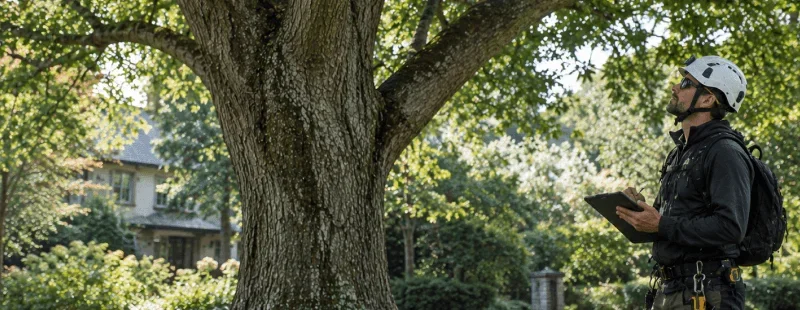
When Do You Need an Arborist Report?
Not every tree decision needs a written report. A homeowner removing a dead shrub does not need one. A property owner facing any of the four situations below usually does.
Tree Removal Permits
Most cities and counties that regulate tree removal require a written justification before issuing a permit for anything above a certain trunk diameter, and that justification generally has to come from a qualified arborist rather than the property owner's own opinion. The report typically documents the tree's health, structural condition, and species, then states clearly why removal is the appropriate recommendation rather than pruning or monitoring.
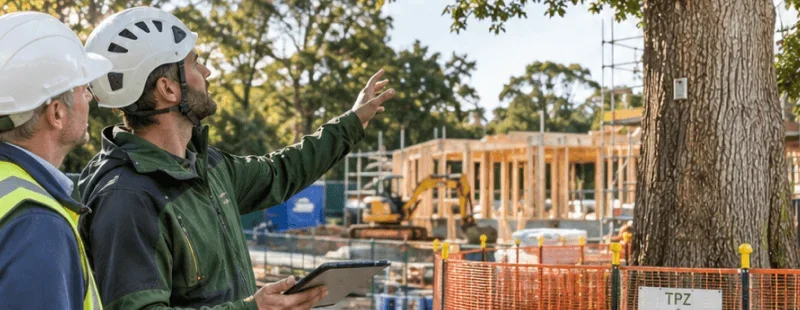
Construction and Development Projects
Development near existing trees is one of the most common triggers for a required arborist report, and the requirements can be detailed. Portland's own guidelines, for example, require the report to specify the tree's species, size, condition, and root cover, describe how the species tolerates construction impact, and include a site plan showing how any protection measures fit the development activity, all prepared by a certified or registered consulting arborist. Skipping this step on a permitted project does not just risk a fine, it can stall the permit itself until a qualified report is submitted.
Insurance Claims and Disputes
After storm damage, or when a tree on one property threatens another, an arborist report gives an insurer or a court something more solid than two neighbors disagreeing about whether a tree was already dying. A dated, signed report showing a tree's condition before or immediately after an incident is often the difference between a claim that gets paid and one that gets argued over for months.
Protected or Heritage Trees
Many municipalities designate certain species, sizes, or individually named trees as protected or heritage trees, which usually means any work near them, from root cutting to canopy reduction, requires a report and often a site visit from the city's own forester before work can proceed. Removing or damaging a protected tree without the required documentation can carry fines well beyond the cost of the report itself.
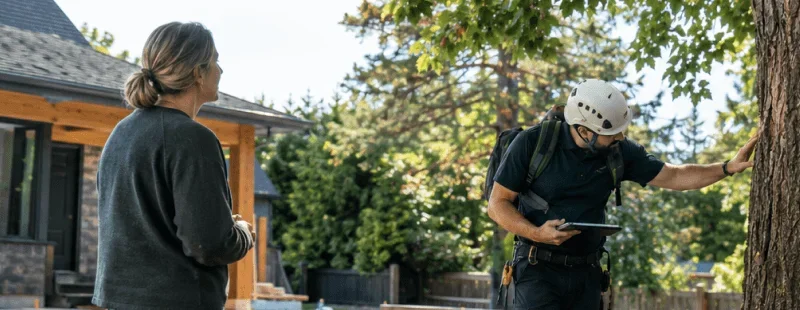
What's Included in an Arborist Report
A complete report generally covers the tree's species and size (measured as diameter at breast height), its overall condition, and the extent of its root zone and canopy. From there it typically documents any prior damage or stress the tree has experienced, evaluates how well that species tolerates the specific impact under discussion, whether that is nearby digging or a storm, and closes with a clear recommendation and the reasoning behind it. Reports written for permits or legal use also include supporting photographs and, when relevant, a site plan showing exactly how a protection zone or removal plan relates to the property. A report that skips the reasoning and just states a conclusion is a red flag, since the reasoning is what a permit office or an adjuster is actually evaluating.
Arborist Report vs. Tree Inspection vs. Risk Assessment
These three terms get used loosely, but they are not interchangeable. A tree inspection is usually a quick visual walkthrough, often free or low cost, meant to flag obvious problems rather than document them formally. A tree risk assessment is a more structured evaluation focused specifically on the likelihood and consequences of a tree failing, frequently using a recognized methodology to rate the hazard. An arborist report is the broader, written document, which may incorporate a risk assessment as one section, but the report itself covers health, structure, and recommendation together and is written to be relied on by a third party. If a permit or an insurer will read the document, it needs to be a report, not just a verbal inspection.
How Much Does an Arborist Report Cost?
Cost depends heavily on how many trees are involved and what the report is for. A single tree report, the kind most commonly needed for a removal permit or a straightforward health question, generally runs 150 to 450 dollars. A more detailed report covering multiple trees, or one written for a development site, typically runs 450 to 700 dollars or more, since it involves more field time and more documentation per tree. Consulting arborists who bill hourly instead of a flat fee usually charge 75 to 250 dollars an hour, and a report can take anywhere from a few hours to a full day depending on the number of trees and the complexity of the site.
A few factors push the price up regardless of report type: rural or hard to access properties add travel time, a rush turnaround for a permit deadline or a storm claim usually carries a premium, and any report likely to be challenged, in a legal dispute or an insurance denial, costs more because it has to be written to withstand scrutiny rather than just inform a homeowner. Get a written scope before hiring, since "arborist report" without a defined number of trees and a stated purpose is how a 200 dollar job turns into a 600 dollar invoice.
Who Can Write an Arborist Report?
Two credentials show up most often on a report a permit office will actually accept. An ISA Certified Arborist has passed a written exam covering tree biology, diagnosis, and safety, and holds the most widely recognized general credential in the field. A Registered Consulting Arborist, credentialed through the American Society of Consulting Arborists, has typically built on that base with additional training specifically in writing reports for legal, insurance, and expert witness purposes, which is why their reports usually cost more and why they are the ones typically hired for a report likely to end up in a courtroom or an insurance dispute rather than a routine permit application. It is also worth understanding that neither of these is technically a license. Most states do not license the title arborist at all, which is exactly why the difference between an arborist license and a certification matters before hiring anyone, and why checking a credential number is worth thirty seconds before paying for a report. For a broader look at how practicing arborists differ from consulting ones, ArboStar's guide to the different types of arborists breaks down which one fits which situation.
How Long Is an Arborist Report Valid?
Most permit offices and insurers treat an arborist report as current for 6 to 12 months, though the exact window depends on the jurisdiction and the reason for the report. Trees change condition, storms happen, and construction sites shift, so a report written a year ago about a tree's stability is treated as stale information rather than current fact. If a permit process drags on, or a construction timeline slips well past when the original report was written, it is worth asking the issuing office directly whether a refreshed report is required before the permit is finalized. Paying for an update is nearly always cheaper than restarting the entire permit process from scratch.
Frequently Asked Questions
What is the purpose of an arborist report?
An arborist report creates a written, professional record of a tree's health, structure, or risk that a permit office, insurer, or court can rely on, along with a specific recommendation and the reasoning behind it.
How long does an arborist report take to complete?
A single tree report typically takes a few hours of field time plus report writing, often delivered within a few business days. A multi tree or development report can take a full day on site and longer to write up, especially if a rush turnaround is not requested.
Does an arborist report guarantee my removal permit?
No. The report supports the application by documenting the tree's condition and giving a professional recommendation, but the permit office makes the final decision and can still deny a request even with a report in hand.
Is an arborist report the same as a tree inspection or a quote?
No. A tree inspection is usually a quick visual check, and a quote is a price for work. An arborist report is a formal written document with findings and a recommendation, written to be relied on by a third party like a permit office or an insurer.
Who can write an arborist report?
Most permit offices and insurers require the report to come from an ISA Certified Arborist or a Registered Consulting Arborist, since these credentials confirm the training needed to make findings that will hold up under review.
Conclusion
An arborist report cost typically falls between 150 and 700 dollars depending on the number of trees and the purpose of the report, with hourly consulting rates running higher for anything complex. The document matters most in four situations: a removal permit, a construction project near existing trees, an insurance claim or dispute, and any protected or heritage tree. Skipping the report to save a few hundred dollars usually costs more later, in a denied permit, a stalled construction timeline, or a claim that never gets paid. When in doubt about whether your situation needs one, ArboStar's education hub covers the credentials, terminology, and process in more depth.
See how ArboStar can run your tree care business
Quoting, scheduling, crews and invoicing in one place. Book a short demo and see it with your own jobs.