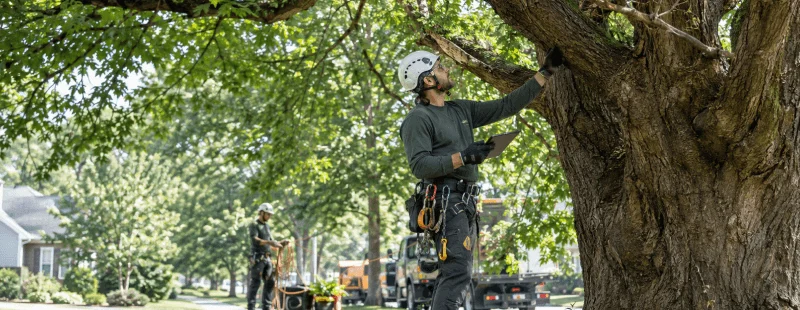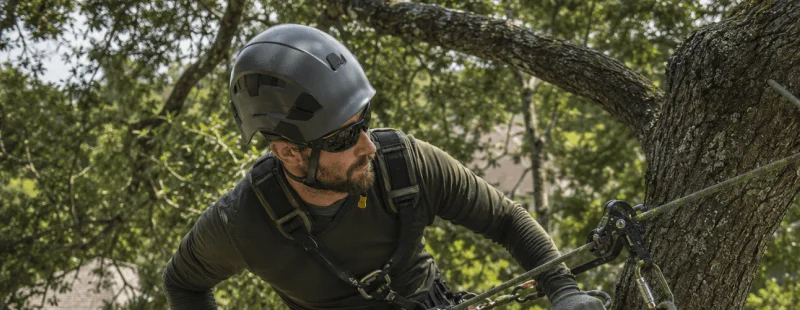


A climber forty feet up a red oak, saw in hand, rigging a limb over a client’s roof, is doing a job most people would pay good money to avoid. The question that actually matters, whether you’re deciding to climb for a living or trying to price your own crew’s time, is what that work pays back.
Quick summary: The average arborist salary in the US in 2026 sits around $60,675 a year, or $29.17 an hour, according to ZipRecruiter’s June 2026 salary data. Glassdoor puts the figure lower, at $57,139 a year ($27/hour), and Indeed’s most recent estimate is $27.10/hour. PayScale, which draws from a smaller, self-reported pool, comes in lowest at $25.10/hour. The gap comes down to methodology and sample size, not a mistake in any one source. For most working arborists, the realistic band is $46,500 to $69,000 a year. ISA Certified Arborists and experienced climbers can push past $88,000, and consulting arborists and business owners routinely clear six figures. Key entities: ISA Certified Arborist, ZipRecruiter, BLS, climbing arborist, consulting arborist, crew leader.
Average Arborist Salary in 2026
Ask four salary sites how much do arborists make and you’ll get four different numbers within a few dollars of each other. That’s normal for a trade where pay depends heavily on region, employer type, and how much of the job happens off the ground.
| Source | Average per year | Average per hour |
|---|---|---|
| ZipRecruiter (June 2026) | $60,675 | $29.17 |
| Glassdoor (July 2026) | $57,139 | $27.00 |
| Indeed (June 2026) | n/a | $27.10 |
| PayScale (2026) | roughly $52,000 | $25.10 |
The spread exists because ZipRecruiter and Glassdoor pull from millions of active job postings, while PayScale leans on smaller, self-reported salary surveys that skew toward lower base rates and exclude a lot of overtime and storm-response pay. The Bureau of Labor Statistics classifies this work under “Tree Trimmers and Pruners” (SOC 37-3013) and reported a median annual wage of $50,440 as of May 2024, the most recent government figure available. Put the sources together and a realistic arborist salary per year lands between $46,500 and $69,000 for most working arborists, and arborist salary per hour figures cluster between $25 and $29 across the sources that carry the most weight.
ZipRecruiter’s percentile breakdown gives a clearer picture of where individual arborists fall within that range:
| Low | 25th percentile | Average | 75th percentile | Top 10% |
|---|---|---|---|---|
| $32,000 | $46,500 | $60,675 | $69,000 | $88,000 |
Arborist Salary by Role
Not every arborist does the same job, and pay tracks that difference closely. The gap between someone dragging brush on the ground and someone running a consulting practice is often triple the paycheck.
Ground Crew and Laborer
Entry-level ground work is where nearly everyone starts. Expect $32,000 to $42,000 a year, or roughly $19 to $22 an hour, matching the lower end of PayScale’s entry-level tree trimmer data and ZipRecruiter’s national floor of $32,000. Ground crew handles chipping, dragging brush, and setting up rigging, without the pay premium that climbing brings.
Climbing Arborist
Climbing arborist salary figures typically run from $45,000 to $75,000 a year. Crane-assisted removals and technical rigging jobs can push weekly pay well above that during a busy stretch, and climbing is one of the highest-paid field roles that doesn’t require a management title. Washington is currently the top-paying state for this specialty, running about 13% above the national average, while Florida sits at the bottom of the list.
Crew Leader and Foreman
A tree service crew leader salary usually falls between $50,000 and $80,000 a year. The bump over a climbing role reflects the added responsibility: managing a team, reading the site for hazards before the first cut, and making the call on how a removal gets sequenced.
ISA Certified Arborist
ISA certified arborist salary data shows a real, measurable lift over uncertified peers, roughly $10,000 a year on average once the credential is added, according to industry salary guides, with private tree service employers reporting smaller hourly premiums of $3 to $8 above uncertified workers. Certified arborists commonly earn $55,000 to $103,500 or more, especially once they take on plant health care diagnostics, risk assessments, and written reports for clients. Master arborist salary figures, tied to the top credential offered by the International Society of Arboriculture, Board Certified Master Arborist, sit above this tier again and are frequently reported alongside consulting and expert-witness work rather than routine field pay.
Consulting Arborist
Consulting arborist salary figures vary the most of any role on this list, from the low six figures on the high end down to entry-level consulting-adjacent jobs in the $40,000s, largely because “consulting arborist” covers everything from formal appraisal work to municipal contract review. A working range of $70,000 to $110,000 or more is realistic once someone is doing court testimony, tree appraisals, or municipal risk assessments regularly rather than occasionally.
Arborist Salary by State
Where you work changes the paycheck almost as much as what you do. Tree density, storm frequency, cost of living, and demand for municipal contracts all shape the local number.
| State/City | How it compares |
|---|---|
| Lafayette, CA | 33.6% above the national arborist average |
| Nantucket, MA | 23% above the national average |
| Washington (state) | Top-paying state for climbing arborists, about 13% above average |
| New York | About 9% above the national average for climbing roles |
| California (statewide) | $60,457/year average, 6% above national (Glassdoor) |
| Texas | $56,529/year average, below the national figure |
| Florida | Lowest-paying state for climbing arborist roles |
Coastal, high-cost markets with dense urban canopies tend to sit at the top of this list. Arborist salary California figures land near or above the national average almost everywhere in the state, while arborist salary Texas and arborist salary Florida numbers trend lower, a pattern driven less by skill differences and more by cost of living and fewer high-value municipal and utility contracts in those regions.
What Drives Arborist Pay Up (and Down)
A handful of factors explain most of the spread between a $32,000 salary and a six-figure one.
-
ISA or TCIA certification, plus a crane operation license, adds real dollars per hour.
-
Utility line clearance work pays a premium most residential tree care doesn’t match.
-
Five or more years of experience, especially with technical removals, moves someone out of entry-level pay bands.
-
Working in a metro area with high tree density and steady storm cleanup demand helps.
-
Specializing in plant health care rather than general pruning opens higher-paying diagnostic and consulting work.
On the other side, a lack of certification, long seasonal slowdowns (February and March are typically the quietest months), small rural markets, and staying in ground-level work without moving toward climbing or leadership all cap earning potential. Among employers, Bartlett Tree Experts, Davey Tree, Asplundh, and SavATree consistently show up as major payers in industry salary data, and Rainbow TreeCare is listed by Glassdoor as the top-paying company in the personal consumer services segment of tree care.
How Much Can an Arborist Business Owner Make?
Everything above describes an employee’s paycheck. Running the business changes the math considerably, and it’s where the biggest gap in this whole guide shows up.
A solo operator running pruning and small removal jobs alone can expect to clear somewhere around $90,000 a year if the schedule stays full. Add two or three crews and the number typically moves to $150,000 to $250,000 or more, and an owner running a scaled operation with multiple trucks and steady contract work can pass $350,000. What separates a solo operator from an owner running several crews isn’t only headcount. It’s how efficiently the operation runs: pricing that reflects real job cost, crews that stay booked instead of sitting idle between jobs, and repeat contracts for plant health care and seasonal maintenance instead of one-off removals. ArboStar helps tree care business owners keep crew schedules full, track job costs in real time, and see which jobs are actually profitable before the next one gets booked.
Arborist Pay Structures: Hourly, Salary, or Production-Based?
Most field arborists are paid hourly, and that’s still the dominant model industry-wide for ground crew and climbers alike. Crew leaders and plant health care technicians are more likely to move onto a salary, reflecting the supervisory and diagnostic parts of the job rather than hours spent cutting. Production-based pay shows up less often but tends to appear on larger removal jobs, where paying by output rather than hour rewards a crew for finishing efficiently rather than stretching the clock.
For an owner, the structure question is really a retention and cost-control question. Hourly pay is simple to track but can reward slow work if job costing isn’t tight. Salary keeps payroll predictable but only works once a crew leader’s role is genuinely supervisory. Getting this mix right often matters more to the bottom line than the specific dollar figures in any of the tables above.
Conclusion
Arborist pay ranges from $32,000 for entry-level ground work to $350,000-plus for owners running multiple crews, and the biggest single lever in that range is what an arborist does with certification, climbing skill, and eventually, ownership. Whether the goal is negotiating a raise, deciding whether ISA certification is worth the exam fee, or figuring out what a crew leader should be paid, the numbers above reflect the actual 2026 market rather than a single, misleading average. See how ArboStar helps tree care businesses turn crew time into profit with a personalized demo.