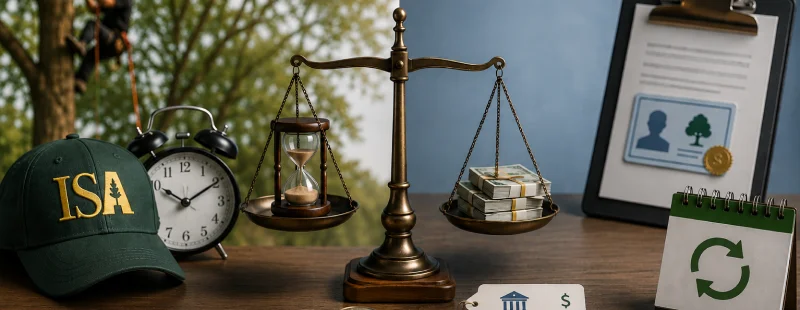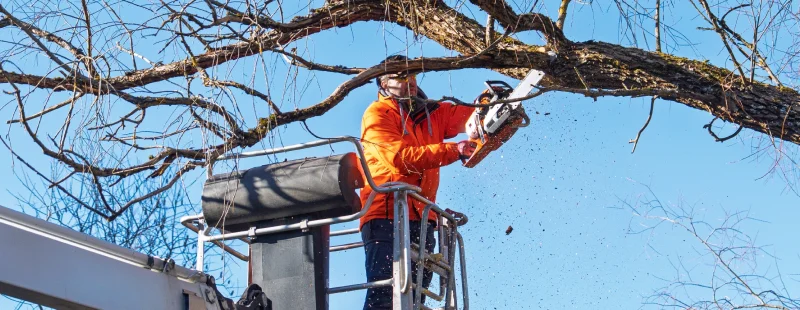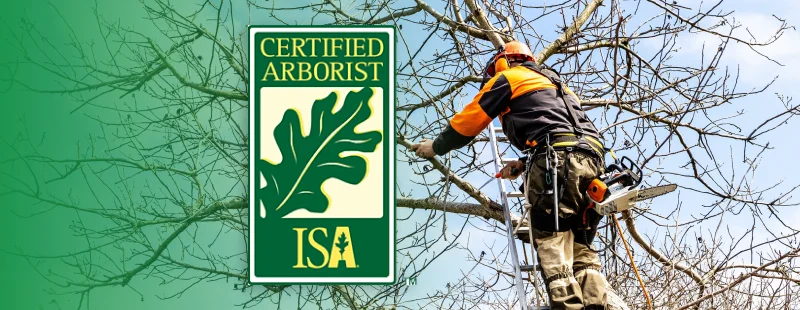
Quick Summary: A consulting arborist is a tree specialist who advises instead of doing the physical work. They assess tree health and risk, write reports for permits, insurers and courts, and plan tree protection on construction sites. You hire one when you need an independent assessment or a formal document, and a hands-on arborist when you need pruning or removal. In the US the Registered Consulting Arborist title comes from the American Society of Consulting Arborists (ASCA), a separate credential from ISA certification.
Key entities: ASCA, Registered Consulting Arborist, ISA Certified Arborist, TRAQ, tree risk assessment, arborist report, tree preservation plan.
A big oak leans a little more every year. Your neighbor says it's dangerous. The tree company you called says it should come down, and they'd be happy to do it. Who do you believe?
That's the moment a consulting arborist is for. They don't bring a chainsaw. They bring an independent opinion, and usually a written report you can show to a city, an insurer or a court.
What Is a Consulting Arborist?
A consulting arborist is a tree expert whose job is advice, assessment and documentation rather than pruning or removal. The American Society of Consulting Arborists describes them as authoritative experts who bring "an objective, comprehensive viewpoint" to their clients.
Their clients vary. Homeowners hire them to answer a question about one tree. Developers and builders need them to plan around trees on a site. Municipalities use them for tree inventories and ordinances. Attorneys and insurers bring them in when a tree is at the center of a claim or a dispute.
If you're new to the profession as a whole, our guide to what an arborist is and the overview of different types of arborists are a good starting point.
Consulting Arborist vs Practicing Arborist
Both work with trees, and many consulting arborists started out as practicing arborists. The difference is in what you get at the end.
|
|
Consulting arborist | Practicing (hands-on) arborist |
|---|---|---|
| What they do | Assess trees, diagnose problems, give independent recommendations | Prune, remove, plant and care for trees |
| Who usually hires them | Property owners, developers, municipalities, attorneys, insurers | Homeowners, property managers, businesses |
| What you receive | A written report, plan, appraisal or testimony | Completed tree work |
| How they are paid | Usually per job or by the hour, depending on scope | Usually per job, based on the work quoted |
| Typical credential | Registered Consulting Arborist (ASCA), often with ISA certification and TRAQ | ISA Certified Arborist, plus any state or local license |
The line isn't always strict. Some companies offer both services. That's not automatically a problem, but it matters when the question is whether a tree should be removed at all. We come back to that below. For how arborists differ from tree trimmers and tree surgeons, see this comparison.
What Does a Consulting Arborist Do?
ASCA lists a wide range of consulting arborist services, from diagnosing tree and landscape problems to municipal ordinance development and tree inventories. For most property owners, four of them come up again and again.
Tree Risk Assessment
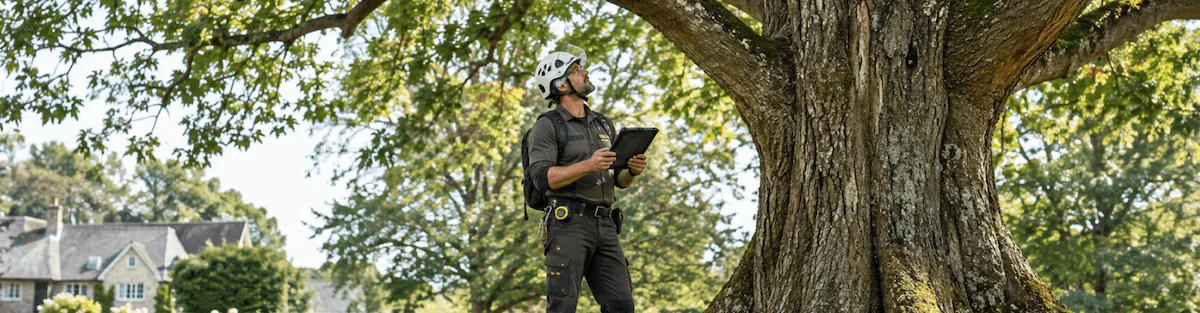
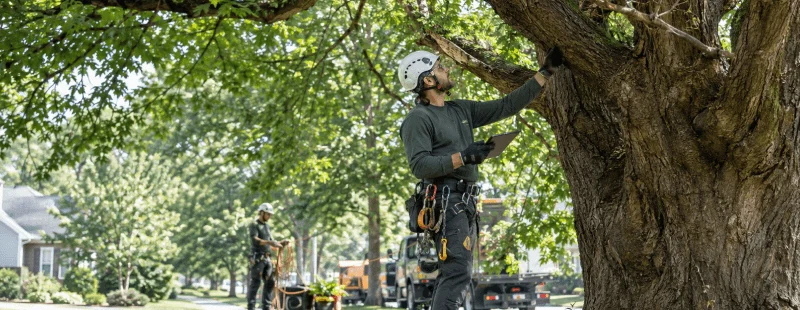
This is one of the most common reasons people call. A consulting arborist looks at a tree's structure, its condition and what it could hit if it failed, then gives an opinion on the level of risk and what to do about it. That might be pruning, monitoring, cabling or removal. Our guide to tree risk assessment explains how the process works.
Tree Health and Problem Diagnosis
Thinning crowns, dying branches, fungus at the base. A consultant works out what's actually going on, whether it's an insect, a disease, soil problems or old damage. The diagnosis comes with a recommendation, which might be treatment, a plant health care program or simply waiting and watching.
Construction Impact and Tree Preservation Plans
Construction is hard on trees. Digging, trenching and heavy equipment can damage roots well outside the area you see. ASCA lists tree protection for construction projects among its members' services. In practice, that usually means a tree preservation plan: which trees to keep, how to protect them during work, and what to check afterwards. Some local governments ask for this kind of plan as part of a permit or development application.
Appraisal, Disputes and Expert Witness Work
Sometimes the question isn't about the tree's future but about its value or what went wrong. Consulting arborists appraise trees for insurance and legal claims, investigate failures after the fact, and act as expert witnesses when a dispute goes to court. ASCA lists expert witness work, litigation support, forensic investigations and tree appraisals among the services its members provide.
Keep Every Tree Assessment in One Place
Record trees with GPS, photos and notes, then reuse them for estimates, crew prep and repeat service.
When Should You Hire a Consulting Arborist?
A consulting arborist earns their fee when you need an independent answer or a document someone else will rely on. Typical situations include:
- A city or county requires an arborist report before you can remove a protected tree or get a building permit.
- You and a neighbor disagree about a tree on or near the property line.
- An insurer is asking about a tree after damage, or before covering a property.
- A contractor has recommended removing a large, healthy-looking tree, and you want a second opinion first.
- You're planning construction near mature trees and want to keep them alive.
- A tree failure has caused damage and the cause is disputed.
In most of these cases, the deliverable is a written report. Our article on arborist reports explains what goes into one and when you need it.
When You Don't Need One
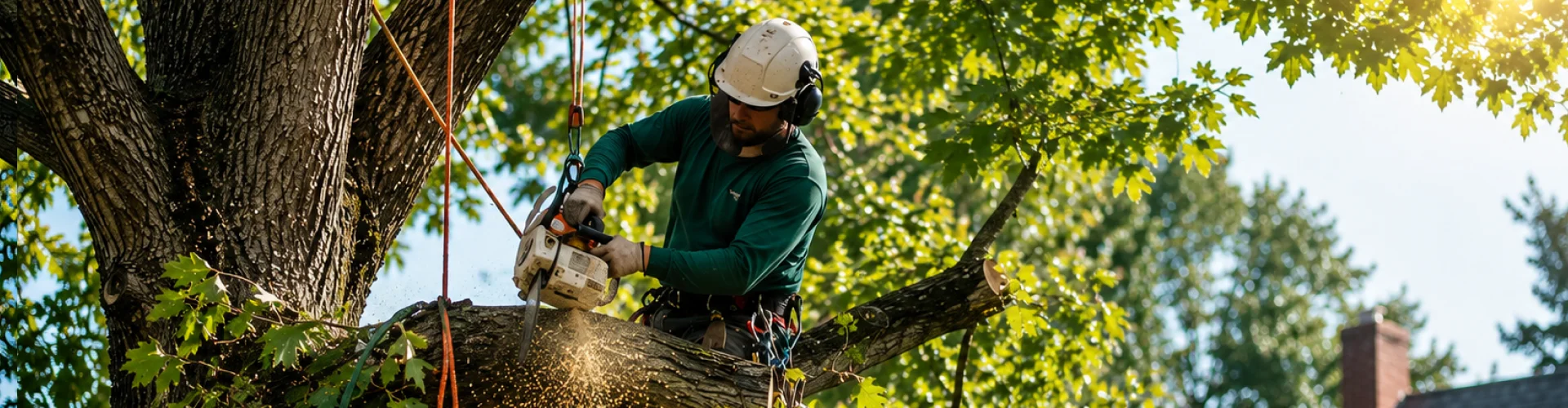
Not every tree question needs a consultant. If you simply want a tree pruned, a dead tree removed or a hedge shaped, and no permit, insurer or dispute is involved, a qualified practicing arborist is the right call. They can assess the tree on site and do the work.
The simple test: if nobody else will read the result, you probably don't need a report.
Credentials to Look For
This is where many people get confused, because two different organizations issue the credentials you'll see most often in the US. They answer different questions.
Registered Consulting Arborist (ASCA)
The Registered Consulting Arborist (RCA) title comes from the American Society of Consulting Arborists. It focuses on consulting itself: report writing, the consultant's role, dispute resolution and forensic work.
According to ASCA's RCA requirements (checked November 3, 2026), a candidate must be a current ASCA member, graduate from ASCA's Consulting Academy, earn 420 continuing education units, and submit two reports for review. Membership itself has its own requirements: ASCA asks for at least five years of experience in arboriculture plus a related degree, Board Certified Master Arborist status or a set number of continuing education units.
ISA Certified Arborist and TRAQ
ISA certification comes from the International Society of Arboriculture and shows broad knowledge of tree care. It isn't a consulting credential, but many consultants hold it. Our guide explains what an ISA Certified Arborist is, and this article covers the difference between an arborist license and a certification.
TRAQ, the ISA Tree Risk Assessment Qualification, is specific to risk assessment. It requires an eligible credential to start, a course and an assessment, and holders must retrain and retest every seven years. If your main question is "is this tree safe?", TRAQ is worth looking for.
Stop Re-Assessing the Same Tree Twice
Watch the free webinar on tree data loss and repeated site analysis, and how mapping a property once saves return visits.
How Much Does a Consulting Arborist Cost?
There's no single price. Consulting arborists usually quote either per job or by the hour, depending on the scope. A quick assessment of one tree costs far less than a construction preservation plan or court testimony, which can involve site visits, research and preparation time.
The clearest way to compare is to ask for a written quote that names the deliverable. For report pricing specifically, see our breakdown of arborist report costs.
How to Hire a Consulting Arborist
A short checklist helps:
- Check credentials. Ask whether they are a Registered Consulting Arborist, ISA certified and TRAQ qualified, and confirm them with the issuing organization.
- Ask about insurance, including professional liability coverage.
- Agree on a written scope. It should say what they will inspect, what you will receive and when.
- Ask about independence. If the same company would also be paid to remove the tree, ask how they keep the assessment separate from the sales side.
- Check that the report format fits its use. A report for a permit office or a court may need specific content, so tell them who will read it.
How to Become a Consulting Arborist
If you landed here from a job listing, the ASCA route is the clearest path in the US. It starts with experience in tree care, then ASCA membership, the Consulting Academy, continuing education and report review, as described above. Many consultants also hold ISA certification and TRAQ before they move into consulting.
For pay, see our arborist salary guide.
Frequently Asked Questions
What does a consulting arborist do?
A consulting arborist assesses trees, diagnoses problems, evaluates risk and writes reports, plans or appraisals. They also act as expert witnesses in disputes. They advise rather than doing the pruning or removal themselves.
What is the difference between a consulting arborist and a certified arborist?
"Certified arborist" usually means ISA certification, which shows broad tree care knowledge. A Registered Consulting Arborist holds a separate ASCA credential focused on consulting, report writing and dispute work. Many consultants hold both.
Do I need a consulting arborist to remove a tree?
Usually not. A practicing arborist can handle most removals. You may need a consultant if your local government requires a report for a protected tree, or if the removal is disputed.
How much does a consulting arborist charge?
It depends on the scope. Consultants usually quote per job or by the hour. Ask for a written quote that names the deliverable, and see our arborist report article for report pricing.
Can a consulting arborist also do the tree work?
Some companies offer both. If you need an independent opinion, ask how the assessment is kept separate from any work they might sell.
Conclusion
A consulting arborist gives you advice and documents. A practicing arborist gives you completed tree work. Knowing which one you need saves money and avoids asking the company that would remove a tree whether it should come down.
If a permit office, insurer, neighbor or court is involved, a consulting arborist is usually worth it. If you just need a tree pruned or a dead one removed, call a qualified practicing arborist. Either way, check credentials with the organization that issues them and get the scope in writing.
For more plain-language guides on tree care and how the industry works, explore the ArboStar education hub, and come back here whenever you need to decide whether a consulting arborist is the right call.
Back Every Job With a Clear Record
See who changed each estimate, invoice, job or client record and when, so every record holds up.