

Quick Summary: Hiring an arborist typically costs 300 to 1,800 dollars per project, or 75 to 250 dollars per hour for hourly work. Tree removal and large pruning jobs sit at the high end, while a basic inspection or consultation costs the least. Tree size, accessibility, ISA certification, and timing all move the final price.
Key entities: ISA Certified Arborist, tree removal cost, arborist hourly rate, consulting arborist, day rate.
Average Cost to Hire an Arborist
Most homeowners pay between $300 and $1,800 for a single arborist visit, with the average cost of an arborist landing close to $800 nationally. That figure covers common jobs like pruning, a health inspection, or removing a small to mid-size tree. So, how much does it cost to hire an arborist for something bigger? Large removals, storm cleanup, and multi-tree jobs can run well past $2,000, and a complicated removal near a house or power line sometimes reaches $5,000 or more.
These figures reflect a general national arborist cost range and move with your local market, so treat them as a planning number rather than a quote. Get two or three written estimates before deciding on anything over $1,000, and confirm current local pricing before you budget, since costs shift from year to year.
What Affects the Cost of Hiring an Arborist?
A handful of factors drive most of the price difference between one arborist quote and the next.
Tree Size and Height
Height and trunk diameter are the biggest cost drivers on almost every job. A 20 foot ornamental tree might take an hour to prune. An 80 foot oak requires rigging, a bucket truck or climbing gear, and a larger crew, which multiplies both time and risk. As a rough guide, price tends to climb sharply with each size tier a tree moves into, from small (under 30 feet) to medium (30 to 60 feet) to large (over 60 feet).
Tree Type, Health, and Accessibility
Dense hardwoods take longer to cut and haul than softer species. A dead or diseased tree can be more dangerous to remove than a healthy one, since decayed wood behaves unpredictably under tension. Accessibility matters just as much: a tree standing alone in an open backyard costs less to work on than one wedged between a fence, a shed, and power lines, where a crew has to lower every piece by hand or rope instead of letting it drop.
Emergency vs. Scheduled Work
Scheduled work almost always costs less than an emergency tree service call. A company that can plan a crew, equipment, and disposal in advance operates far more efficiently than one dispatching a team at 9 p.m. after a storm. Emergency premiums of 25 to 50 percent above standard rates are common, and during a widespread storm event, prices can climb higher still simply because every crew within driving distance is already booked.
Does ISA Certification Cost More?
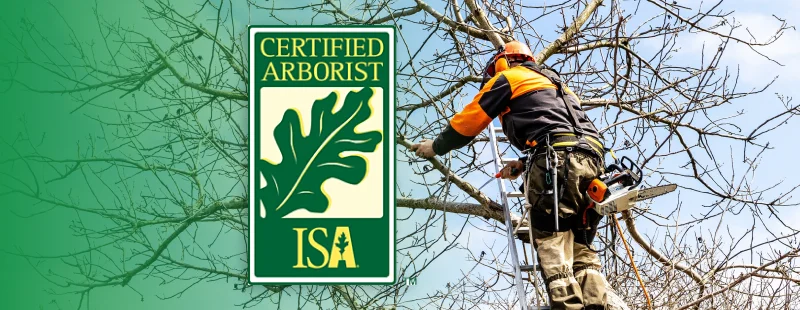
Hiring an ISA Certified Arborist can cost a bit more per hour than an uncertified crew, and the gap is usually smaller than people expect. Certification reflects tested knowledge of tree biology, risk assessment, and pruning standards, exactly what you want for a diagnosis, a written report, or a job near a structure. For routine trimming with no complicated risk factors, an experienced but uncredentialed crew may be perfectly adequate. For more on what the credential actually covers and who needs one, see our guide on what an arborist is and when to hire one.
Arborist Cost by Service
Arborist prices shift by service type as much as by tree size. Here is a general breakdown of common jobs and their typical price range.
| Service | Typical Cost Range |
|---|---|
| Consultation or tree inspection cost | $75 – $250 |
| Arborist report (written assessment) | $150 – $700 |
| Tree trimming cost / pruning | $200 – $1,500 |
| Tree removal cost (small to medium tree) | $300 – $2,000 |
| Tree removal (large or hazardous tree) | $1,500 – $6,500+ |
| Stump grinding | $150 – $500 |
| Cabling and bracing | $150 – $450 |
| Tree planting | $150 – $1,850 |
Figures represent a general national market range and should be re-verified against local quotes before budgeting.
Costs add up quickly on jobs with more than one service, which is why a removal quote almost always looks larger than a pruning quote for the same tree. ArboStar’s breakdown of how tree service companies price their work covers this from the business side, useful context if you want to understand why a bid is structured the way it is.
Free eBook: Grow Your Tree Service
Marketing strategies tree care companies use to win more jobs, from Google Business optimization to automating follow ups.
Hourly Rate vs. Day Rate vs. Per Project Pricing
Most arborists do not bill by the hour for typical residential work. Per-project pricing is the norm because it lets a company account for drive time, disposal, and risk upfront rather than watching a clock. When an arborist hourly rate does apply, usually for consulting visits or small jobs, it generally runs $75 to $250 an hour depending on region and the equipment involved.
For large or multi-day projects, some companies quote a day rate instead, commonly $800 to $2,000 for a full crew and equipment. That structure tends to work better for municipal contracts, storm cleanup, or larger properties with several trees needing attention in one visit.
A useful benchmark for the labor side of that math comes from the U.S. Bureau of Labor Statistics, which puts the median wage for tree trimmers and pruners at $23.59 an hour nationally, with the top 10 percent earning more than $36 an hour. That figure is base crew labor, before a company adds equipment, insurance, disposal fees, and overhead, which is part of why a quoted tree service cost runs well above what any single worker takes home.
Does the Time of Year Change the Price?
Yes, and this is the part most pricing guides skip. Tree work follows a seasonal curve. Spring and early summer are peak season for routine pruning and removals in most regions, since trees are easiest to assess once they have leafed out and homeowners are focused on their yards. Prices during this window tend to sit at or slightly above average.
Late fall and winter, once trees are dormant, is typically the slower season for scheduled work, and some companies offer modest discounts to keep crews busy. The exception that overrides all of this is storm season. Hurricane season along the Gulf and East Coast, and winter ice storms further north and inland, create short bursts of extreme demand. When a storm knocks down trees across an entire region at once, every available crew gets booked within days, and emergency pricing reflects that scarcity as much as the size of the job. Booking routine pruning before your local storm season starts is one of the more reliable ways to avoid paying peak prices.
How to Get an Accurate Quote
A vague quote is often the first warning sign. Before you agree to anything, ask the following:
-
Is the estimate based on an in-person visit, not just photos or a phone description?
-
Does the price include debris removal and stump grinding, or are those billed separately?
-
Can you show proof of liability insurance and workers’ compensation coverage?
-
Is the arborist ISA certified, and can they provide the certification number?
-
Are you a practicing arborist doing the work, or a consulting arborist writing a report for someone else to act on?
-
What happens to the price if the job turns out to be more complex once work starts?
Be cautious of any bid that comes in dramatically lower than the others you collected. It usually means something is missing from the quote, whether that is insurance, disposal, or part of the actual scope of work.
Is Hiring an Arborist Worth the Cost?
For most tree issues, yes. A qualified arborist catches problems a homeowner would miss: a hidden cavity, a root system compromised by nearby construction, a tree that looks healthy but is structurally unsound. The cost of a consultation is small compared to the cost of a tree falling on a roof, a car, or a power line. Even routine pruning tends to pay for itself over time by extending a tree’s healthy lifespan and reducing the odds of an expensive emergency removal later. The exception is very minor, low-risk work, like trimming a small ornamental shrub, where a general landscaper is a reasonable and cheaper choice.
FAQ
How much does an arborist cost per hour?
Most arborists charge $75 to $250 an hour when billing hourly, though many residential jobs are quoted per project instead. Rates run higher in expensive metro markets and for certified specialists handling complex diagnostic work.
Do arborists charge for a consultation or estimate?
Many do, typically $75 to $250, though some companies waive the fee if you hire them for the job. Always ask upfront whether the visit is free or billed.
Is it more expensive to hire a certified (ISA) arborist?
Sometimes, but the gap is usually modest. You are paying for tested expertise, which matters most for diagnosis, risk assessment, and work near structures or power lines.
Do you need to tip an arborist?
It is not expected. Tree work is priced to cover labor, equipment, and risk already. If a crew went well beyond the job scope, a tip or a positive review is a nice gesture but never required.
Why do emergency tree services cost more?
Emergency callouts require crews to drop other work, operate outside normal hours, and take on higher risk conditions, often in wind, rain, or with unstable trees. That combination of urgency, risk, and limited crew availability during widespread storm events pushes prices up.
Conclusion
So, how much does it cost to hire an arborist? Plan for $300 to $1,800 on a typical job, with consultations at the low end and large or emergency removals at the high end. The exact number depends on tree size, accessibility, timing, and whether the work calls for ISA certification. Getting two or three written quotes, asking about insurance, and booking before storm season starts are the simplest ways to keep costs predictable.
For more practical guides on tree care and what to expect when you hire a professional, visit ArboStar’s Education Hub.