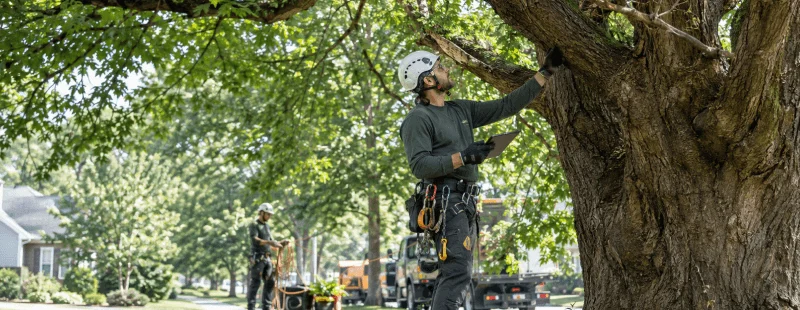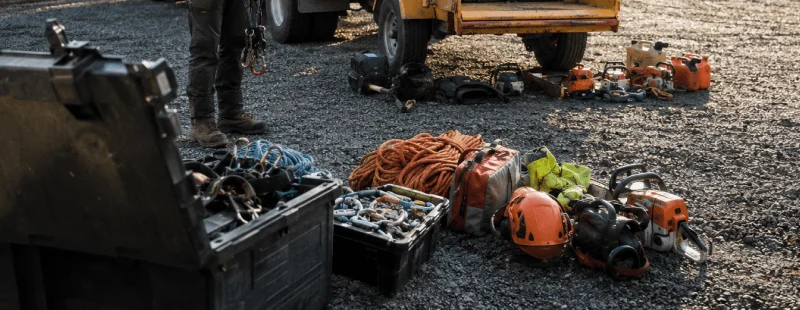


The “Blood Triangle” of tree care accidents consists of falls, electrocution, and struck-by incidents. To survive, specific non-negotiables must be followed: adhering to ANSI Z133 safety standards, maintaining the Minimum Approach Distance (MAD) from power lines, establishing a strict Drop Zone, and never starting a chainsaw without clear communication. Following these arborist safety rules reduces the fatality rate by over 60%.
The “Non-Negotiables”: PPE That Actually Work
In tree work, some gear is optional. Personal protective equipment is not. You don’t wear it just to satisfy regulations – you wear it to ensure you go home in one piece at the end of the day. Understanding why certain items are essential can save more than just time or money; it can save your life.
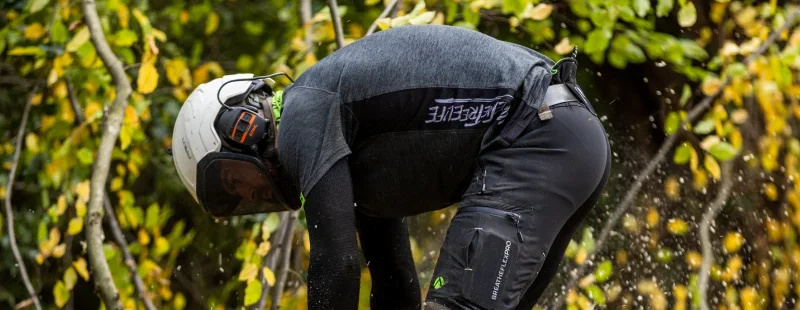
Helmets (ANSI Z89.1): More Than Just a Hard Hat
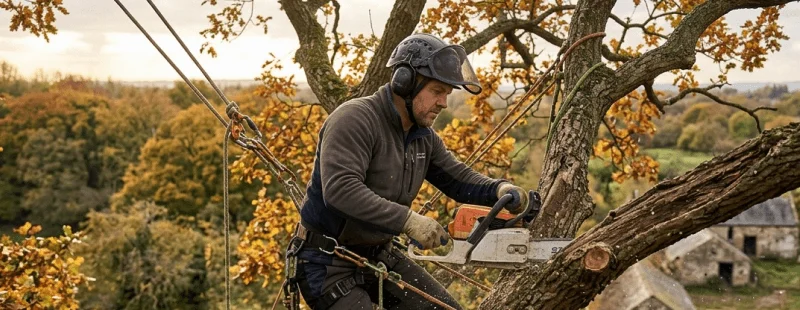
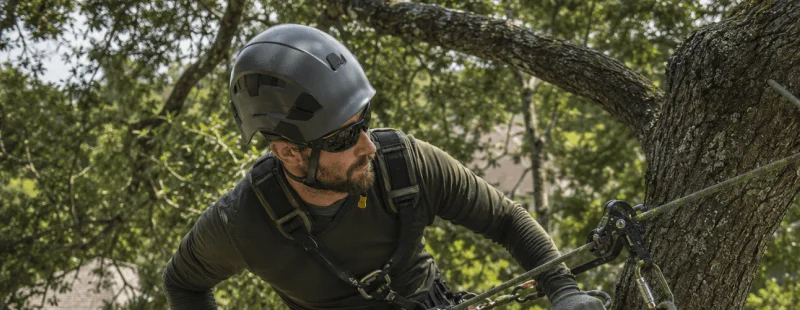
A helmet is your first line of defense, not only against falling branches and debris but also against electrical hazards that are easy to overlook. Under ANSI Z89.1, helmets are classified both by type and by electrical protection.
-
Class G (General) helmets protect against impact and provide limited electrical insulation up to 2,200 volts.
-
Class E (Electrical) helmets provide a much higher level of insulation, up to 20,000 volts, making them crucial when working near power lines or other electrical hazards.
It’s not enough to just wear a helmet; it must be maintained properly. Drilling holes, adding metal attachments, or failing to replace a damaged helmet can completely compromise its protection. The helmet only works if it’s intact, inspected regularly, and replaced when needed. In short, a helmet is not decoration – it’s survival.
Chainsaw Protection: Chaps Are Essential for Groundies Too
The next step of our tree care safety checklist – the chainsaw protection. Many crews assume chainsaw chaps are mainly for climbers. In reality, ground workers face just as much, if not more, risk. Whether you’re bucking logs, clearing brush, or refueling a saw, your legs are the most exposed body parts when a chainsaw slips, kicks back, or catches unexpectedly.
Chainsaw chaps are made with layers of protective fibers that are specifically designed to stop a moving chain on contact. They might feel heavy or uncomfortable in the heat, but they are proven to prevent serious injuries. Remember: most chainsaw injuries happen to the legs, not the arms or torso. If a saw is running, chaps must be worn, no exceptions.
Eye and Ear Protection: Guarding Against the Damage You Can’t Feel
Cuts hurt immediately. Hearing loss doesn’t. Chainsaws, chippers, and blowers regularly exceed safe noise levels, and exposure over time can cause permanent, irreversible damage. Tinnitus, reduced hearing clarity, and ringing in the ears are not just “old guy problems” – they are the result of years of unprotected work.
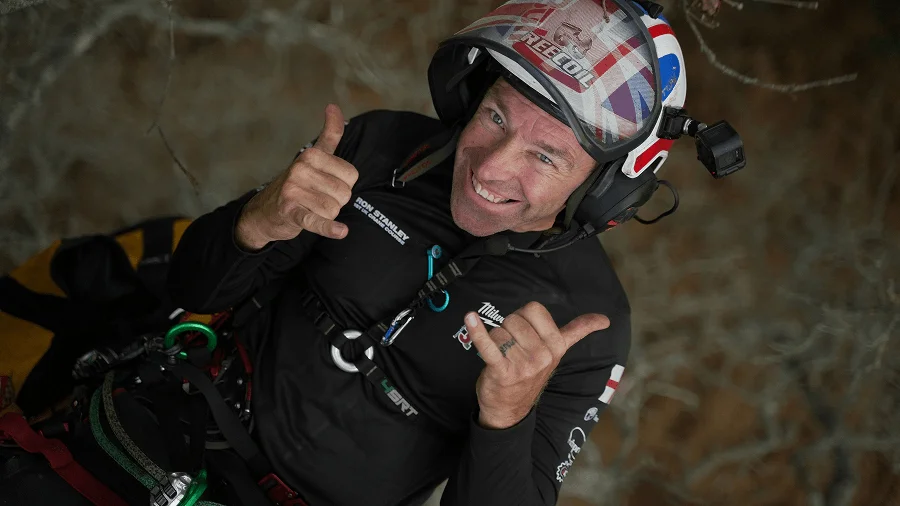
Proper ear protection – whether foam plugs, earmuffs, or helmet-integrated systems – reduces this risk, but only if worn consistently. Eye protection is just as important. Fast-moving wood chips and fine debris can strike from unexpected angles, and a face shield alone is rarely enough; safety glasses underneath provide a second line of defense. You only get one pair of eyes and ears, and protecting them is non-negotiable.
PPE Is Not a Suggestion
In strong, safety-conscious crews, arborist PPE requirements are treated as standard procedure, not a personal choice. Skill and experience reduce risk, but protective equipment absorbs the danger you can’t control. Helmets, chaps, eye protection, and ear protection – worn consistently and correctly – form the foundation of every safe workday.
Because at the end of the day, the best tree climber isn’t the one who takes the most risks. It’s the one who makes it home every day, in one piece, ready to do it all again tomorrow.
Rule #1: Respect the “Minimum Approach Distance” (MAD)
Electricity is invisible. It doesn’t warn you. And it is the number one silent killer in tree work. Respecting the Minimum Approach Distance, or MAD, isn’t optional – it’s the rule that keeps you alive.
For non-qualified line clearance arborists, ten feet is the absolute minimum distance from any energized power line. It’s not a suggestion. It’s the line between safe work and a fatal mistake. Electricity can arc, jump, and travel through air, especially in wet or humid conditions. That means even without direct contact, you can be electrocuted if you get too close. Ten feet is your safety buffer – never compromise it.
A branch may look harmless. Green, healthy, and strong. But if it touches a live wire, it can carry lethal voltage. That means even if you’re standing outside the MAD, you can still be in danger. Always assume the branch is energized until proven otherwise. Never trust your eyes. Electricity is faster than you, stronger than you, and it doesn’t negotiate.
Call Before You Cut: Know Before You Act
If you can’t identify the voltage or confirm it’s de-energized, you don’t cut the tree. Simple as that. Call the utility company, get a qualified professional on site, and get instructions. Planning, patience, and communication are as important as your chainsaw skills. A quick cut is never worth risking your life.
MAD is about respect – respect for the invisible force that can end a career, a season, or a life in an instant. Following the 10-foot rule, understanding indirect contact, and calling before cutting aren’t just rules on paper. They are survival strategies.
When you respect MAD, you don’t just protect yourself. You protect your crew, your family, and every tree you work around for years to come.
Rule #2: Establishing and Policing the Drop Zone
Struck-by hazards are one of the most common hazards in tree work, and they almost always involve the ground crew. Branches, limbs, or even entire sections of a tree can fall unpredictably if the drop zone isn’t properly established and controlled. Setting clear boundaries and maintaining communication saves lives.
Here’s some tree felling drop zone rules to keep you safe:
-
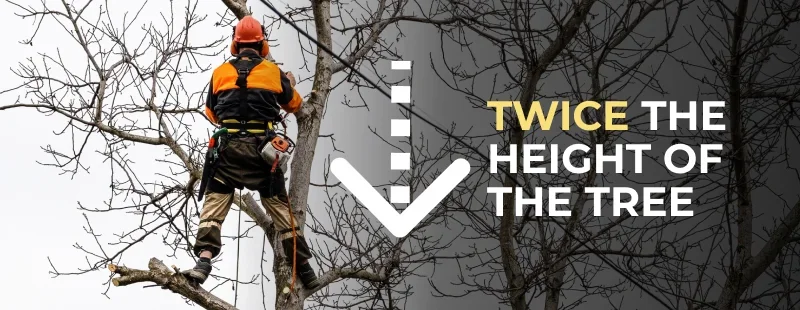
The cone of death. Define a landing area at least twice the height of the tree in every direction. Anything inside this “cone of death” is strictly off-limits while cuts are in progress. The size might feel excessive, but it accounts for swings, bounces, and branches that don’t fall straight down.
-
Command & response. Communication is key. Before any cut, the climber announces “Stand Clear”. The ground crew must reply “Clear” before the saw starts. No exceptions. This simple verbal check ensures everyone is alert and in a safe position.
-
Visual barriers. Use cones, tape, or temporary fencing to clearly mark the drop zone. Pedestrians and bystanders should never be allowed inside. If anyone enters, stop work immediately. A single lapse in attention can turn a routine cut into a serious accident.
-
Continuous vigilance. The drop zone isn’t a one-time setup. Watch constantly. Reassess the area as the tree comes down or the cut progresses. Branches can swing, bounce, or roll unexpectedly. Ground crew must stay aware and communicate hazards immediately.
Rule #3: The 360-Degree Hazard Inspection (Pre-Climb)
Before you climb, don’t rush. The tree doesn’t wait for mistakes, and neither does gravity. A thorough 360-degree inspection can prevent serious accidents by revealing hidden dangers that aren’t obvious from the ground. Structural integrity is everything – if the tree can’t support you, nothing else matters.
Here’s what to check before every climb:
-
Root collar assessment. Start at the base. Look for signs of decay, fungus, heaving roots, or water damage. A compromised root system can cause the tree to fail unexpectedly during cutting or climbing. Walk all the way around the trunk – sometimes the weak spot is on the far side.
-
The “widowmaker” check. Look up. Inspect for hung-up branches, dead limbs, or any debris that could fall once the tree is disturbed. These are the notorious “widowmakers”. Never assume the tree is safe just because the branches look stable from a distance. Set your rope away from any potential hazards.
-
Weather factors. Wind, rain, and ice can turn a routine climb into a dangerous gamble. Check wind speed limits for safe climbing in your area. Strong gusts can make rigging unpredictable and increase the risk of limb swings, rope failure, or loss of balance.
-
Full circle awareness. A proper 360-degree inspection isn’t just about spotting hazards. It’s about understanding how the tree behaves as a whole. Note lean, asymmetry, signs of stress, and anything unusual that could affect your plan. Plan your climb and cuts with these factors in mind.
Rule #4: Chainsaw Discipline (Ground & Air)
Chainsaws are powerful tools, but they are also relentless if handled carelessly. Discipline isn’t about rules for the sake of rules – it’s about survival, both on the ground and in the air. Every cut demands respect, focus, and proper technique.
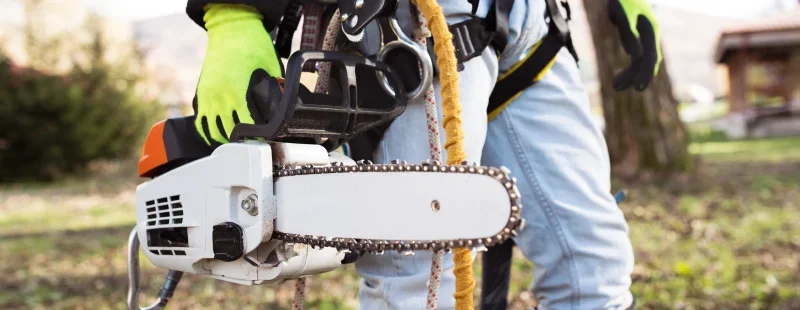
Two hands, always. Forget the myth that you can safely use a chainsaw with one hand. Even a momentary slip can send the saw bar spinning, and one hand isn’t enough to control it. Grip, stance, and body position matter. Your control comes from both hands working together, every cut, every time.
Kickback Prevention
Kickback is real. Never position your body behind the tip of the bar, where the chain can kick back toward you. Stand to the side, maintain balance, and anticipate the saw’s movement. Treat the kickback zone like a red line – crossing it is asking for trouble.
Drop starting is banned for a reason. Placing a saw on the ground and forcing it to start while applying pressure might seem convenient, but it removes control and increases the chance of injury instantly. Always start the saw in your hands, on a stable surface, with firm footing. Chainsaw safety for climbers starts before the first pull.
Chainsaw discipline isn’t about slowing down. It’s about making every cut predictable and controlled. Follow the rules, respect the tool, and the saw will do its job – without doing damage to you.
Rule #5: Communication – The Invisible Safety Line
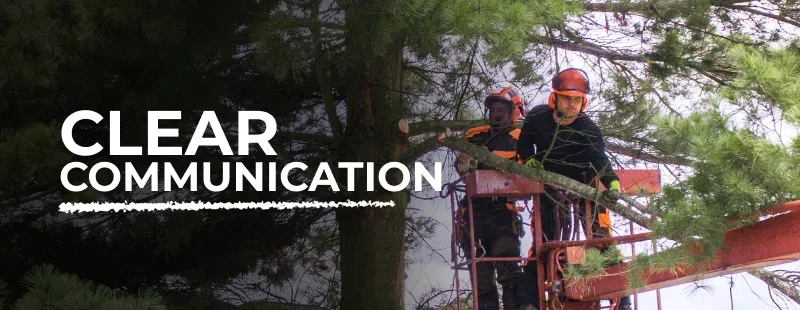
In tree work, your eyes can only see so far, and your ears can only hear so much. Miscommunication is a silent hazard that can turn a routine job into a serious accident. Staying in sync with your team is just as important as wearing PPE or following MAD. Clear, reliable communication acts like an invisible safety line, keeping everyone on the same page – from climber to ground crew.
Here’s how the pros keep communication effective on noisy job sites:
| Communication Method | Purpose | Key Points |
|---|---|---|
| Bluetooth (two-way communication headsets) / radios | Maintain constant verbal contact | Industry standard for ground & air. Allows climbers and ground crew to coordinate even over chainsaw, chipper, or blower noise. Hands-free operation keeps both hands ready for safety and work. |
| Standardized hand signals | Backup when noise is too loud | Everyone on site knows the signals. Signals like “stop”, “clear”, or “lower load” must be consistent and practiced. Ideal when working near chippers, traffic, or high winds. |
| Call & confirm | Prevent missteps | Always use a two-way confirmation. The climber calls an action (“Stand Clear”), and the ground crew replies (“Clear”). One-way communication is not enough – confirmation prevents accidents. |
Strong communication doesn’t happen by accident. It requires equipment, training, and discipline, and it ensures the entire team moves together safely, even when visibility is limited or the site is noisy.
Conclusion
Safety isn’t an “add-on” or something to consider after the saw starts or the climb begins – it is the job itself. Every helmet, every set of chaps, every drop zone marker, and every call-and-confirm moment exists to keep you and your crew alive. There are old arborists and bold arborists, but there are no old, bold arborists – taking shortcuts or ignoring the aerial rescue protocol only shortens your career and puts others at risk.
A disciplined approach to PPE, MAD, inspections, chainsaw handling, communication, and drop zone management turns experience into survival. Make safety your baseline, not your backup plan, and your workday will end as it should: with everyone going home in one piece. To make it easier to plan, communicate, and train your team, download a digital Job Hazard Analysis (JHA) form for your next crew meeting and put these rules into practice before the first cut is made.
See how ArboStar can run your tree care business
Quoting, scheduling, crews and invoicing in one place. Book a short demo and see it with your own jobs.