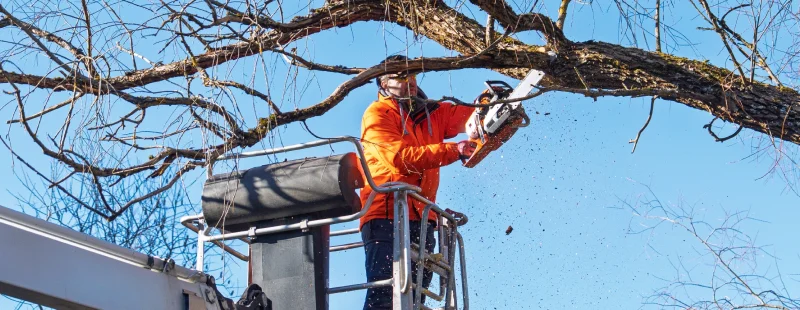
Quick summary: You can start as a paid employee of a licensed tree service, and that doesn’t require a contractor license of your own. Taking tree jobs worth $1,000 or more, or hiring anyone to help, requires a CSLB C-49 Tree and Palm Contractor license, which calls for four years of journey level experience, a trade exam and a $25,000 contractor bond. ISA Certified Arborist is a separate credential issued by ISA, not the state, and it takes three years of experience (or education plus experience) and a passing score of 76%.
Key entities: CSLB, C-49 Tree and Palm Contractor, ISA Certified Arborist, journey level experience, contractor bond, AB 2622.
Ask around about how to become an arborist in California and you’ll hear two very different answers. One crowd says you need a license. The other says you just need a saw and a truck. Both are half right, and the half they miss can cost you a job or a fine. The real answer depends on one question: are you working for a tree company, or are you the tree company?
This page covers the legal and licensing side, which is where California gets specific. For the bigger picture on the job itself, what arborists do all day and how the career unfolds, start with our general guide on how to become an arborist.
How to Become an Arborist in California: The Short Answer
There’s no state “arborist license” in California. What the state regulates is contracting. If you work on a crew for a licensed company, the company’s license covers the work and you need no license yourself. If you bid tree jobs on your own, the Contractors State License Board (CSLB) expects you to hold a C-49 Tree and Palm Contractor license once a job hits $1,000 in combined labor and materials, needs a permit, or involves anyone helping you.
ISA certification sits on a separate track. It’s a professional credential, not a legal permit. Lots of employers and cities want to see it, but the state doesn’t require it to work.
| Path | Who it fits | What you need | When the C-49 becomes necessary |
|---|---|---|---|
| Employee path | Groundworkers, climbers, crew leaders on a licensed company’s payroll | Skills, training, safety habits; ISA certification is optional but valued | Never, as long as you work under your employer’s license |
| Contractor path | Anyone bidding and running tree jobs for their own clients | C-49 license: 4 years journey level experience, exams, $25,000 bond | Jobs of $1,000 or more, any job needing a permit, or any job where you hire help |
Read it this way: the license follows the contract, not the climber. The moment you sign the contract, you need it.
Do You Need a License to Work as an Arborist in California?
That depends on whose name is on the contract. This is the question most people are really asking when they search for an arborist license in California, so let’s split it cleanly.
Working as an Employee
A groundworker, climber or crew leader on a licensed company’s payroll doesn’t need a CSLB license. The company holds the license, carries the bond and the insurance, and answers to CSLB for the work. You bring the skills. That’s why nearly everybody starts here, and why the employee route is the fastest legal way into the trade. Your employer may still require training, a clean driving record or ISA certification for certain roles, but those are hiring rules, not state law.
Taking Jobs Yourself: The C-49 Contractor License
Once you start quoting your own jobs, you’re a contractor in the state’s eyes. The California tree service contractor license is the C-49 Tree and Palm Contractor classification. CSLB defines it plainly: a C-49 contractor “plants, maintains, and removes trees and palms”, and the duties include pruning, stump grinding and tree, palm or limb guying.
The core California arborist requirements for that license, as CSLB lists them:
- Age: 18 or older.
- Experience: at least four full years at journey level, or as a foreman, supervisor or contractor in tree work, within the last ten years, verified by someone who knows your work.
- Exams: written law and trade exams, plus an open-book asbestos exam submitted before licensure.
- Background check: fingerprinting after CSLB accepts your application.
- Contractor bond: $25,000, or a $25,000 cashier’s check filed with CSLB.
- Fees: a $450 application fee, then an initial license fee of $200 for a sole owner or $350 for other business types.
You’ll also need proof of workers’ compensation and, depending on your business type and staff, liability insurance. California is tightening that rule: from January 1, 2028, nearly every licensed contractor will need a workers’ comp policy on file, employees or not.
What Is Exempt
The C-49 rule carves out a narrow exception. No license is required for incidental pruning or guying of planted trees by a nurseryperson, or incidental pruning by a gardener as described in Section 7026.1 of the Business and Professions Code. The key word is incidental. A landscape gardener who trims a few branches during regular maintenance is covered. A gardener who starts selling removals is not.
What Changed: C-49 and the $1,000 Threshold
If you read older guides, two numbers will be out of date.
First, the license itself. Tree contractors used to hold the C-61/D-49 Tree Service limited specialty. CSLB stopped accepting new D-49 applications after December 31, 2023, and began taking C-49 applications on January 1, 2024. Existing D-49 holders can keep renewing, and CSLB says the work covered is the same, though the new name now includes palms. Every C-49 applicant takes the trade exam, and anyone who held an active D-49 for at least four years gets an expedited experience review.
Second, the minor work exemption. Assembly Bill 2622 raised the ceiling for unlicensed work from $500 to $1,000, effective January 1, 2025. That sounds generous, but the fine print bites. The job can’t require a permit of any kind, you can’t hire anyone to help, and any ad for your services has to say you’re not licensed. In practice, a single mid-size removal blows through $1,000 fast, so the exemption is a stopgap, not a business model.
Getting Started: Entry Level Tree Work and Experience
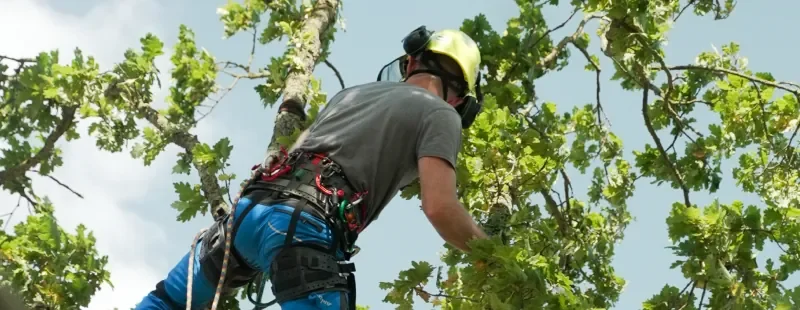
Every path starts on the ground. Most new hires begin as groundworkers: dragging brush, feeding the chipper, running ropes and learning how a crew actually moves. Good groundies watch the climber, ask questions and pick up rigging long before they ever tie in. From there the usual climb, literally, goes to climber trainee, climber and eventually crew leader or foreman.
Two things matter from day one. The first is safety. Tree work is one of the most dangerous jobs in the country, and the industry’s safety standard, ANSI Z133, is free for individuals to download from ISA. Learn it early and the habits stick.
The second is paperwork, and almost nobody thinks about it. Your future C-49 application needs four years of journey level experience that someone can verify. Keep a simple record from your first job: employers, dates, supervisors, the work you did. When the time comes to apply, you’ll thank yourself.
Keep Every Hour and Certification on Record
Keep employee records, hours and productivity in one place, so training and experience are easy to prove.
ISA Certified Arborist: Requirements, Cost, and Renewal
If you’re wondering how to become a certified arborist in California, the process is the same as anywhere else, because ISA runs it, not the state. The program is accredited by the ANSI National Accreditation Board under ISO 17024, and the exam is offered in English, Spanish, French and Traditional Chinese. Our explainer on what an ISA Certified Arborist is covers the credential in depth; here are the numbers from ISA’s Certified Arborist Program Guide, revised August 2025.
| Eligibility route | Education required | Full-time experience required |
|---|---|---|
| Experience only | None | 3 years |
| Associate degree (two-year) | At least 2 arboriculture-related courses | 2 years |
| Bachelor degree (four-year) | At least 4 arboriculture-related courses | 1 year |
| Assessment-based certificate or diploma | 900 assessed hours, at least 90 in arboriculture | 2 years |
| Assessment-based certificate or diploma | 1,800 assessed hours, at least 180 in arboriculture | 1 year |
ISA counts one year of full-time experience as about 1,795 hours. Pruning, climbing, diagnosis and treatment, cabling and bracing, and planting all qualify, and so can documented, supervised volunteer work.
The exam has 200 multiple-choice questions over 3.5 hours, and you need 76% to pass. Safe work practices (15%) and pruning (14%) carry the most weight. Fees run $40 to apply plus $295 to enroll for ISA members, or $50 plus $369 for everyone else, and a retake costs $120. Certification lasts three years. To renew, you either retake the exam or earn at least 30 continuing education units and pay a $220 fee.
Remember what this credential is and isn’t. It proves knowledge. It doesn’t let you contract. Our guide to arborist license vs. certification explains the difference across states.
Education and Training Paths
You don’t need a degree to become an arborist, but school can shave years off the ISA experience requirement. ISA recognizes four kinds of programs: two-year associate degrees, four-year bachelor degrees, assessment-based certificate or diploma programs, and Registered Apprenticeship Programs or similar approved programs. One catch: you can’t stack two degree programs to meet a longer program’s requirement, though certificate hours can be combined.
Before you enroll anywhere, ask the school two questions. How many of its courses relate directly to arboriculture? And does ISA accept the program toward eligibility? A forestry or horticulture degree with only one tree course won’t get you the reduced experience requirement.
From First Job to Licensed Contractor: The Path
Here’s the order most people follow, from the first day on a crew to a license with their own name on it.
- Get hired by a licensed tree service. Start as a groundworker and learn the crew’s systems.
- Train up. Learn ANSI Z133, climbing, rigging and chipper safety, and move into a climber role.
- Log your hours. Record employers, dates, supervisors and duties from the start.
- Earn ISA certification. After three years of full-time experience, or sooner with qualifying education, sit the exam.
- Step up to journey level or foreman work. Four years at that level within the last ten years is what CSLB wants.
- Apply for the C-49. File the application, pass the law and trade exams, complete fingerprinting and the asbestos exam.
- Get bonded and insured. Post the $25,000 contractor bond, file workers’ comp and liability coverage, and pay the license fee.
Realistically, that’s four years at the very least, and often more, since CSLB counts journey level time rather than your first months on the ground.
Ready to Bid Your First Tree Job?
Build a free, printable estimate for removal, trimming, pruning or stump grinding. It makes a PDF and needs no signup.
What Arborists Earn in California
California pays tree workers well by national standards, and pay climbs as you move from ground to climber to certified crew leader. ISA certification and a clean safety record are two of the most common levers for a raise. Wages also swing a lot between regions, from the Bay Area to the Central Valley. For current figures by role and state, see our arborist salary guide.
Running Your Own Tree Service in California
A C-49 license makes you legal. It doesn’t make you profitable. Once you’re bidding your own work, you’re also pricing jobs, scheduling crews, buying equipment and carrying the bond and insurance every month. Our guide on how to start a tree service business walks through startup costs and the first hire, and the tree removal business plan covers the removal side in detail. When the jobs start piling up, tree care software like ArboStar keeps estimates, crew schedules and job costs in one place, so you can see which work actually pays.
See Which Tree Jobs Actually Pay
Custom dashboards and reports across customers, jobs, revenue and costs show where your margins really are.
Frequently Asked Questions
Do you need a license to work as an arborist in California?
Not to work for someone else. California has no state arborist license. You need a CSLB C-49 Tree and Palm Contractor license only when you contract tree work yourself, for jobs of $1,000 or more, jobs that need a permit, or jobs where you hire help.
Can an employee do tree work without a contractor license?
Yes. An employee of a licensed tree service works under the company’s license, so no personal CSLB license is needed. The company carries the license, the bond and the insurance.
Is ISA certification the same as a CSLB license?
No. ISA Certified Arborist is a professional credential from the International Society of Arboriculture. A CSLB license is a legal permit to contract. One shows what you know; the other lets you sign the contract.
How long does it take to become an ISA Certified Arborist?
At least three years of full-time experience if you have no qualifying education. A two-year degree or a 900-hour certificate cuts that to two years, and a four-year degree or an 1,800-hour certificate cuts it to one, plus the time to study for and pass the exam.
Can you do tree work without a license if the job is small?
Only under the minor work exemption: the total for labor and materials must be under $1,000, the job can’t need a permit, you can’t hire anyone, and any ad must state you’re unlicensed. Incidental pruning by a nurseryperson or gardener is also exempt.
Conclusion
The fastest answer to how to become an arborist in California is to pick your path first. If you want to climb and learn, get hired by a licensed tree service; you need no license of your own, and every year a crew counts toward what comes next. If you want to run the business, plan for the C-49: four years of journey level experience, the exams, the $25,000 bond and insurance before your first contract of $1,000 or more. ISA certification strengthens either path, but it never replaces the license. Whichever road you take, the ArboStar education hub has the next step covered, from certification to running a crew.