

Quick Summary: An arborist is a trained tree care professional who assesses tree health, prunes, removes, and plants trees, and manages storm and disease risk. ISA certification signals verified training and is the main credential to check before hiring. Hire an arborist for pruning near power lines, storm damage, removal decisions, or unexplained disease and decay.
Key entities: ISA Certified Arborist, TCIA, tree risk assessment, climbing arborist, urban forestry.
What Is an Arborist?
So, what is an arborist? An arborist is a trained tree care professional who specializes in the planting, care, maintenance, and, when necessary, removal of trees. The word comes from the Latin arbor, meaning tree, and the modern arborist definition covers anyone who studies tree biology, diagnoses problems, and applies hands-on techniques to keep trees healthy and structurally sound.
In practice, the arborist meaning goes further than someone who trims branches for a living. Arborists study plant science, pest management, and hazard evaluation. Some work independently, others as part of a tree service crew, and a few specialize as consulting arborists who write reports rather than climb trees themselves.
What Does an Arborist Actually Do?
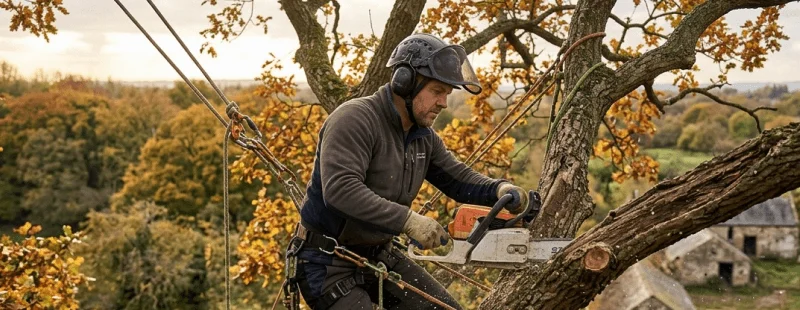
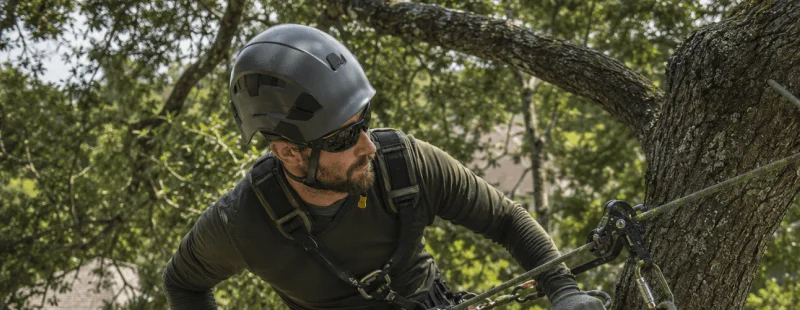
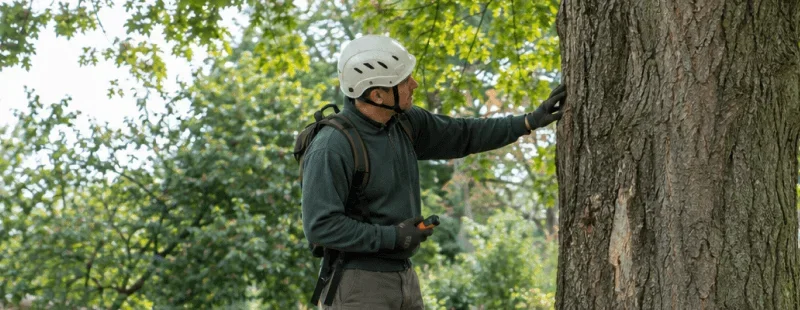
Ask a homeowner what does an arborist do, and the answer usually starts with cutting branches. That is only part of the job. A typical week can include diagnosing a fungal infection, writing a report for an insurance claim, working as a climbing arborist forty feet up a white oak or directing the ground crew from below, and recommending which species to plant along a new driveway. Day-to-day, most of the workload still centers on pruning and tree removal, but the decisions behind those tasks rely on training most people never see.
Tree Health Assessment and Diagnosis
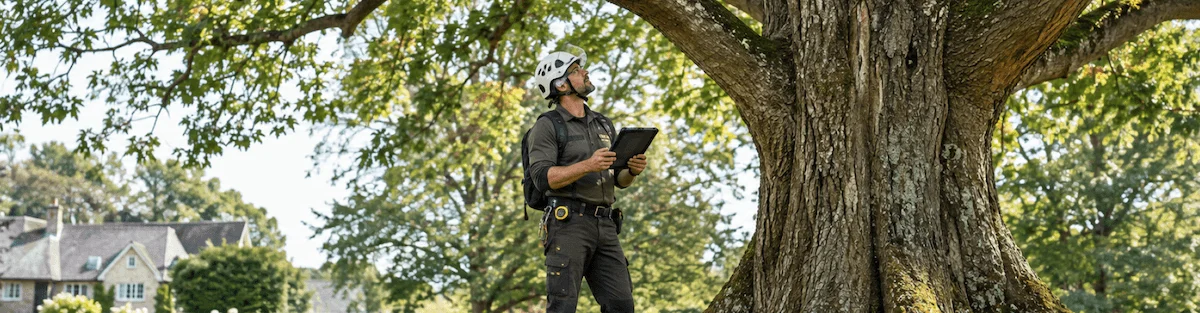
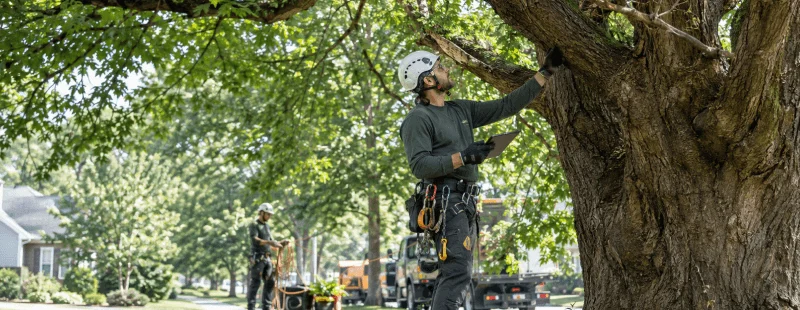
Before any cutting happens, an arborist studies the tree. A tree health assessment looks at leaf color, bark condition, root flare, and signs of pest damage or decay. When a tree shows structural weakness, the arborist may move into a full tree risk assessment, rating the likelihood of failure and the consequences if a branch, or the whole tree, comes down.
Pruning, Risk Management, and Preservation
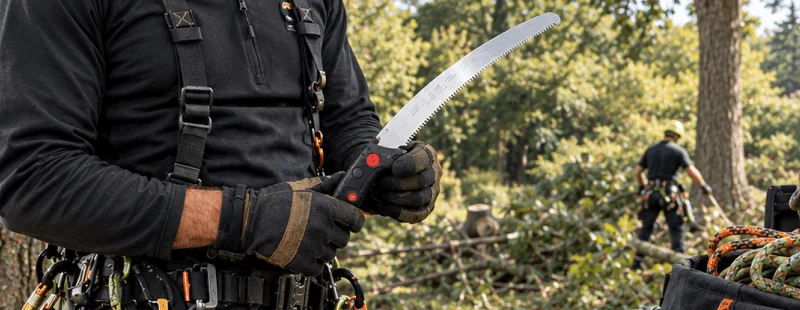
Pruning follows a clear decision process rather than guesswork. An arborist removes dead or crossing branches, improves airflow through the canopy, and takes weight off weak limbs before they fail on their own. Removal is treated as a last resort, used only when a tree cannot reasonably be saved or poses a direct threat to people or property.
Planting and Species Selection
Arborists also help property owners choose the right tree for a given spot, factoring in soil type, mature size, root spread, and how close the tree will eventually sit to a foundation, driveway, or power line. A tree planted in the wrong place often turns into an expensive problem a decade later, so this part of the job saves money long before any cutting is involved.
Arborist vs. Tree Surgeon vs. Tree Service: What’s the Difference?
The terms get used loosely, and that causes real confusion. In the UK and parts of Europe, tree surgeon is simply the everyday word for arborist, same training, same job, different regional habit. In North America, the term shows up less often, but people still search arborist vs tree surgeon expecting a meaningful distinction where there usually isn’t one.
Tree service is a broader term. A tree service company may employ certified arborists alongside crew members who have not earned formal credentials. Some arborists work as practicing arborists who climb and cut on site, while others work as consulting arborists, producing written assessments for legal, insurance, or municipal purposes without doing the physical labor themselves. Knowing which type you actually need matters more than the label on the truck.
ISA Certification: What It Means and Why It Matters
Anyone can call themselves an arborist. Most of the US has no license requirement for the title, which is exactly why the ISA Certified Arborist credential exists. The International Society of Arboriculture tests candidates on tree biology, diagnosis, pruning standards, and safety before granting certification, and certified arborists have to complete continuing education to keep it current.
The TCIA, or Tree Care Industry Association, is the trade group most reputable tree service companies belong to, and it accredits companies rather than individuals. Between the two, ISA certification and TCIA accreditation give homeowners a fast way to tell a trained professional apart from someone with a chainsaw and a website. When you search for a certified arborist near me, checking for both credentials narrows the list quickly.
When Should You Hire an Arborist?
Not every tree issue needs a specialist, but plenty do. Knowing when to hire an arborist saves money and, in some cases, prevents injury.
Routine Pruning and Tree Health
Mature trees benefit from a structural check every few years, especially species prone to weak branch unions like Bradford pear or silver maple. Routine pruning by a trained arborist protects the tree’s long-term shape and catches small problems before they turn into removals.
Storm Damage and Emergencies
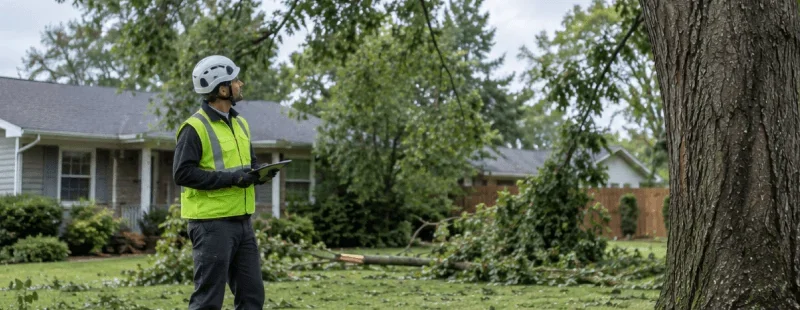
High winds and heavy snow load are the most common causes of sudden tree failure. After a storm, a professional handling emergency tree care can tell the difference between a tree that just needs cleanup and one that’s still standing as a genuine safety risk. Never approach a tree resting on power lines; that call belongs to the utility company first, not a homeowner with a ladder.
Tree Removal Decisions
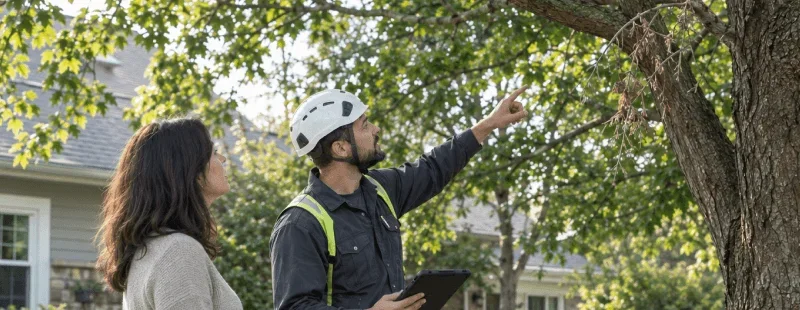
Removal is rarely a simple call. A leaning tree near a house, a trunk with visible cavities, or a species reaching the end of its natural lifespan all deserve a professional opinion before anyone brings out a chainsaw. An arborist can confirm whether a tree is actually dying or just going through a rough season.
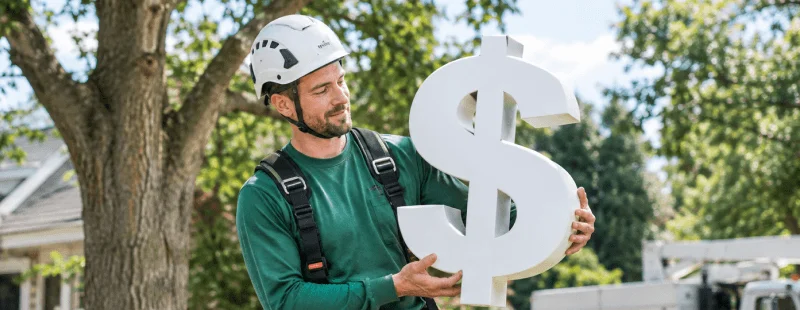
How Much Does Hiring an Arborist Cost?
Pricing varies by region, tree size, and the type of service requested. A basic consultation or visual inspection generally runs $75 to $250, while a detailed written arborist report, the kind used for insurance claims or permit applications, typically costs $150 to $700. Homeowners hiring for a specific job like pruning or removal should expect an average project cost somewhere between $300 and $1,800, with emergency storm response often landing at the higher end because of urgency and access difficulty.
Get quotes from at least two or three arborists before committing, and ask whether the estimate includes debris removal and stump grinding. Pricing data like this ages fast, so confirm current local rates before setting a budget.
How to Choose a Qualified Arborist
A few checks separate a solid hire from a costly mistake:
-
Confirm ISA certification and ask to see the certification number.
-
Ask for proof of liability insurance and workers’ compensation coverage.
-
Request references from recent, comparable jobs.
-
Get a written estimate, not just a verbal quote.
-
Be cautious of anyone who demands full payment upfront or pressures a same-day decision right after a storm.
Most arborists build this expertise gradually, through a mix of formal education, hands-on apprenticeship, and ISA exams. If you’re curious about that path, ArboStar’s guide on how someone becomes an arborist walks through the training and certification timeline in more detail.
FAQ
What’s the difference between an arborist and a tree surgeon?
None, functionally. Tree surgeon is the common term used in the UK and parts of Europe for the same profession North America calls an arborist. Both refer to a trained tree care specialist.
Do I need a certified arborist for every tree job?
No. Basic hedge trimming or small branch cleanup can be handled by a general landscaper or tree service crew. Diagnosis, risk assessment, large removals, and work near power lines warrant a certified arborist.
How much does an arborist typically charge?
Most homeowner jobs fall between $300 and $1,800, with consultations alone running $75 to $250. Exact pricing depends on tree size, location, and service type, so always get a local quote.
Can an arborist tell me if a tree is dying or dangerous?
Yes. That is one of the core skills of the profession. An arborist inspects the trunk, canopy, and root flare, and can usually tell within one visit whether a tree needs treatment, monitoring, or removal.
Is arborist work the same as landscaping?
No. Landscaping covers lawns, gardens, and general outdoor design. Arborists specialize specifically in tree health, structure, and safety, and often work alongside landscapers rather than replacing them.
Conclusion
So, what is an arborist, in one sentence? A trained tree care professional who keeps trees healthy, safe, and properly placed on your property, backed by science rather than guesswork. Whether you need routine pruning, a second opinion on a leaning oak, or fast help after a storm, hiring one is usually cheaper than the alternative: property damage, a removal that got more complicated than it needed to be, or an injury a trained eye would have caught early.
Want to keep learning about tree care from people who work in the industry every day? Browse ArboStar’s Education Hub for more practical guides written for homeowners and tree care professionals alike.
See how ArboStar can run your tree care business
Quoting, scheduling, crews and invoicing in one place. Book a short demo and see it with your own jobs.