

Quick summary: Arborist, tree trimmer, and tree surgeon get used interchangeably, but they are not the same job. An arborist is trained in tree biology and diagnosis and can hold ISA certification, a tree surgeon focuses on the hands on work of pruning and removal, and a tree trimmer handles routine cutting and maintenance, often with the least formal training of the three. In the UK, tree surgeon is the default term for the trade, while arborist and tree trimmer are the more common terms in the US.
Search "arborist" on a UK tree care company's site and the word barely shows up. Search "tree surgeon" on most US company sites and the same thing happens in reverse. That is not an accident, and it is the first clue that arborist vs tree trimmer vs tree surgeon is not really three synonyms for the same job, it is two overlapping vocabularies describing at least two genuinely different levels of training. This guide sorts out what each term actually means, how training and certification separate them in practice, and which one you actually need to call for the job in front of you.
Arborist vs Tree Trimmer vs Tree Surgeon: The Quick Answer
An arborist studies tree biology, diagnoses problems, and can hold an ISA credential that verifies that knowledge. A tree surgeon is the hands on practitioner who does the cutting, pruning, and removal work, and in the UK it is simply the everyday word for the trade. A tree trimmer handles routine, lower risk maintenance work, like shaping hedges or clearing branches away from a roofline, and typically carries the least formal training of the three. The titles overlap in practice, plenty of tree surgeons and trimmers are also trained arborists, but the words themselves describe different levels of training, not three names for the same job.
What Is an Arborist?
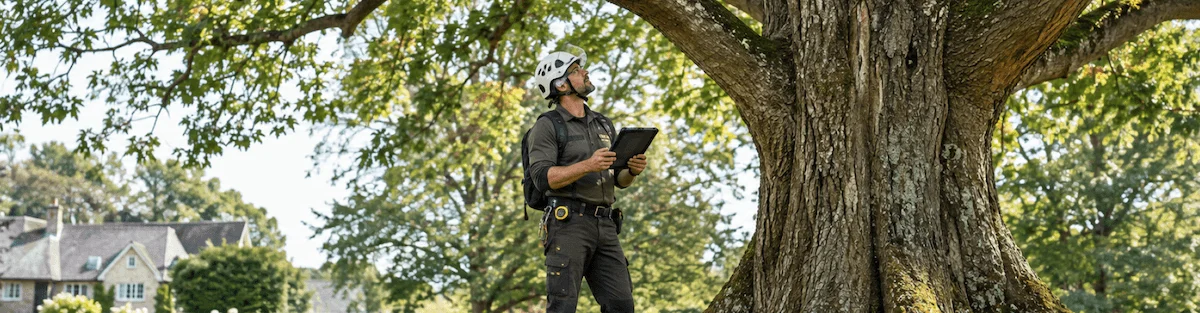
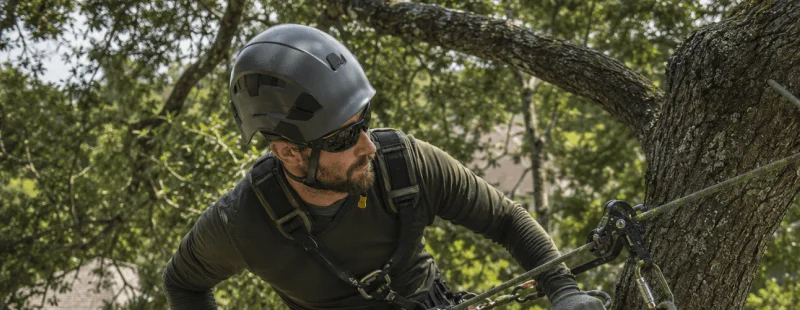
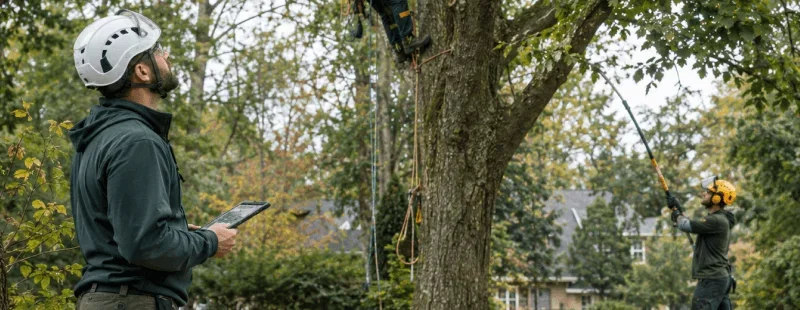
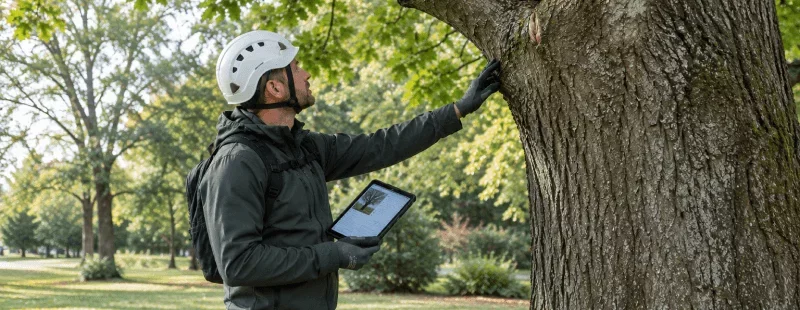
An arborist is trained in the science side of tree care: biology, disease diagnosis, soil health, structural risk, and the standards that govern correct pruning cuts. The distinguishing feature is not that an arborist necessarily climbs or cuts, some do and some work purely as consultants, but that the role centers on understanding why a tree is behaving the way it is before any work happens.
The ISA Certified Arborist credential is the most widely recognized way to verify this training in North America: it requires a minimum of three years of hands on experience or a relevant degree, plus a passing score on a 200 question exam covering tree biology, diagnosis, pruning standards, and safety. Not every arborist holds this credential, the job title itself is not legally protected in most of the US, which is exactly why the certification exists and why it is worth checking for.
What Is a Tree Surgeon?
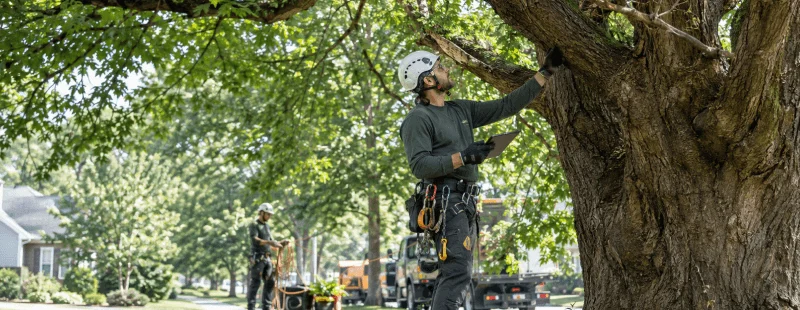
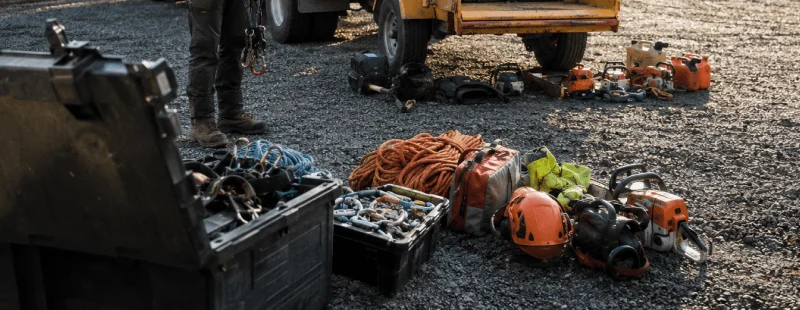
Tree surgeon describes the practitioner doing the physical work: climbing, cutting, pruning, and removing trees on site. In the United Kingdom, it is simply the standard term for the profession, used the way "tree service" or "tree care company" gets used in the US, and it carries no separate credential of its own the way ISA certification does.
A tree surgeon can absolutely also be a trained arborist, and among established UK operations, many are, but the term itself describes what the person does with their hands rather than a verified level of biological or diagnostic knowledge. Because "tree surgeon" has no protected legal meaning any more than "arborist" does in most US states, the same advice applies on both sides of the Atlantic: the job title alone does not confirm training, the credential does.
What Is a Tree Trimmer?
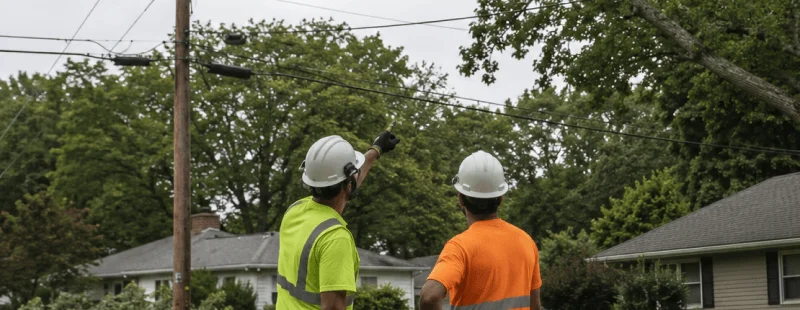
A tree trimmer handles routine, lower risk cutting and maintenance work: shaping growth, clearing branches away from a roofline or power line, and general upkeep that does not require diagnosing a structural or health problem first. It is the most common term in the US for entry level or general labor on a tree crew, and it typically carries the least formal training of the three roles discussed here, sometimes none beyond on the job instruction.
That does not make the work unimportant, a lot of routine tree maintenance genuinely is routine, but it does mean a tree trimmer is usually not the person to call when a tree is showing signs of disease, structural failure, or a problem that needs a diagnosis rather than a cut.
Why the Terms Get Confused, and a UK vs US Note
A lot of the confusion is regional rather than technical. In the UK, tree surgeon is the default word for the entire trade, arborist shows up mostly in academic or ISA certification contexts, and tree trimmer barely appears at all, which is itself a useful tell if you are reading a UK based source and trying to map its terms onto US expectations. In the US, arborist and tree trimmer are the more common working terms, and tree surgeon shows up occasionally but reads as slightly old fashioned or imported.
None of these words are legally standardized in either country the way, say, a medical license is, so companies and individuals use whichever term fits their marketing or their regional convention. The practical takeaway is not to treat any of the three titles as proof of anything on their own. Ask what credential the person actually holds instead.
Training and Certification: What Actually Separates Them
What actually distinguishes these roles is not the job title but the verified training behind it. The ISA Certified Arborist credential is the clearest marker: it requires documented field experience or a relevant degree, a written exam covering tree biology and safe work practices, and ongoing continuing education to keep the certification current. Crucially, this credential is independently checkable. The ISA publishes a public directory of its certification types, and anyone can verify whether a specific person holds an active, current credential rather than taking a business card at face value.
This is also where license and certification get mixed up. A license is a government issued legal permission to operate, and a certification is a professional body's proof of tested knowledge, and they are not the same thing and do not always come from the same source. ArboStar's breakdown of the difference between an arborist license and a certification covers exactly where that distinction matters when hiring.
Who Do You Actually Need for Your Tree Work?
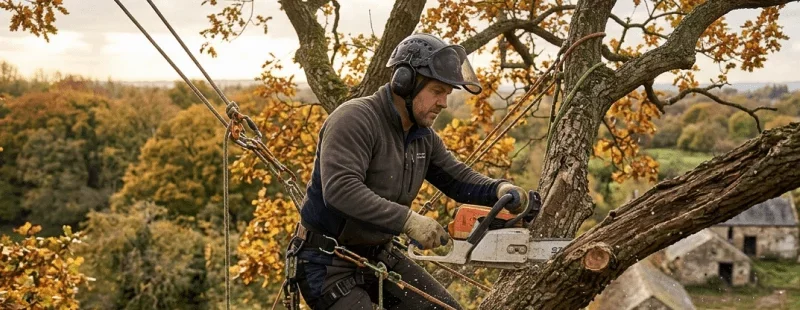
Match the person to the problem rather than the job title on the truck. Routine trimming, hedge shaping, or clearing a branch away from a gutter is squarely tree trimmer territory, and there is no need to pay for a full diagnostic visit for that kind of work. A tree that is being removed, has visible storm damage, or needs a significant structural prune is tree surgeon work, hands on cutting at a level of complexity that benefits from real climbing and rigging skill.
A tree that looks unhealthy without an obvious cause, is near a foundation or power line and needs a risk judgment call, or is part of a permit application or insurance claim needs an arborist, ideally an ISA certified one, because that is a diagnosis and documentation problem before it is a cutting problem. When in doubt about which category a job falls into, it rarely hurts to start with the arborist, since a qualified one can tell you honestly whether the work actually needs their level of training or can be handled by trimming.
Do You Ever Need All Three?
On a larger or more complicated job, yes, and it is worth thinking of this as a team rather than a hierarchy where one title outranks the others. A consulting arborist might assess a tree and write the report that documents why removal is necessary and satisfies a permit office, a tree surgeon or climbing crew does the actual cutting and rigging, and tree trimmers handle the surrounding routine maintenance and cleanup that rounds out the job. None of these roles is simply a lesser version of the others, they are different skill sets that a well run crew, or a well run tree care company built from someone who became an arborist through years of field experience, brings together for a job that a single person could not safely or efficiently handle alone.
Frequently Asked Questions
Is a tree surgeon the same as an arborist?
Not necessarily. Tree surgeon describes the hands on practitioner doing the cutting, while arborist describes someone trained in tree biology and diagnosis, often with ISA certification. A person can be both, but the titles describe different things.
What does a tree trimmer do that an arborist doesn't?
A tree trimmer handles routine cutting and maintenance without needing to diagnose a health or structural problem first. An arborist's role centers on that diagnosis, understanding why a tree needs work before deciding what work to do, which is a different skill than trimming itself. For a closer look at how practicing and consulting roles split within arboriculture specifically, see ArboStar's guide to distinguishing types of arborists.
Do tree trimmers need certification?
Not typically. Tree trimming is usually treated as entry level or general labor work, and while some trimmers pursue ISA certification over time, it is not a standard requirement the way it functionally is for consulting or diagnostic work.
Can a tree surgeon also be ISA certified?
Yes, and many are. Tree surgeon describes the type of work being done, while ISA certification verifies the underlying knowledge, so the two are not mutually exclusive at all.
Is "tree surgeon" a UK term, or is it used in the US too?
It is the default term for the trade in the UK. It does show up occasionally in the US, but arborist and tree trimmer are the more commonly used working terms there.
Conclusion
Arborist vs tree trimmer vs tree surgeon is not a question of three interchangeable synonyms, it describes three different levels of training that happen to overlap in practice. An arborist brings the diagnostic and biological knowledge, often backed by ISA certification. A tree surgeon brings hands on climbing, cutting, and removal skill, and is simply the standard word for the trade in the UK. A tree trimmer handles the routine maintenance that keeps a property looking cared for without needing a full diagnosis first.
None of the three titles is legally protected on its own, so the credential behind the name matters more than which word happens to be on the truck. When you are ready to hire, ArboStar's education hub covers how to verify that credential and what to expect from each type of visit.
See how ArboStar can run your tree care business
Quoting, scheduling, crews and invoicing in one place. Book a short demo and see it with your own jobs.