

In the tree care industry, scaling often triggers the “Horizontal Growth Trap”, where adding more crews increases operational complexity and overhead faster than it adds net income. Profit margin erosion typically stems from five areas: untracked windshield time, administrative bloat, high labor burden (taxes & insurance), equipment depreciation, and manual process inefficiencies. True tree care profit margins scaling requires shifting focus from gross revenue to operational density and EBITDA (Earnings Before Interest, Taxes, Depreciation, and Amortization).
The “Growth Trap”: When More Revenue Means More Problems
As your tree care business grows, you naturally expect your profits to grow too. But many arborists discover a painful truth: more revenue does not always mean more money in your pocket. This common challenge is known as the Growth Trap.
From Owner-Operator to Business Manager
When you operate mostly by yourself, overhead stays low and simple. You work in the field, drive your own truck, handle jobs personally, and keep paperwork minimal. This structure often delivers strong tree care profit margins – sometimes 25–35% – because most of the money you earn stays with you.
However, once you add a second crew, and especially when you reach three or more crews, the picture changes completely. You suddenly need foremen, extra trucks, more equipment, office support, and better systems to track everything. These new layers create tree service overhead costs that often grow faster than your revenue. At this point, you spend less time climbing trees and more time managing people, schedules, and numbers.
Why $1 Million at 30% Beats $2 Million at 10%
Here is a simple example that shows why revenue and profit are very different:
-
A $1 million business with a healthy 30% margin gives you $300,000 in actual profit.
-
A $2 million business with a thin 10% margin leaves you with only $200,000 in profit.
Even though the larger business brings in twice the revenue, the owner actually earns less money. This reality explains the real danger of the growth trap for arborists.
The Hidden Problems of Scaling Up
As your company expands beyond three crews, you begin to experience dis-economies of scale – problems that simply do not appear when the business is smaller. Communication between crews becomes harder. Equipment gets misplaced or sits idle while one team waits for another. Jobs get scheduled poorly, which creates long stretches of windshield time (hours spent driving instead of working).
At the same time, administrative tasks multiply quickly. You may need extra help just to handle payroll, customer calls, invoicing, and insurance. This creates administrative bloat that quietly eats away at your margins without you noticing right away.
Your field service labor burden also rises sharply. Costs such as workers’ compensation insurance, payroll taxes, unemployment fees, and benefits add up much faster than most owners expect. Equipment wears out quicker and creates higher equipment depreciation costs. If you do not track these expenses carefully, they turn into unallocated overhead that hides in your books and silently reduces profitability.
The Mindset Shift You Need
Many arborists feel frustrated at this stage. They work harder, manage more people, and generate higher gross revenue – yet their bank account does not grow as expected. The old way of running the business stops working.
The good news is that you can break free from this trap. Real growth in the tree care industry requires a clear shift in focus. Instead of simply chasing more revenue, successful owners start paying close attention to operational efficiency metrics, such as billable hours vs. payroll hours. They track their EBITDA for tree services regularly and actively work on increasing tree service profitability by controlling overhead and improving systems.
Moving from an owner-operator mindset to a true business owner mindset takes effort and new skills. But owners who make this transition protect their margins and build a stronger, more sustainable tree care company for the long term.
Automate scheduling and invoicing to protect profit margins


Profit Killer #1: The Invisible “Labor Burden”
Many tree service owners believe they know exactly how much an employee costs. They look at the hourly wage and think that is the full price. Unfortunately, this is one of the biggest mistakes that quietly destroys tree care profit margins.
In reality, every technician on your crew costs significantly more than the number you see on their paycheck. This hidden extra amount is called the labor burden, and it is one of the fastest ways tree service overhead costs grow out of control as your business scales.
Here is what a typical $25-per-hour arborist actually costs your business:
-
Base wage – $25.00 per hour
-
Payroll taxes (Social Security, Medicare, unemployment, etc.) – adds roughly $3–4 per hour
-
Workers’ Compensation insurance – often $4–7 per hour or more in tree care because the work is high-risk
-
Benefits (health insurance, paid time off, retirement contributions, etc.) – can add another $2–4 per hour
-
Other costs (uniforms, training, safety equipment, background checks) – another $1–2 per hour
Total burdened cost: $35 to $40 per hour – and sometimes even higher.
The most dangerous error happens when owners bid jobs using only the base wage. They calculate a job based on $25 per hour, but in truth, they are paying closer to $38–40 per hour. This small miscalculation means you underprice every single job without even realizing it. Over time, these underpriced jobs stack up and steadily erode your margins.
This is exactly why field service labor burden becomes such a serious growth trap for arborists. When you have only one or two crew members, the extra costs feel manageable. But once you scale to four, five, or more technicians, the invisible labor burden multiplies quickly and can turn a seemingly profitable job into a losing one.
Smart arborists who want to improve tree service profitability stop bidding on raw wages. They train themselves to think and bid using the full burdened hourly rate. This single change helps protect your margins and gives you a much clearer picture of your real costs.

Profit Killer #2: Windshield Time & Travel Decay
As your tree care business grows and you add more crews, one hidden problem often appears: crews spend too much time driving and too little time working. This “windshield time” quietly steals profit from every job. Many owners do not notice it until margins have already dropped.
The issue becomes especially painful when jobs are scattered all over the city instead of being grouped in the same areas. Without good route density, your teams waste hours in traffic every day. You still pay them full wages, but they produce far fewer billable hours. This is one of the fastest ways tree service overhead costs increase and tree care profit margins shrink.
Here is a clear example of how much money windshield time can cost you:
| Description | Time lost | Weekly cost (at $38 burdened rate) |
|---|---|---|
| Daily windshield time per crew | 2 hours | - |
| Crew size | 3 technicians | - |
| Total lost hours per day | 6 hours | $228 |
| Total lost hours per week (5 days) | 30 hours | $1,140 |
As you can see, just two hours of daily travel per crew can cost you more than $1,140 every week – money that comes straight out of your profit.
When you scale without focusing on geographic efficiency, every new contract becomes less profitable. Jobs on opposite sides of the city force crews to drive long distances between sites. This creates travel decay – the steady loss of productive time that grows worse as you add more crews. What used to be a healthy 30% margin job can quickly drop to 15% or lower simply because of extra driving.
The solution starts with better planning. Successful arborists who want to improve tree service profitability begin clustering jobs by neighborhood or zip code. They track billable hours versus payroll hours carefully and make route density a key part of their scheduling. By reducing windshield time, you put more money back into your pocket without raising prices or adding new customers.
Profit Killer #3: Equipment – The Silent Depreciation Bank
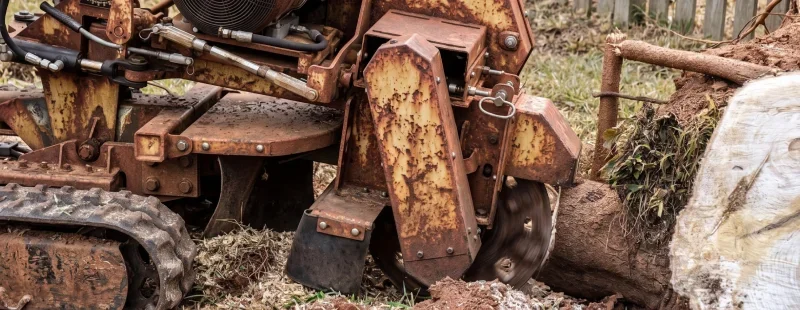
Many tree service owners see equipment as a necessary tool for growth. They buy new chippers, bucket trucks, or stump grinders to handle more jobs and look more professional. However, equipment quietly becomes one of the biggest hidden drains on profit if you do not manage it correctly. It acts like a silent bank that slowly takes money out of your business every single day.
Why Equipment Depreciation Eats Your Margins
Every piece of heavy equipment has a limited lifespan. A chipper might last 4,000–6,000 productive hours. A bucket truck may run reliably for only 7–10 years before major repairs begin. If you do not build the cost of replacing that equipment into every bid, you are not truly covering your real expenses.
Most owners make this mistake: they calculate job costs using only fuel, maintenance, and the operator’s wage. They forget to add equipment depreciation – the gradual loss of value as the machine ages and wears out. When the day comes to buy a new chipper or truck, they suddenly discover they do not have enough cash saved. As a result, they either borrow money (paying interest) or operate with old, unreliable equipment that breaks down and costs even more.
This problem gets much worse when you try to scale too quickly.
The Trap of Buying Equipment Too Early
It feels exciting to buy new, shiny equipment when your business starts growing. You think, “If I get a bigger truck and a better chipper, I can take on more jobs and grow faster”.
Unfortunately, many arborists fall into this trap. They purchase expensive machines before they have enough steady work to keep them busy. The dangerous rule of thumb is this: equipment should be utilized at least 80% of the available time to stay profitable. If your new bucket truck sits idle for days each week, you still pay for insurance, registration, storage, and depreciation – but you earn almost nothing from it.
This creates unallocated overhead that quietly destroys your tree care profit margins. Instead of helping you scale, the new equipment becomes a heavy financial burden that lowers your EBITDA for tree services and pushes you deeper into the growth trap for arborists.
Smart owners treat equipment as a long-term investment, not a quick fix. They calculate the true hourly cost of each machine (including depreciation) and only buy new gear when current equipment is consistently running near full capacity and when job volume clearly justifies the expense.
Profit Killer #4: The Admin & Manual Process Bloat
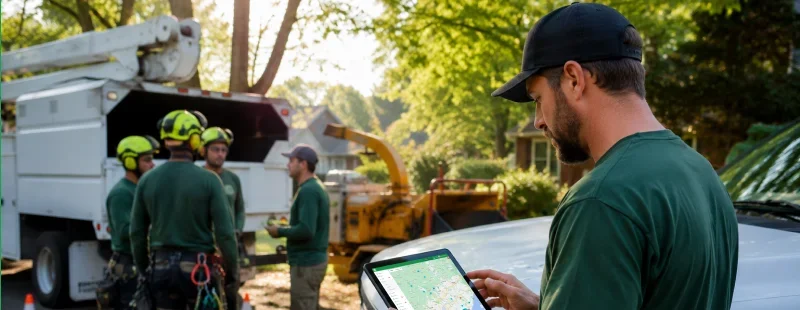
As your tree care company grows from a few crews to several, the amount of paperwork and office work explodes. Many owners try to solve this by simply hiring more people in the office. Unfortunately, this approach creates administrative bloat – extra overhead that grows almost as fast as your revenue, but without adding real value. Instead of making the business more profitable, it quietly eats away at your tree care profit margins.
Here are the most common ways manual processes hurt your bottom line:
-
You hire an additional office manager or admin just to handle the growing “paperwork chaos” – scheduling, invoicing, customer calls, and crew coordination – instead of first implementing simple systems or software that could automate much of this work.
-
Manual dispatching forces someone to spend hours every day assigning jobs, moving crews around, and fixing schedule conflicts by phone or email.
-
Billing follow-ups are done one by one – chasing late payments, sending reminders, and correcting mistakes – which takes more and more time as you add more customers.
-
Every new crew or new job creates a linear increase in administrative work, so your overhead costs rise almost exactly in line with revenue, leaving little or no extra profit.
-
Important data gets lost in spreadsheets or paper notes, leading to errors, duplicated work, and missed opportunities to spot problems early.
When you rely on manual processes, tree care profit margins scaling stops being an advantage. You end up working harder just to stay organized, and your tree service overhead costs grow faster than your income. This is a classic sign of the growth trap for arborists – more revenue on paper, but thinner margins in reality.
The owners who successfully improve increasing tree service profitability take a different path. They look for ways to reduce administrative bloat through better tools and streamlined processes long before they hire more office staff. By keeping overhead lean, they make sure that growth actually puts more money in their pocket instead of just creating more work.
How to Reclaim Your Margins: The Operational Shift
You now understand the main profit killers that quietly destroy margins as your tree care business grows. The good news is that you can fix them. The secret lies in making a clear operational shift – moving from “working harder and adding more crews” to “working smarter and protecting every dollar of profit”.
This shift turns the growth trap for arborists into real, sustainable increasing tree service profitability. Instead of chasing revenue at any cost, you focus on operational density, efficiency, and tight control of costs.
Automate the Office First
The fastest way to reduce administrative bloat and tree service overhead costs is to stop relying on manual processes. Invest in good CRM or field service management (FSM) software early. Modern tools can automatically handle invoicing, send reminders for late payments, optimize crew routes, and track job status in real time. When dispatching and billing no longer eat up hours of someone’s day, you eliminate the need to hire extra office staff too soon. This single change often frees up 10–20 hours per week and immediately improves your EBITDA for tree services.
Choose Density Over Distance
One of the smartest moves you can make is learning to say “no” to jobs that are too far away. Focus on building route density in specific neighborhoods or zip codes instead of scattering crews across the entire city. Even if it means turning down some work at the beginning, keeping travel time low protects your billable hours versus payroll hours. Less windshield time means more actual tree work and higher profit on every contract. Over time, strong local density becomes one of your biggest competitive advantages.
Know Your Unit Economics Cold
Tree care profit margins scaling only happens when you understand exactly how much profit each crew generates every month. Stop looking only at total revenue. Start tracking operational efficiency metrics at the crew level: revenue per crew, burdened labor cost per crew, equipment cost per crew, and net profit per crew. When you see these numbers clearly every single month, you can quickly spot which crews or services are truly profitable and which ones are dragging your margins down. This knowledge gives you the power to make confident decisions about pricing, hiring, and equipment purchases.
Making these three operational shifts – automating the office, focusing on density, and mastering unit economics – helps you move from an owner-operator mindset to a real business owner mindset. You stop feeling overwhelmed by growth and start seeing your tree care profit margins stabilize and then expand again.
The result is a healthier, more predictable tree service business that rewards you for the risks you take – instead of punishing you for simply trying to grow.
Conclusion: Focus on Sanity, Not Vanity
You have now seen the real picture behind growing a tree care business. Revenue can look impressive on paper, but it is often a vanity metric – a number that feels good but does not always put more money in your pocket.
What truly matters is profit. Profit is what allows you to pay yourself fairly, invest in better equipment, keep your team safe with proper training and insurance, and eventually build the kind of business that supports your retirement and your family’s future. Chasing bigger revenue numbers while watching your tree care profit margins shrink only leads to more stress, longer hours, and frustration.
The growth trap for arborists is real, but it is not inevitable. By understanding the hidden costs – labor burden, windshield time, equipment depreciation, administrative bloat, and the Workers' Comp impact on margin – and by making the operational shift toward efficiency and density, you can scale your tree service business without sacrificing your margins or your peace of mind.
Start small and take action today. Run a quick “Labor Burden” audit on your last five jobs. Go back and calculate what you actually kept after taxes, workers’ comp, benefits, travel time, and equipment costs. You might be surprised by the real numbers. Many owners discover they were working for far less than they thought. Once you see the truth clearly, you can begin fixing the leaks and protecting your profitability.
Focus on sanity, not vanity. Build a tree care company that grows stronger, cleaner, and more profitable with every crew you add. Your future self – and your team – will thank you for it.