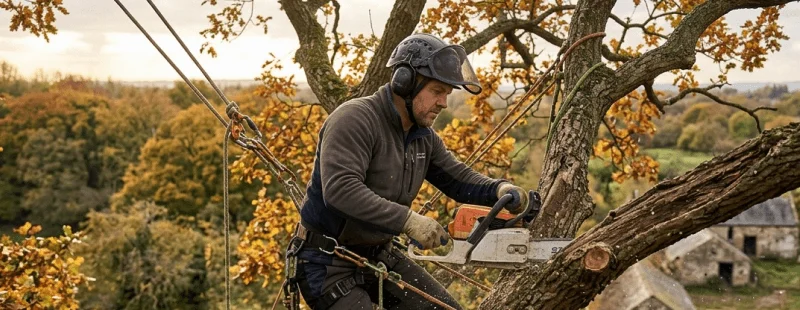


A single storm can generate two weeks of revenue in 48 hours, or it can wreck your margins and burn out your best climber. The difference comes down to two decisions you make before the wind picks up: what your emergency tree removal cost structure looks like, and who answers the phone at 2 a.m. Most cost guides on this topic are written for homeowners. This one is for the tree care company owner who has to set the rates, build the on-call rotation, and still make payroll when the adrenaline wears off.
What the Market Charges: Emergency Tree Removal Cost Benchmarks
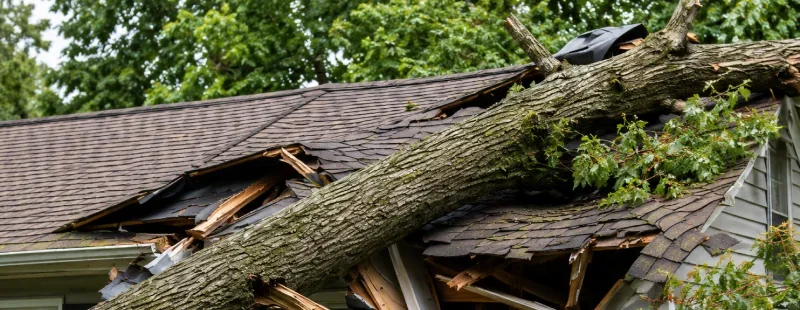
Homeowner-facing cost guides put standard removal between $200 and $2,000 for most trees, with emergency work running 20 to 50 percent above that. Crane jobs and trees on structures push the multiplier to 2x or 3x. Here is how the published ranges break down by tree size:
| Tree size | Standard removal | Emergency removal |
|---|---|---|
| Small (under 30 ft) | $150 to $500 | $300 to $800 |
| Medium (30 to 60 ft) | $450 to $1,200 | $800 to $1,800 |
| Large (60 to 80 ft) | $800 to $1,500 | $1,500 to $3,000 |
| Extra large (80+ ft) | $1,000 to $3,000 | $2,000 to $5,000 |
Treat these numbers as a sanity check, not a price list. Your customers see them when they search, so an emergency quote far outside these ranges will get questioned. Your actual floor has to come from your own costs, which is where most storm-work pricing goes wrong.
Why Emergency Jobs Cost More to Run
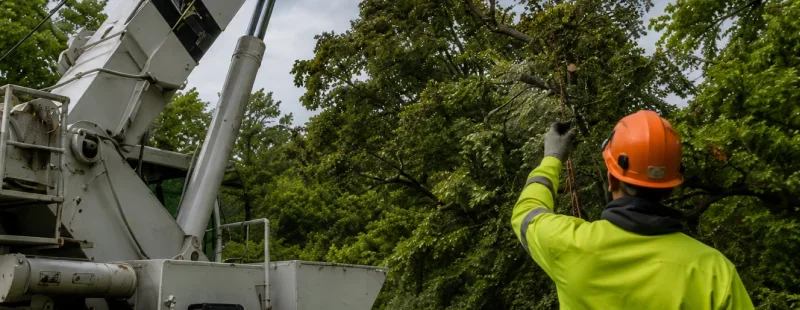
The premium is not a markup for convenience. Emergency work carries real cost loadings that scheduled removals do not. Overtime labor is the obvious one: a crew called out on Saturday night is earning time and a half before the first cut. Then there is risk exposure. A tree resting on a roof or tangled in a service drop demands slower, more deliberate rigging, often with a crane or lift you may be renting at emergency availability rates.
Weather adds its own tax. Wet bark, unstable root plates, and compromised limbs turn a routine removal into a technical dismantle. Insurance carriers price this reality too, and workers' comp for storm response reflects it. Add disrupted scheduling, since every emergency call displaces booked work, and a 40 percent premium starts to look less like profit and more like cost recovery. If a customer pushes back, walk them through it. Transparency wins the review even when the invoice stings.
How to Price Emergency Tree Removal
Storm pricing improvised on the tailgate leaks money. Set the framework in the off-season and your estimators can quote fast without guessing. The framework has three parts.
Emergency premiums and call-out minimums
Start from your fully loaded man hour rate, then apply a fixed emergency premium of 25 to 50 percent for after-hours response. On top of that, set a flat call-out minimum, typically $250 to $500, that applies even if the crew arrives and the job takes 40 minutes. The minimum covers mobilization: fuel, drive time, and the fact that three people left their dinner tables. Equipment surcharges pass through separately. If a crane costs you $250 an hour with a four-hour minimum, that line goes on the estimate as its own item, never absorbed into labor.
Hourly versus fixed bids in storm conditions
Fixed pricing works when you can see the whole job. After a storm you often cannot. Hidden trunk cracks, a second leader hung up in the canopy, or a fence you could not inspect in the dark will eat a flat bid alive. For active storm response, quote time and materials with your published emergency rates, give the customer a realistic range, and update them at defined checkpoints. Save fixed bids for the cleanup wave that follows in the days after, when conditions are stable and you can walk the property properly. Your general approach to pricing tree services still applies; storm work just narrows which tools are safe to use.
Billing insurance-covered jobs
A large share of emergency removals get paid by homeowners insurance, which typically covers removal when the tree hits an insured structure. Most policies cap that coverage between $500 and $1,000 per tree. For you, this means documentation is revenue protection. Photograph the tree, the damage, and the site before the first cut. Itemize labor, equipment, and disposal on the invoice so the adjuster can approve it without a phone call. Companies that make adjusters' lives easy get referred by them. The requirements on your side of the policy matter just as much, and our guide to tree removal insurance for arborist businesses covers what carriers expect from contractors doing hazard work.
How to Staff a 24/7 Emergency Response
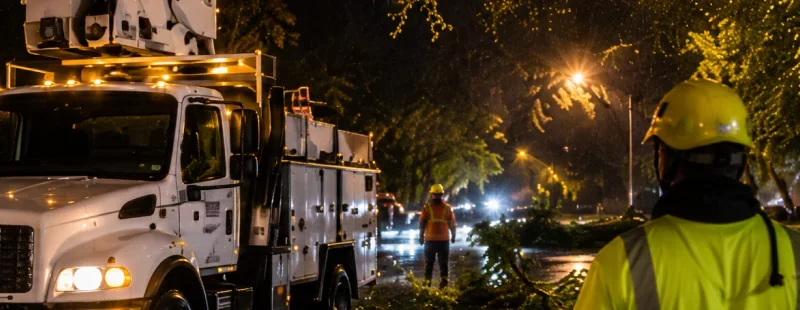
Pricing gets the attention, but staffing is where emergency programs quietly fail. A phone number that promises 24/7 response and rings through to voicemail costs more reputation than having no emergency service at all.
On-call rotation and crew pay
Build a written rotation, one week at a time, with at least two qualified people per shift: a climbing arborist or crane-qualified lead plus experienced ground crew. Pay for the standby itself, not just the hours worked. A stipend of $50 to $150 per on-call week plus guaranteed overtime for actual call-outs keeps the rotation from feeling like punishment. Rotate holidays deliberately. The companies that lose their best climbers after every storm season are usually the ones that treated on-call as free.
Crew composition and equipment readiness
Emergency calls involving conductors require Electrical Hazard Awareness Program (EHAP) training, and everything about storm work should follow the ANSI Z133 safety standard. TCIA training programs cover both, and having an ISA Certified Arborist assess the scene before cutting begins protects the crew and the customer. Readiness extends to the yard: a designated storm truck fueled and loaded, saws sharpened, rigging inspected, and crane and lift vendors confirmed before the season starts. When the call comes in, dispatch should be a lookup, not a scramble. Crews, trucks, and job assignments living in one scheduling system means the person answering the phone can see who is on call, where the nearest crew is, and what equipment is free.
From Call to Invoice: Making Storm Work Profitable
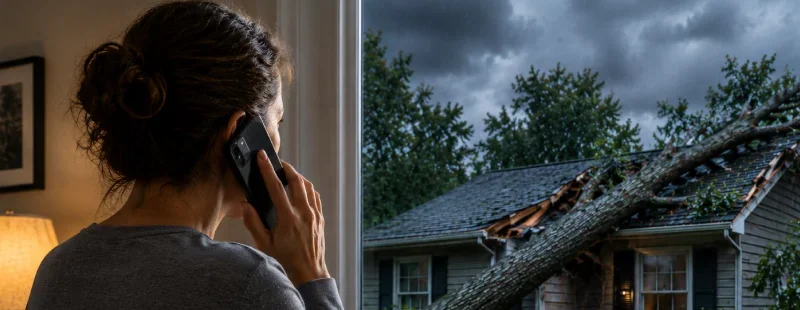
Run the whole sequence as one pipeline. Intake triages the call: life safety and power lines go to 911 and the utility, structure strikes get the on-call crew, everything else books into the cleanup queue. The crew documents before, during, and after. The invoice goes out within 24 hours while the urgency is still fresh, itemized for the adjuster. Then comes the step most companies skip: job costing every emergency ticket after the storm passes. Compare billed revenue against actual labor, equipment, and disposal hours. That review is what tells you whether your 40 percent premium actually covered the overtime, and it is the single best input for next season's rate card.
Storm response rewards the companies that systematized it in July, not the ones improvising in the middle of the outage. Set your emergency tree removal cost structure from your real man hour rate, pay your on-call crews like their readiness has value, and cost every job once the chainsaws go quiet. ArboStar handles the operational side of that loop, from emergency dispatch to job costing, in one platform built for tree care companies. Book a demo to see how storm season looks with the chaos taken out.
Run Storm Season Like a System, Not a Scramble
Emergency dispatch, crew scheduling, job costing, and invoicing all live in one place with ArboStar – so the person answering the phone at 2 a.m. already knows who's on call, what's free, and what to bill.
Frequently Asked Questions
How much more does emergency tree removal cost than standard removal?
Published guides converge on a 20 to 50 percent premium over standard rates, with straightforward jobs at the low end. Crane work, trees on structures, and night response push totals to two or three times the scheduled price for the same tree.
Why is emergency tree removal so expensive?
The premium covers real costs: overtime labor, hazardous working conditions, specialized equipment mobilized on short notice, and the booked jobs a company displaces to respond. Companies that break these factors out on the estimate face far less price resistance.
Does homeowners insurance cover emergency tree removal?
Usually yes when the tree falls on an insured structure and the cause was a covered peril such as wind or ice. Coverage is commonly capped at $500 to $1,000 per tree. A tree that falls in the yard without hitting anything is typically not covered, so contractors should confirm payment terms before starting.
How fast should a tree service respond to an emergency call?
Customers calling about a tree on their house expect a crew within hours, not days. A realistic standard for a staffed on-call program is phone answer within minutes, an arrival estimate on that first call, and same-day response for structure strikes. Life safety situations and lines down go to 911 and the utility first.