

Courant has recalled its Spliced Kalimba climbing ropes after receiving reports that the factory-installed splice failed in the field. If your crews climb on Kalimba line, this arborist climbing rope recall affects you directly: you need to find every affected rope in your inventory, pull it from service, and document that it's been done, before it becomes tomorrow's phone call. Here's exactly what's been recalled, how to identify it, and how to respond as a company, not just as an individual climber.
What climbing rope has been recalled?
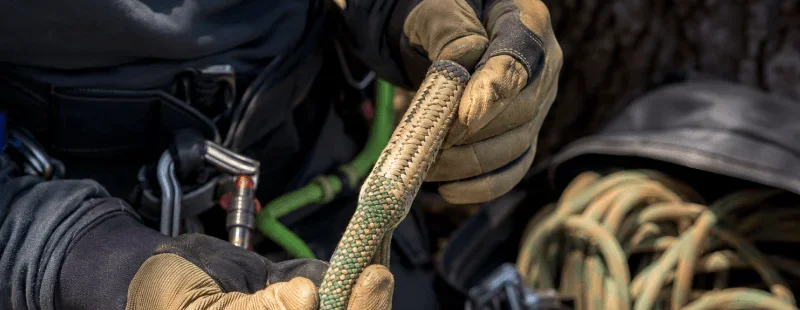
Here are the confirmed facts, checked against Courant’s own announcement and the official CPSC recall notice. Courant, the France-based manufacturer, announced a voluntary recall of its Spliced Kalimba climbing line on June 17, 2026, after identifying a design defect in the factory-installed low-profile splice. In the United States, the recall was formalized through Courant’s importer, Wichard Groupe North America, in cooperation with the U.S. Consumer Product Safety Commission, with the CPSC notice published August 6, 2026. The firm has received three reports of splices failing; no injuries have been reported. About 1,050 ropes were sold nationwide, through retailers including Vertical Supply Group, Arbsession, and RBI Corporation, from January 2023 through June 2026 for between $250 and $350.
This is important: the recall covers Courant-spliced products only. It is not a blanket recall of every arborist climbing rope on the market, and it is not a statement about spliced climbing lines from other manufacturers. Kalimba rope purchased without a splice, or by the meter, falls outside this recall scope.
How to identify an affected Courant Kalimba rope
Before you can act, you need to know what you’re looking at. Check the manufacturer and model on the tag attached to the rope end, confirm whether it carries a factory splice, and compare the part number and length against the recall notice. Then pull your purchase record, note the retailer, and check the rope against the current recall documentation, since instructions can vary slightly between sellers.
| Check | What to verify | Action |
|---|---|---|
| Model | Brand, model, and part number on the rope tag | Match against the official recall list |
| Splice | Whether the rope has a factory-installed splice | Splice present means the rope may be affected |
| Purchase information | Retailer, purchase date, proof of purchase | Locate and attach to the equipment record |
| Recall status | Current guidance from Courant or the authorized retailer | Confirm before returning to service |
What tree care companies should do now
This is the part that actually protects your crew, so treat it as a checklist rather than a suggestion.
-
Stop using the affected rope immediately.
-
Tag it as removed from service so nobody grabs it by mistake.
-
Inform crew leaders and every climbing arborist who may have used it.
-
Check every truck, gear bag, and equipment storage area, not just the obvious spots.
-
Record the rope, the assigned employee, purchase data, and current location.
-
Complete the official recall process through Courant or the authorized retailer.
-
Record the replacement or final disposition once it arrives.
Don’t attempt to remove or re-splice the termination yourself, and don’t keep using the rope while you wait for a replacement. If instructions from different sellers seem to conflict, default to the safest option: stop use and follow the latest word from Courant or your authorized retailer. For a broader refresher on the fundamentals, ArboStar’s arborist safety rules guide covers PPE and pre-climb inspection basics that pair well with recall response.
Why equipment recalls become an operations problem
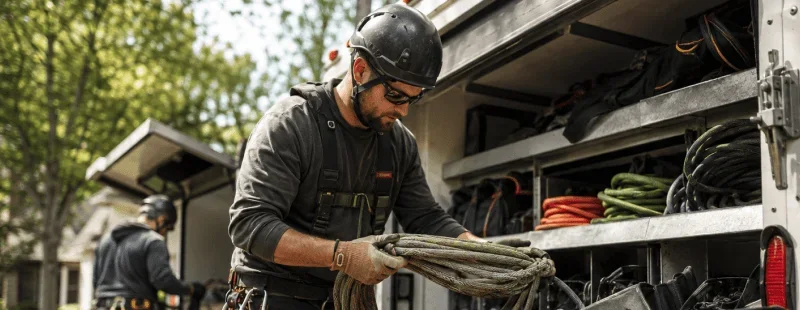
A recall notice rarely stays put. Rope moves between crews, purchase records live in a different filing cabinet than the gear itself, and a single crew member might miss the manufacturer’s post entirely if they’re not tagged on social media or on the distribution list. Worse, a rope that’s been pulled and tagged can still wander back into a truck or gear bag if nobody owns the tracking. And when a recall lands, most operations managers don’t have one clean, current list of what’s affected and where it sits.
This is the real difference between a pre-use inspection and documented equipment control. A pre-use inspection catches wear and damage on the rope in your hand today. Documented equipment control tells you, in one search, exactly how many Kalimba ropes your company owns, which ones carry a factory splice, and who is using each one right now. When a recall hits, that second layer is what actually keeps a recalled rope out of the canopy.
Building an arborist climbing gear inspection system
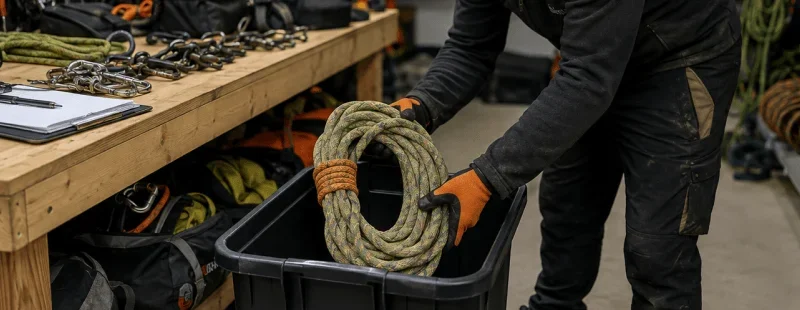
The Kalimba recall is a good excuse to look at how your company tracks climbing line generally, not just this one product. A workable system needs a unique record for each piece of equipment: manufacturer, model, and purchase date; the crew or employee it’s assigned to; an inspection history; a current status such as active, quarantined, under review, or retired; photographs and any recall documentation attached to the record; the person responsible for follow-up; and confirmation once a replacement is in hand.
That’s the kind of arborist equipment management that turns a recall from a scramble into a checklist. ArboStar’s arborist equipment management tools help you keep those records in one place, assign status and ownership, and attach documentation, so if another climbing rope safety recall comes along, you’re not starting from a spreadsheet. Worth noting: this doesn’t automatically flag recalled products for you, but it does give you the equipment inspection record you need to answer the question fast when a manufacturer sends one out.
Lessons from the Courant Kalimba recall
The core takeaway is simple, if not always easy: a tree care company should be able to find every unit of climbing gear it owns, identify who is using it, and confirm it’s been pulled from service, all within minutes, not days. That’s true whether the trigger is a spliced climbing rope recall like this one or a future notice for a different piece of equipment entirely. It’s not a statement about the arborist equipment industry as a whole; it’s a reminder that recall-readiness and everyday risk management run on the same rails. If you’re building out that side of your operations, ArboStar’s guide to digital risk assessment and hazard forms and its worksite emergency preparedness resource are both worth a look.
For the latest confirmed scope and reported failures, see TreeStuff’s recall notice, and for the current stop-use instruction and affected product list from a Courant retailer, see Gustharts’ product safety notices. Sources were checked as of August 11, 2026; always defer to the latest notice from Courant or your authorized retailer, since recall guidance can be updated.
Frequently Asked Questions
Which Courant Kalimba ropes are affected by the recall?
The recall covers Spliced Kalimba climbing ropes carrying Courant’s factory-installed low-profile splice, including any rope spliced under Courant’s splicing protocols before June 15, 2026. Check your rope’s tag and part number against the official recall notice to confirm.
Are Kalimba ropes without a factory splice affected?
No. Kalimba rope purchased without a splice, or bought by the meter, is not included in this recall. The recall applies specifically to Courant-spliced products.
Can an arborist continue using the rope after removing the splice?
Don’t make that call on your own. Stop using the rope and follow the current instructions published by Courant or your authorized retailer, since guidance on handling the splice can change and varies by seller.
What information is needed to complete a climbing rope recall?
You’ll generally need the rope’s model and part number, proof of purchase, and the retailer it came from, plus completion of the recall registration through Courant or the authorized retailer to arrange return and replacement.
How should a tree care company document recalled equipment?
Record the affected rope, the employee it was assigned to, its purchase information, and its current status, quarantined, returned, or replaced, in a central equipment record. Note who completed the recall action and when, so the file shows the rope was properly removed from service.
See how ArboStar can run your tree care business
Quoting, scheduling, crews and invoicing in one place. Book a short demo and see it with your own jobs.