

Quick summary: Most professional arborists carry a fixed blade pruning saw around 13 inches, such as the Silky Zubat 330, for in tree work, and keep a folding saw like the Silky Gomboy 240 for lighter or occasional jobs. Fixed blades cut faster and will not fold shut mid cut, while folding saws are safer to carry and store on a belt or in a pocket. Blade curve, teeth per inch, and scabbard fit matter as much as the brand on the handle.
Key gear mentioned in this guide: Silky Zubat, Silky Gomboy, Corona RazorTOOTH, Felco 600, fixed blade, folding saw, scabbard.
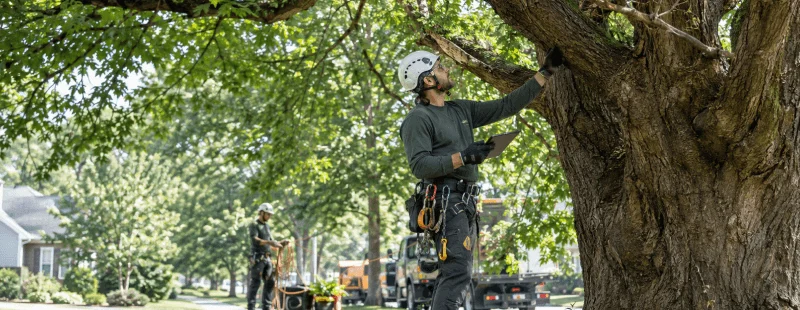
A climber who fires up a chainsaw for a single two inch cut usually spends more time unclipping, starting, and reclipping the saw than the cut itself takes. That is the entire argument for carrying a good hand saw. Most of what actually gets cut in a canopy is small enough to handle without gas or a battery, and a saw that lives quietly in a scabbard never runs out of charge fifty feet up. Finding the best arborist hand saw and pruning saw for your own work usually means owning two: a fixed blade for the bulk of pruning cuts, and a folding saw for the lighter jobs that do not justify carrying anything bigger. This guide covers both categories, four specific models worth buying, and the carry setup that keeps a saw where you can reach it instead of dangling in the way.
What Makes a Good Arborist Pruning Saw
A saw built for tree work is not the same tool as the crosscut saw in a garage. Nearly every serious arborist tool and piece of equipment in a climber's kit earns its place by doing one job extremely well, and pruning saws are no exception. A few things separate a real arborist hand saw from a hardware store pruning saw:
-
Pull stroke cutting action, which lets the blade stay thin and the cut stay controlled overhead
-
A curved or taper ground blade that keeps more teeth engaged per stroke
-
Impulse hardened or chrome plated teeth that resist sap and rust between sharpenings
-
A scabbard or sheath built to clip onto a saddle or climbing belt, not just a garden shed hook
-
A replaceable blade, since the blade wears out long before the handle does
Weight matters too, but less than people assume. An extra two ounces on a saw you use for thirty seconds at a time is not the problem. A saw that binds in green wood, or one whose scabbard rattles loose on a rappel, is the actual problem, and it is why the brands covered below show up on almost every professional crew.
Fixed Blade vs. Folding: Which Do Climbing Arborists Actually Use?
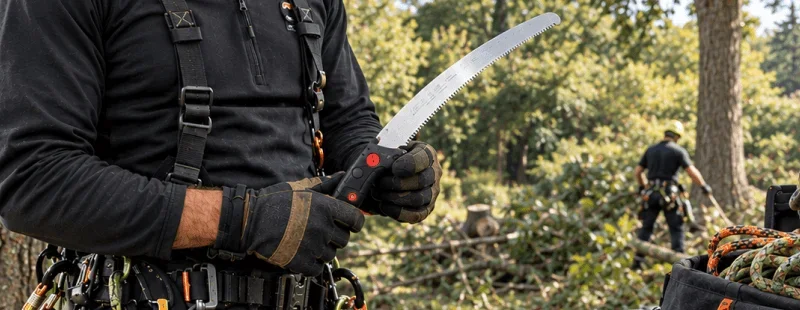
Ask a homeowner and they will usually reach for whatever folds up small. Ask a climbing arborist and the answer splits by task, not preference. A fixed blade pruning saw, full tang and locked into a rigid scabbard, is the go to for anything from finger sized deadwood up to branches several inches thick. There is no folding mechanism to work loose mid stroke, and the blade can be longer and stiffer without adding a hinge point that eventually develops play.
A folding pruning saw earns its spot for a different reason: it disappears into a pocket or a small pouch when it is not being used, which matters on days that involve more climbing and rigging than cutting. Ground crew, pole saw setup, and light residential pruning are where a folding saw shines. Very few climbers use a folding saw as their primary in tree tool for anything beyond occasional light work, because the extra moving part is one more thing that can fail at height. The practical answer most crews land on: a fixed blade on the saddle for real cutting, a folding saw as backup or for anything under an inch or two.
The Best Arborist Hand Saws and Pruning Saws
Prices below are approximate and vary by retailer and blade length option; confirm current pricing before buying.
Silky Zubat 330: the industry standard fixed blade
The Zubat is the saw most climbing arborists picture when someone says arborist hand saw. The 330mm (13 inch) version has a full tang, chrome plated curved blade running roughly 6.5 to 7 teeth per inch, and a scabbard with a roller entry and locking system that holds the blade in place even upside down. It is a fixed blade pruning saw built for green wood and forestry work, with a rubber grip handle that stays comfortable through a long day of overhead cuts. Expect to pay somewhere around 100 to 120 dollars depending on retailer, with a shorter 240mm or 270mm version available for climbers who want less blade to manage in tight canopy work.
Silky Gomboy 240: best folding saw for quick jobs
The Gomboy 240 is Silky's best selling folding saw worldwide, and it earns that reputation with a 240mm (about 9.5 inch) taper ground blade running around 8.5 teeth per inch on the standard medium tooth version. It locks in two positions for flush cuts, folds down to a size that fits a jacket pocket, and weighs well under a pound. This is the saw crews reach for on small residential jobs, deadwooding, or any time carrying the Zubat feels like overkill. Pricing generally runs 60 to 80 dollars.
Corona RazorTOOTH: aggressive cut at a lower price
Corona's 13 inch RazorTOOTH (model RS 7120) is the budget minded pick among fixed blade options, with a curved steel blade, triple ground teeth, and a pistol grip handle built for one handed cutting. It is rated for branches up to roughly 6 to 7 inches in diameter and cuts noticeably faster than a straight blade saw of similar length. It will not match the fit and finish of a Silky, and the scabbard is less refined, but for a crew equipping several climbers on a budget, or for a backup saw riding in the truck, it does the job at a fraction of the price, typically somewhere in the 30 to 35 dollar range.
Felco 600: most compact folding option
The Felco 600 is a Swiss made folding saw with a short, conical, hard chrome blade around 6 to 7 teeth per inch that resists clogging and binding on the pull stroke. At roughly 14 inches open and under 6 ounces, it is the saw that lives in a chest pocket or a small pouch for the occasional cut that does not justify unclipping anything larger. It handles branches up to about 4 inches in diameter, which covers a surprising amount of routine deadwooding and vine cutting. Price generally lands around 40 to 45 dollars.
Blade Size, Teeth, and Curve: How to Choose
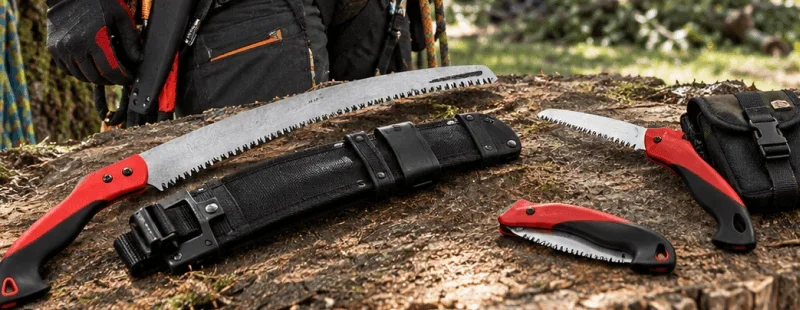
Blade length decides how much branch you can reach into a cut without repositioning, and most climbers land somewhere between 240mm and 330mm for a primary saw. Shorter blades maneuver better in tight crotches and dense canopy; longer blades clear more material per stroke on open pruning cuts. Teeth per inch is the second variable: fewer, larger teeth cut faster through green wood but leave a rougher surface, while more teeth per inch give a cleaner cut that matters more on ornamental or fruit trees where the finished cut affects healing. A curved blade is close to universal on professional saws now, since the curve keeps more teeth in contact with the wood on the pull stroke and reduces the effort needed per cut. None of this replaces good technique. Even the best arborist hand saw makes a poor cut if it is used against the fundamentals covered in ArboStar's guide to pruning best practices for healthy trees, particularly cutting at the branch collar instead of leaving a stub.
Carrying It Right: Scabbards and Climbing Belt Setup
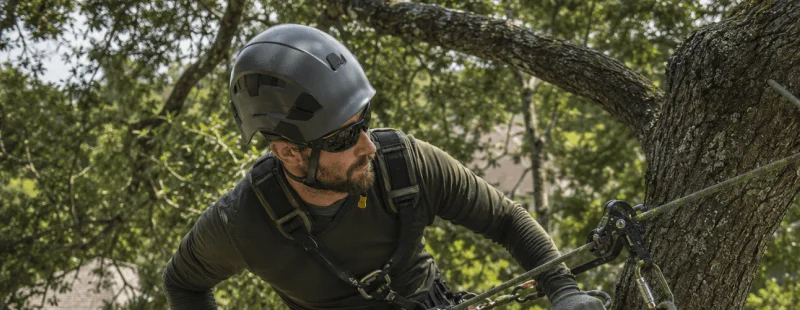
A saw that is not accessible mid climb might as well be left on the ground. Fixed blade scabbards are built to mount directly to a saddle or climbing belt, usually through a snap or a fixed loop, and the good ones lock the blade in place even when the climber is inverted. Position matters more than most climbers think about on their first few jobs: mounting the saw where a reach across the body does not cross a running lanyard or interfere with the friction hitch saves fumbling on every single cut. Folding saws are more forgiving, since a pocket or a small pouch on the harness works fine, but a locking mechanism that holds the blade shut during the climb is worth checking before buying, since a saw that pops open in a pocket is a real hazard. Getting the whole carry system right, saw, lanyard, and the line itself, is part of the same decision covered in ArboStar's breakdown of choosing the right climbing rope for your system, since hardware compatibility runs through the whole setup rather than any one piece of gear.
Maintenance and When to Replace a Blade
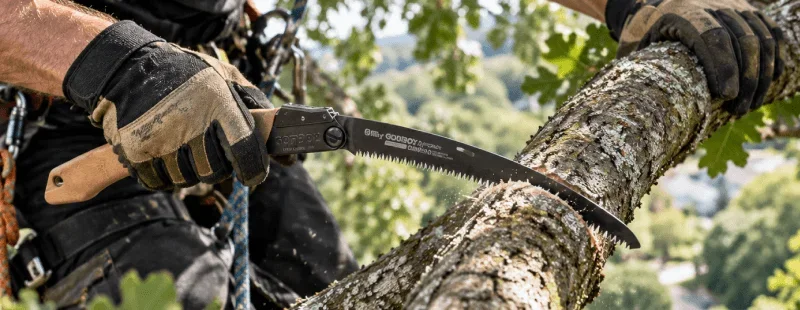
Pruning saw blades are consumables, not lifetime purchases. Sap buildup slows a cut and eventually pits the blade if it is not wiped down after use, and most manufacturers sell replacement blades separately rather than expecting an owner to sharpen impulse hardened teeth. A quick wipe with a cloth after a sappy job, an occasional drop of light oil on the pivot of a folding saw, and periodic inspection for cracked teeth or a loose scabbard lock cover most of what a saw needs. Replace the blade when teeth are visibly chipped, when the cut starts requiring noticeably more strokes than it used to, or when the blade shows rust that wipes off but keeps coming back. A dull or damaged saw is also a safety issue, not just a productivity one, and it belongs in the same conversation as the rest of a crew's gear inspection covered in ArboStar's essential safety rules every arborist should know.
Keeping Saws Stocked and Tracked Across a Crew
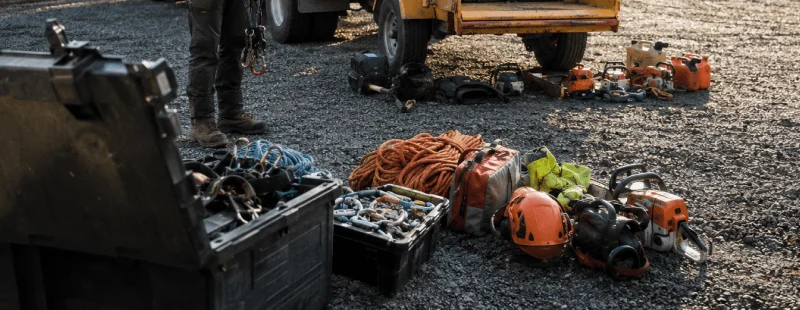
A single climber can keep a favorite Zubat for years without losing track of it. A crew running three or four saddles is a different problem: saws walk off in truck beds, get left on job sites, or end up with a chipped blade nobody reports until it fails mid climb. The same logic that applies to tracking a crew's chainsaws applies here. Logging hand saws by unit, assigning them to a specific climber, and noting replacement dates keeps a 100 dollar Zubat from quietly disappearing the same way a chainsaw would never be allowed to. ArboStar's equipment tracking handles this alongside scheduling and job costing, so gear accountability is not a separate spreadsheet nobody updates.
Frequently Asked Questions
What size pruning saw do most arborists use?
Most climbing arborists settle on a fixed blade somewhere between 240mm and 330mm for primary in tree work, with 330mm (13 inches) being the most common single choice because it balances reach against maneuverability in a typical canopy.
Is a fixed blade or folding saw better for climbing work?
A fixed blade is the primary tool for most climbers because it has no hinge to develop play and locks securely into a scabbard. A folding saw serves as a lighter secondary option for small cuts or as a backup that fits in a pocket.
How often should you sharpen or replace a pruning saw blade?
Most arborist saw blades use impulse hardened teeth that are not meant to be sharpened at home. Replace the blade when cuts require noticeably more effort, when teeth are visibly chipped, or roughly once a season for a saw in daily use.
What's the difference between a pruning saw and a regular hand saw?
A pruning saw cuts on the pull stroke rather than the push stroke, uses a curved or taper ground blade suited to green wood, and typically comes with a scabbard built for a belt or harness rather than a workshop.
Do professional arborists prefer Silky saws?
Silky is the most widely used brand among professional and ISA Certified Arborist crews in North America, largely due to blade quality and scabbard design, though Corona and Felco both have a real following for specific saw sizes and budgets.
Conclusion
The best arborist hand saw and pruning saw is really two tools working together: a fixed blade like the Silky Zubat 330 for the bulk of in tree cutting, and a folding saw like the Gomboy 240 or the Felco 600 for lighter jobs that do not justify anything bigger. Budget minded crews get real value from the Corona RazorTOOTH without giving up much cutting performance. Whichever combination fits your work, the details that matter are blade curve, teeth per inch, and a scabbard that mounts cleanly to your climbing belt. Get those right and the saw earns its spot on the saddle for years before the blade ever needs replacing.
See how ArboStar can run your tree care business
Quoting, scheduling, crews and invoicing in one place. Book a short demo and see it with your own jobs.