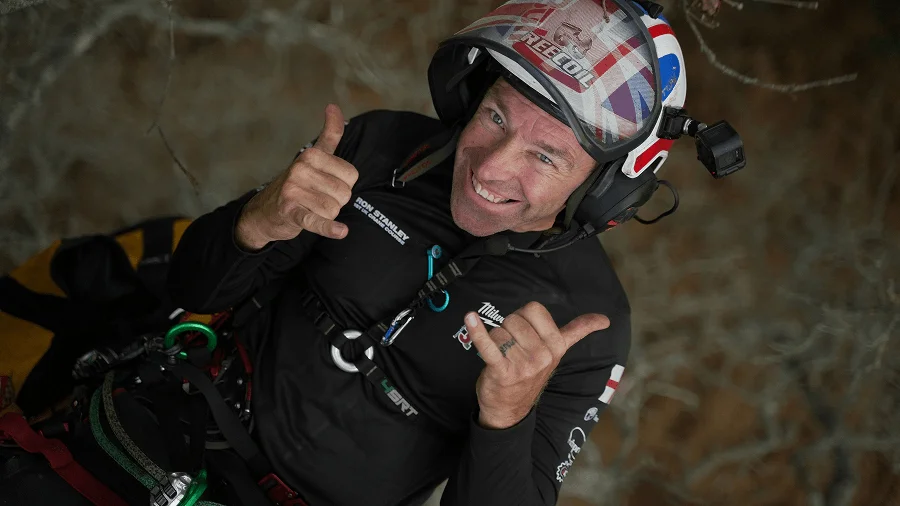


On August 4, 2026, KGW reported that an arborist working in Portland’s Forest Park was killed when a tree unrelated to the crew’s active work fell and struck them. The exact circumstances are still under investigation, and this article won’t speculate about cause or fault. It uses the moment to ask a harder question: what needs to change so a crew catches a hazard like that before it becomes an incident report?
Tree care accident prevention rarely comes down to one failed decision at the moment a tree comes down. In most serious incidents, the chain starts earlier: a hazard goes unnoticed, a work plan doesn’t adjust to something that changed, or a crew keeps working past the point someone should have called a stop.
The fatal hazards tree care crews face
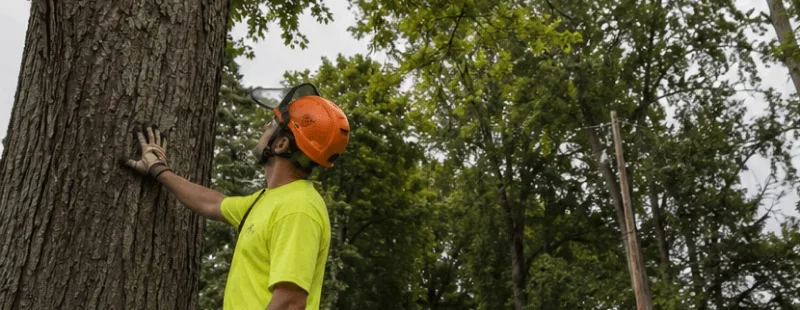
OSHA identifies falls, struck-by hazards, and electrical contact among the leading causes of death in tree care. Wood chippers, aerial lifts, traffic, and poorly maintained equipment add to that list. None of these are unfamiliar to an experienced crew, but familiarity is what lets them slip past a rushed briefing.
Falling trees, limbs and tools
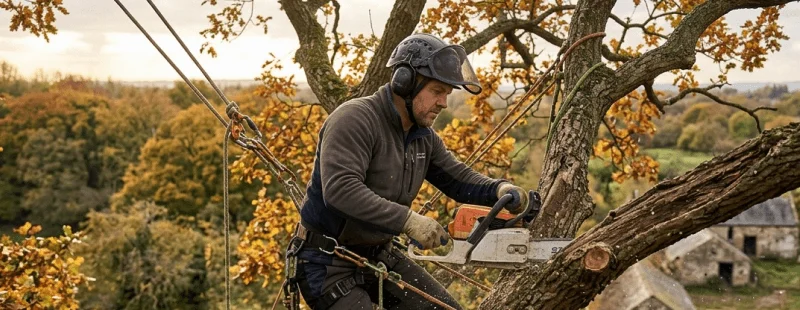
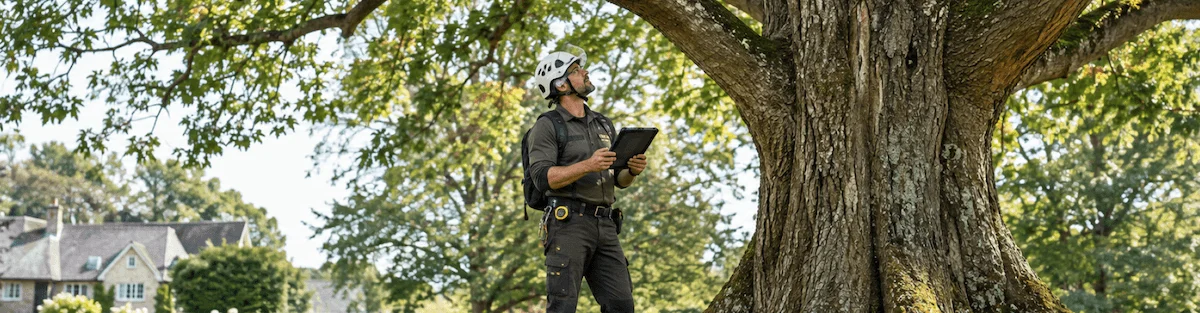
Struck-by hazards don’t only come from the tree being worked on. A hazard assessment has to account for the drop zone around that tree, but also for adjacent trees, dead limbs overhead, and anything already under stress before the crew arrives. A tree unrelated to the active work can still fail without warning.
Falls from trees and aerial lifts
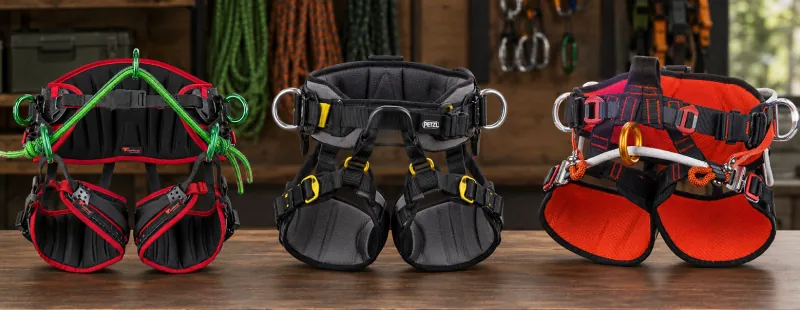
Tie-in points, anchor selection, climbing equipment inspection, and aerial lift setup all carry fall-protection requirements that deserve more depth than fits here. ArboStar’s essential arborist safety rules guide covers PPE, climbing basics, and equipment checks.
Energized power lines
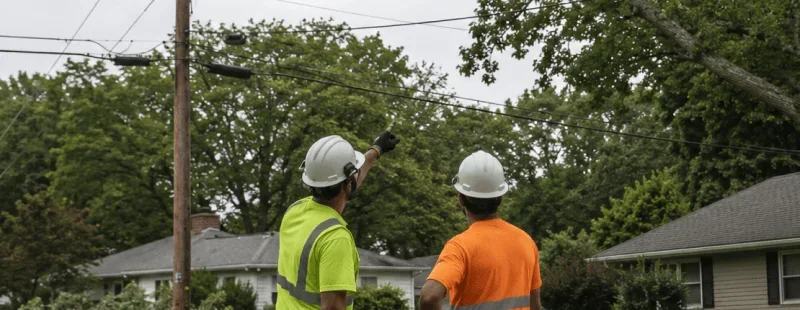
Contact doesn’t have to be direct to be fatal. A rope, tool, aerial lift boom, or the tree itself can create a conductive path to an energized line. Unqualified workers must maintain a minimum approach distance of at least 10 feet, and only qualified line-clearance arborists may work closer.
Chippers, chainsaws and mobile equipment
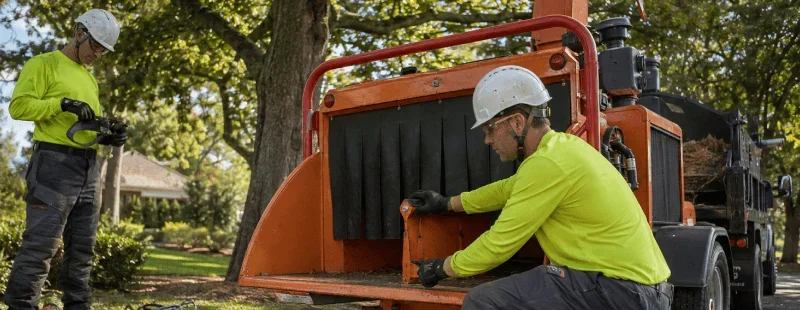
These hazards are more mechanical than dramatic, but just as capable of ending a shift badly. Training, guards, working emergency controls, lockout procedures, and keeping ground crew clear of moving equipment need to be active habits, not checklist items.
Why a pre-job briefing is not enough by itself
Holding a briefing and controlling hazards are not the same thing. A briefing that gets rushed through, or covers the same boilerplate regardless of site, gives a crew a false sense that hazards have been handled. A briefing that actually functions as a control should establish: the crew leader, scope of work, hazards from the target and adjacent trees, drop zone, electrical hazards, climbing or aerial-lift method, weather limitations, equipment allocation, communication commands, emergency actions, and stop-work triggers specific to that site.
Use a control hierarchy, not PPE alone
PPE is the last line of defense, not the first. A more reliable approach works down a hierarchy of controls: eliminate the hazard, substitute the method, apply engineering controls, apply administrative controls, and only then rely on PPE. For an arborist crew, that can mean de-energizing a line instead of working near it live, choosing an aerial lift over climbing when a tree’s structure is questionable, rigging instead of an uncontrolled free-fall, barricading a drop zone instead of a verbal warning, or postponing work when wind pushes past the planned limit. No single method is automatically safer in every case; that call belongs to a qualified assessment of the tree, site, and crew.
Stop work when conditions change
This is where many tree care accident prevention efforts fall short. Job hazard analysis doesn’t end when the briefing wraps up; conditions can shift in minutes. Root movement, cracking or a change in tree lean, movement in an adjacent tree, wind exceeding the planned limit, equipment malfunction, lost communication, an unauthorized person entering the drop zone, new electrical exposure, or crew fatigue can all justify stopping mid-task.
The part that matters most is authority, not process. Every crew member, not just the leader, needs standing ability to call a stop without second-guessing themselves and without facing blowback for it.
Turn safety procedures into a documented workflow
A safety program that lives in a binder in the office isn’t operational; it’s paperwork. To function day to day, it needs to be documented as part of the workflow itself: job hazard analysis, crew members and their assigned roles, briefing completion, photographs of site hazards, equipment inspections, updates when conditions change, stop-work decisions, corrective actions, training records, and incident or near-miss reports.
This is where ArboStar’s digital risk assessment and hazard forms and arborist equipment management tools fit in, giving crew leaders one place to log assessments and keep records tied to the people and jobs they belong to. None of that removes risk on its own, but it ensures that if a hazard was assessed or a stop-work call was made, there’s a record, instead of a memory that fades by the next job.
What to do after a serious tree care incident
This is a short section on immediate priorities, not a medical response guide. After a serious incident: activate your emergency response plan, don’t expose additional workers to the same hazard, preserve relevant records and equipment, notify company leadership, follow OSHA and State Plan reporting requirements, document known facts without speculating about cause, conduct a structured incident review, and communicate corrective actions to every crew, not just the one involved.
Current OSHA requirements on timing are specific: a fatality must be reported within 8 hours, and an in-patient hospitalization, amputation, or loss of an eye within 24 hours. Requirements can vary under individual State Plans, so confirm the applicable rule for your state alongside the federal baseline at OSHA’s reporting page.
It’s also worth knowing where things stand on tree-care-specific regulation. There is currently no comprehensive federal standard written for tree care operations; OSHA applies its general industry standards and the General Duty Clause instead, while ANSI Z133 serves as the industry consensus standard, not a federal regulation. TCIA reported in July 2026 that OSHA continues developing a dedicated Tree Care Operations Standard, still in progress. Until it’s finalized, employers remain responsible for assessing hazards and documenting procedures under the standards that already apply.
Lessons for every tree care company
Incidents like the one KGW reported in Portland are a reminder that serious tree work carries risk no company can promise to eliminate entirely. What a company can control is whether hazards get identified before the saw starts, whether a briefing functions as a control instead of a formality, and whether every crew member has standing authority to call a stop. Building that into daily operations, and documenting it as it happens, is what separates a safety program on paper from one that works on the job site.
Frequently Asked Questions
What are the most common fatal hazards in tree care?
Falls, struck-by hazards from falling trees and limbs, and contact with energized power lines are the leading causes of death, per OSHA. Wood chippers, aerial lifts, traffic, and equipment failure add further risk.
What should be included in a tree care pre-job briefing?
The crew leader, scope of work, hazards from the target and adjacent trees, drop zone, electrical hazards, climbing or aerial-lift method, weather limitations, equipment allocation, communication commands, emergency actions, and stop-work triggers specific to that job.
Who can stop work on a tree care jobsite?
Any crew member, not only the leader, should have standing authority to call a stop when conditions change, without fear of penalty for doing so.
How far should arborists stay from energized power lines?
Unqualified workers must maintain a minimum approach distance of at least 10 feet. Only qualified line-clearance arborists may work closer, following applicable training and procedures.
When must a tree care company report an incident to OSHA?
A workplace fatality must be reported within 8 hours; an in-patient hospitalization, amputation, or loss of an eye within 24 hours. Some State Plans add their own requirements on top of the federal baseline.
See how ArboStar can run your tree care business
Quoting, scheduling, crews and invoicing in one place. Book a short demo and see it with your own jobs.