TRAQ Certification: What It Is, Who Qualifies and How to Get It
Who is eligible for ISA TRAQ, how the course and exam work, what it costs and what changed in 2025.
Quick answer
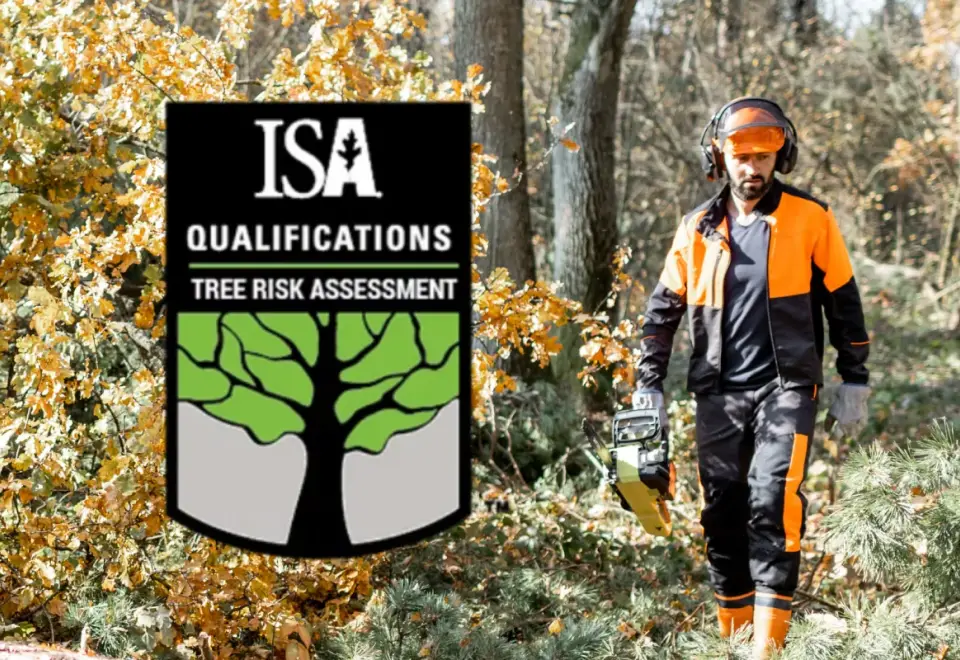
TRAQ is the ISA Tree Risk Assessment Qualification, a standardized method for judging how likely a tree is to fail and what the consequences would be. A TRAQ certified arborist is someone who already met an ISA eligibility path, then completed a two-day course and passed a half-day written and field exam. Strictly speaking it's a qualification, not a certification. If you earn it under the program that took effect on November 5, 2025, it lasts seven years, and ISA no longer offers a separate renewal course.
- ISA
- TRAQ
- Tree Risk Assessment Qualification
- ISA Certified Arborist
- Basic Tree Risk Assessment Form
- tree risk assessment
On this page 11 sections
- What Is TRAQ?
- What a TRAQ Certified Arborist Does
- Who Qualifies for TRAQ?
- How the TRAQ Course and Assessment Work
- What Changed in 2025: Seven Year Validity and No Renewal Course
- How Much Does TRAQ Cost?
- How to Get TRAQ: Step by Step
- TRAQ vs ISA Certified Arborist vs Consulting Arborist
- When Do You Need a TRAQ Arborist?
- Conclusion
- Frequently Asked Questions
Much of what you'll read about TRAQ predates the 2025 change. The rules below come from ISA's own program guide (revised July 2026), its eligibility catalog and its announcement of the 2025 update. We checked all three in November 2026.
What Is TRAQ?
TRAQ stands for Tree Risk Assessment Qualification. It's an instructor-led training and assessment program from the International Society of Arboriculture (ISA) that teaches a standardized, systematic process for assessing tree risk, then tests whether you can apply it. It is not a license, and it doesn't authorize anyone to practice.
People search for "TRAQ certification" and "TRAQ certified arborist", while ISA itself calls the credential a qualification, and the two words mean different things there. An ISA certification covers a broad body of knowledge, is tested separately from any class, and has to be maintained through recertification, for example with continuing education. A qualification covers a narrow subject, and the class and the exam are one package. ISA's guide says qualifications carry no ongoing requirements such as a code of ethics or continuing education, so when the term ends you start over.
So the accurate phrase is "TRAQ qualified". We use "TRAQ certified arborist" here only because that's what clients type and say.
What a TRAQ Certified Arborist Does
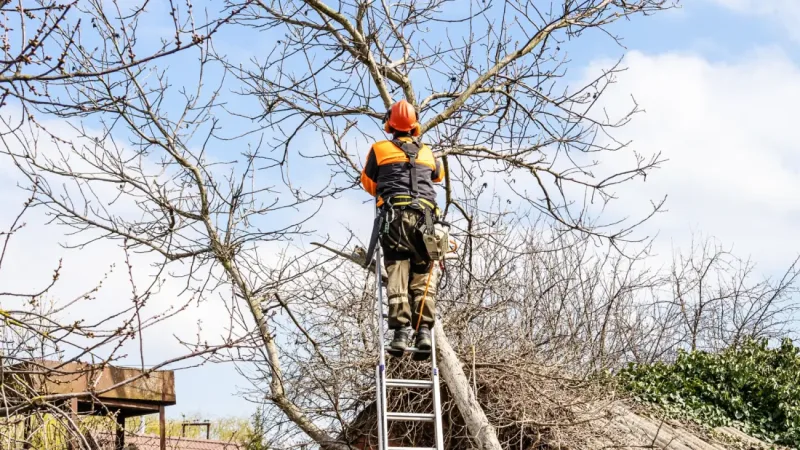
A TRAQ arborist inspects a tree, looks at what it could hit, and rates the risk using ISA's terms. Property owners, municipalities and insurers use the result to decide what happens next.
The main tool is the ISA Basic Tree Risk Assessment Form, a two-page sheet for what ISA calls a basic (Level 2) assessment. For each part of the tree that could fail, the assessor picks a likelihood of failure (improbable, possible, probable or imminent), a likelihood of hitting the target, and the consequences if it does. A matrix turns those answers into one of four ratings: low, moderate, high or extreme. The form also has a line for when the tree should be reassessed.
The form is not the report. ISA's instructions say the form alone isn't intended to serve as one, although some municipalities do want it submitted with a permit application. If your client needs a document for a city or an insurer, plan on a written arborist report with the form attached. For the inspection method itself, see our guide to tree risk assessment and hazard mitigation.
Who Qualifies for TRAQ?
You qualify if you hold one of five ISA credentials, a relevant degree, a national arboriculture certification, or an approved state or provincial license. You don't have to be an ISA Certified Arborist, even though many pages say so.
| Eligibility path | What counts | What you do next |
|---|---|---|
| ISA credential | ISA Certified Arborist, Board Certified Master Arborist, Certified Urban Forest Professional, Certified Arborist Utility Specialist, Certified Tree Climber | ISA's system already shows you as eligible, so you can enroll |
| Degree | Arboriculture, urban forestry, traditional forestry or horticulture, from a college or university or as part of a national qualifications framework | Apply to ISA with proof and wait for approval |
| National certification or certificate | A national credential in arboriculture, such as Australia's Certificate III in Arboriculture | Apply to ISA with proof and wait for approval |
| State or provincial license or certification | Approved ones only, for example the Connecticut Commercial Arborist License, Maryland Licensed Tree Expert, New Jersey Certified Tree Expert, Louisiana Arborist License or Ontario Certified Arborist (444A) | Apply to ISA with proof and wait for approval |
| Other credential | Anything not in the catalog that covers the same core knowledge | Send an eligibility equivalency request with your application |
The full list is in ISA's TRAQ Prerequisite Eligibility Catalog. It also names credentials people forget about, including the ASCA Registered Consulting Arborist, the SAF Certified Forester and the Massachusetts Qualified Tree Warden. A state license counts only if ISA recognizes it. Not sure which kind you hold? Our comparison of an arborist license and a certification sorts it out.
Years on the job aren't on the list. If you have field time and no credential, get one of those first. For most climbers that means working toward ISA certification, and our guide on how to become an arborist covers that route.
How the TRAQ Course and Assessment Work
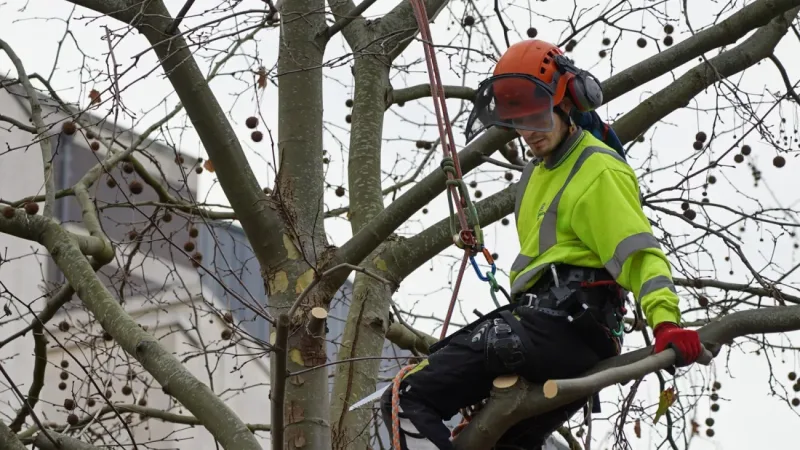
The standard program is a two-day, in-person course followed by a half-day exam. You must attend at least 80 percent of the instruction to sit the exam, and you have to pass both the written and the field part.
The Two Day Course
The course follows ISA's Tree Risk Assessment Manual and is split into nine modules, from levels of assessment and target assessment to tree biology and mechanics, risk categorization, mitigation and reporting. Bring a hard hat, high-visibility clothing, a clipboard and a government-issued photo ID. Without ID by exam day, you can't sit the exam.
ISA assumes you already know tree structure and biology. The two days go into the risk method.
The Written and Field Assessment
The written exam has 110 multiple-choice questions and a two-hour limit. Ten of those questions are unscored trial items mixed in with the rest. You need 75 percent to pass. By weight, 61 percent of the questions cover assessment methodology, 21 percent cover basic tree assessment and risk analysis, and 18 percent cover reporting findings and recommendations.
The performance-based assessment is a real tree at the training site. You get one hour to assess it with the Basic Tree Risk Assessment Form, and an ISA-approved evaluator scores the result. The manual, your workbook, notes and phone all stay out of the exam.
Failed one part? You retake only that part. ISA charges $120 per exam, and you have one year from the start of your original program to pass both. After that, you go back through the full program.
What You Receive
Results appear in your ISA account within six weeks. If you pass, you get a certificate and a digital credential, and your name can be listed in ISA's Find an Arborist directory. ISA certification holders who attend the course also earn 14.5 CEUs.
Study materials are now digital by default. ISA gives you access once your registration is confirmed. Printed manuals cost extra, at a discount from ISA or through some hosts.
What Changed in 2025: Seven Year Validity and No Renewal Course
Since November 5, 2025, TRAQ earned through the updated program is valid for seven years instead of five, and the shorter renewal program is gone. To get the credential back after it expires, you take the full course and both exams again. ISA announced this in a September 2025 release, and the July 2026 program guide confirms it.
There's a catch that's easy to miss. The seven years apply only to people who completed the updated program. Anyone who qualified or renewed under the previous version keeps a five-year certificate, so both terms will be in circulation for a few years. Check the expiration date on the certificate instead of counting forward from a course date.
The TRAQ path under the program effective November 5, 2025. Source: ISA TRAQ Program Guide, revised July 2026.
The exam changed at the same time. The written test grew from 100 to 110 questions, and the field exam now uses a revised version of the form. Don't study from a colleague's old notes.
ISA sends a reminder at some point in the 18 months before your expiration date and says it won't grant extensions past it.
How Much Does TRAQ Cost?
In the US, expect roughly $750 to $945 for the course and exams, based on three chapter listings we checked on November 24, 2026. Each host sets its own fee and refund terms, so there's no single ISA price.
The NJ Arborists chapter lists its July 2027 course at $750 for people who belong to both the chapter and ISA, and $795 for everyone else. Penn-Del ISA charges $775 for members and $875 for non-members for January 2027 at Penn State, with digital materials, a clipboard and exam fees included. New York State Arborists lists $825 for ISA members and $945 for non-members.
If ISA has to review your eligibility, the application fee is $40 for ISA members and $50 for everyone else. Then add travel and about two and a half days away from paid work.
How to Get TRAQ: Step by Step
- Confirm your eligibility. Find your credential in the ISA catalog. If it isn't there, prepare an equivalency request; ISA's form asks for it at least 14 business days before the course registration deadline.
- Get approved in ISA's system. Apply through ISA's credentialing portal if your account doesn't already show you as eligible. ISA quotes five US business days for review.
- Pick a course. Eligible applicants see every upcoming program, its host and the registration link in their ISA account.
- Register before the deadline. It falls a month or more ahead. Registration for New York's December 8 to 10, 2026 course closed on November 6, and Penn-Del's January 25 to 27, 2027 course closes on December 24.
- Study, then attend both days. Read the manual before you arrive and practice filling in the current version of the form on trees you already know.
- Pass the written and field exams. If you miss one, book the retake within the year.
- Track the expiration date. Put it in your calendar with an 18-month warning and keep your email current with ISA.
TRAQ vs ISA Certified Arborist vs Consulting Arborist
One person can be all three, which is why they get mixed up.
TRAQ shows that someone was trained and tested in one method, assessing tree risk. It says nothing about pruning skill, plant health care or climbing.
ISA Certified Arborist is the broad credential. It requires at least three years of full-time experience (or an approved mix of education and experience), a 200-question exam, recertification every three years and adherence to ISA's code of ethics. Here's what an ISA Certified Arborist is in full.
Consulting arborist describes a role, which is giving independent advice and written opinions. The title you'll often see with it, Registered Consulting Arborist, comes from a different body, the American Society of Consulting Arborists. Many consultants hold TRAQ as well. See what a consulting arborist does if you need testimony, an appraisal or a tree preservation plan.
When Do You Need a TRAQ Arborist?
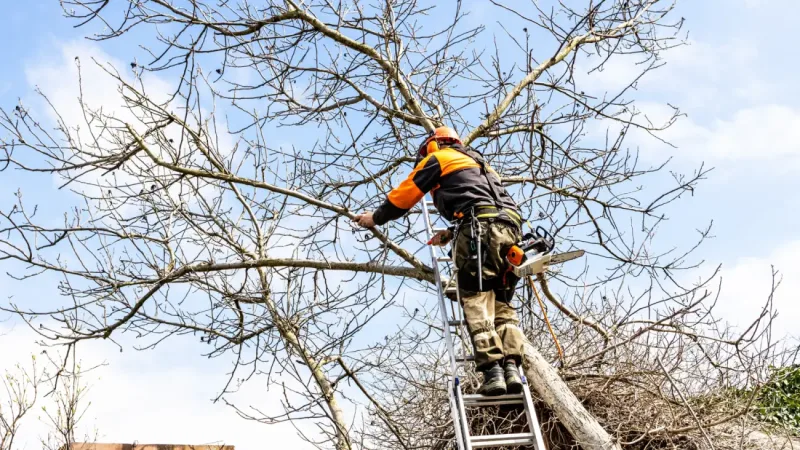
Look for TRAQ when the question is "is this tree safe?" and somebody other than you will rely on the answer. A city may ask for it, or an HOA board that wants each tree rated the same way. Insurers and attorneys may want a documented assessment when a claim or a neighbor dispute turns on the condition of a tree. Sometimes it's simpler: a large tree with a visible defect stands over a house or a sidewalk.
Requirements vary by place, so read the local rule instead of assuming. Kirkland, Washington is a clear example. The city's guide to arborist reports says the arborist must hold an up-to-date TRAQ credential for a hazard tree removal permit, and that every report must come from someone with at least two listed credentials. Elsewhere the rule may not mention TRAQ at all.
Before you hire, look the person up in ISA's directory and ask to see the digital certificate with its expiration date. Holders can keep their record private, so a missing listing proves nothing by itself.
Conclusion
If you're an arborist, open the eligibility catalog first. It tells you whether you can register now or need another credential. Then read the current ISA TRAQ Program Guide and pick a course far enough out that you clear the deadline and have time with the manual.
If you're hiring, ask two things: is the credential current, and will you get a written report? A TRAQ certified arborist who can say yes to both gives you a risk rating you can show to a city or an insurer. For more on credentials, reports and running tree care work, browse the ArboStar education hub.
Frequently Asked Questions
What does TRAQ stand for?
TRAQ stands for Tree Risk Assessment Qualification. It's a program of the International Society of Arboriculture, often written as ISA TRAQ.
Is TRAQ the same as being an ISA Certified Arborist?
No. ISA Certified Arborist is a broad certification maintained through recertification. TRAQ is a narrower qualification in tree risk assessment, earned through a specific course and exam. Holding one doesn't give you the other.
Do you need to be a certified arborist to take TRAQ?
No. Being an ISA Certified Arborist is one way to qualify. ISA also accepts four other ISA certifications, degrees in arboriculture, urban forestry, forestry or horticulture, national arboriculture certifications, and approved state or provincial licenses.
How long is TRAQ valid?
Seven years if you completed the updated program that took effect on November 5, 2025. Certificates earned or renewed under the earlier version run five years. Either way, you retake the full course and exams to get a new one.
How long is the TRAQ course?
Two days of in-person training plus a half-day exam. Within that half day, the written part allows two hours and the field assessment allows one.
Sources (4)
- TRAQ Prerequisite Eligibility Catalog ISA
- Upcoming programmatic changes to ISA TRAQ ISA
- ISA TRAQ Program Guide ISA
- Arborist Reports Guide City of Kirkland, Washington

Written by
The ArboStar Team shares practical insights, strategies, and updates for tree care companies focused on growth and efficiency.
All articles by ArboStar TeamWas this article helpful?
Thanks for the feedback!