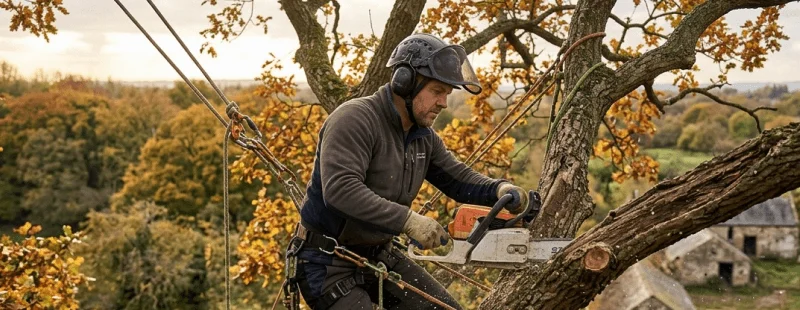


Picture a typical week for a tree care owner: climbing by sunrise, writing estimates at lunch, and still troubleshooting every job site until dark. It works – for a while. But demand rarely waits for the business to catch up, and the instinct to just add more trucks and hire faster can raise risk faster than it raises revenue.
One Irmo, South Carolina arborist built his company the way many owners do – starting with one person and one van, and, as a local profile of his business put it, no shortcuts. That kind of patience is the first thing to slip once the phone won't stop ringing.
Anyone searching for how to grow a tree service business will find no shortage of advice on leads, pricing and hiring. Far fewer resources answer the harder question: how do you keep work safe and consistent once you are no longer on every job site yourself? That is the real work of scaling – and the focus of this guide.
Why Growth Creates New Safety Risks
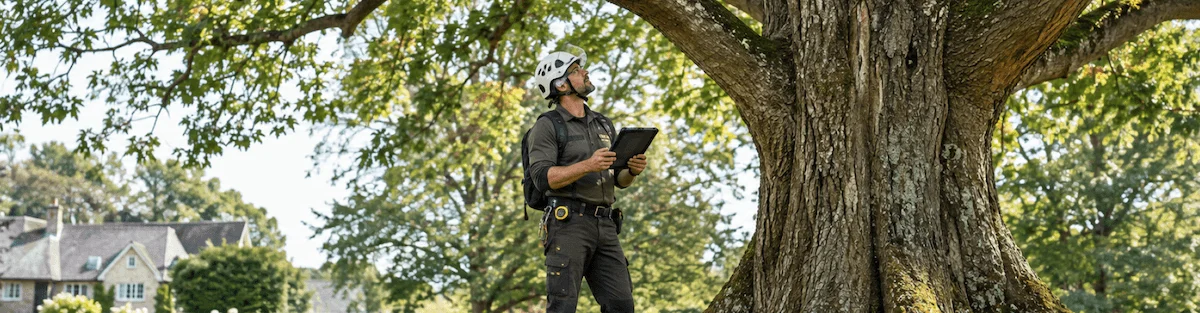
Growth changes more than the number of jobs on the calendar. Once a company brings on a second or third crew, the owner can no longer check every rigging setup or walk every property before the saw starts. New hires arrive with a wide range of experience, and two crews doing what looks like the same job – a storm-damaged removal, a routine prune – can quietly follow different procedures depending on who is leading.
Add more trucks, more climbing gear and more chippers being passed between teams, and equipment that used to live in one person's truck bed now has to be tracked, inspected and shared. Scheduling pressure has a way of encouraging shortcuts, especially when a crew is racing to fit one more job in before dark. And job details that used to travel straight from the estimator's head into the field can get lost somewhere between the office and the truck.
None of this means growth itself makes a tree care business more dangerous. The risk shows up when headcount and workload expand faster than the management systems built to support them – the kind of growing pains that catch up with a company all at once if nobody plans for them. Handled well, tree care business growth gets built on a foundation; handled carelessly, it gets built on hope.
Determine Whether the Business Is Ready to Scale
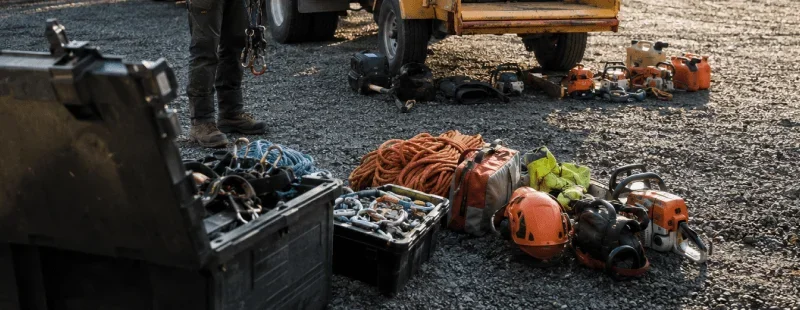
Before hiring a second crew, it is worth running a plain readiness check – the kind any solid answer to how to scale a tree service business should start with. (Owners still getting the business itself off the ground may want to start with this guide to starting a tree care company instead.)
Demand is predictable
A company that is ready to grow understands its numbers: how many qualified leads come in each month, what share of those turn into signed jobs, how big the confirmed backlog is, and how the seasons swing workload up or down. It also knows which services – removals, plant health care, storm response – put the heaviest load on people and equipment. Guesswork here just shows up later as an idle crew or an overbooked one.
Pricing supports a larger team
Rising revenue does not automatically mean the business can support another crew. Before adding one, it is worth confirming that pricing actually covers labor cost, workers' compensation, insurance, equipment payments, maintenance, training time, non-billable travel and administrative overhead – not just the visible cost of the job. There is no universal percentage that proves a company is ready; what matters is that someone has actually run the numbers rather than assumed growth will pay for itself.
Core operations are documented
Before the first new hire walks in, the owner should be able to describe – on paper, not just in their head – how the company takes a lead, runs an estimate, assesses site hazards, hands job information to the crew, assigns people and equipment, documents completed work, reports an incident or near miss, and sends an invoice. If those steps only exist in one person's memory, adding a crew multiplies the guesswork instead of the output.
Signs you are not ready to add another crew:
-
Job briefings only happen when the owner is physically on site
-
No one besides the owner can price a job accurately
-
There is no record of who has trained on which equipment
-
Near misses go unreported or undiscussed
-
Scheduling depends on memory rather than a shared system
Build Roles Before Adding Headcount
There is a real difference between hiring extra hands and building an operational role. A role comes with defined responsibilities, a required skill set, and a clear boundary around what a person can decide on their own – and that boundary matters just as much to tree service crew management as it does to payroll.
Define responsibilities
Each position – ground worker, climber, equipment operator, crew leader, estimator, scheduler or office coordinator, and eventually an operations manager – needs its own answer to three questions: what is this person responsible for, what do they need to know to do it safely, and what can they decide without checking with the owner first. Skipping this step is how two employees with the same job title end up doing the same job two different ways.
Choose crew leaders carefully
A fast climber is not automatically a good arborist crew leader – those are two different skill sets, and mixing them up is one of the more common mistakes owners make when promoting from within. What actually matters is hazard recognition, clear communication, technical competence, judgment under pressure, the ability to run a real job briefing, the willingness to stop work when something looks wrong, a knack for training less experienced workers, and the discipline to document what happened on site.
ANSI Z133, the arboricultural safety standard used across the industry, defines a crew leader as the qualified arborist designated as the individual in charge of a specific job or group of workers – a broad definition on purpose, since crew size and responsibility vary widely from one job to the next. Companies should confirm exact wording against the current edition of the standard, or through TCIA, before writing it into internal policy.
Standardize Training and Onboarding
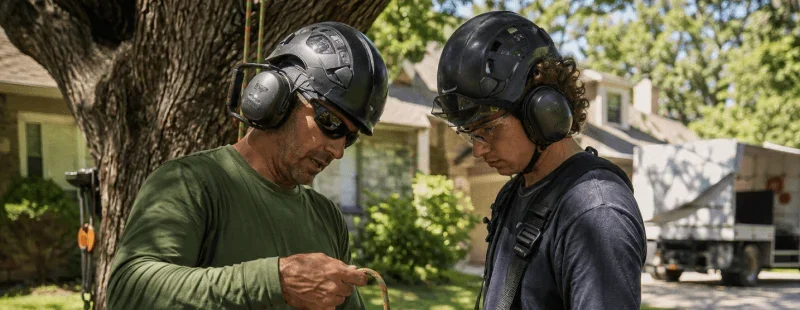
“Shadow an experienced worker for a few days” is not an onboarding program – it is a hope. A repeatable process looks more like this: introduce company safety policies, verify each hire's previous experience and qualifications, teach job-site communication and emergency procedures, train on every tool or machine they will be assigned, document the training that happened, run supervised field practice, confirm competency before anyone works independently, and put refresher training on the calendar instead of leaving it to chance.
TCIA's guidance on new-hire onboarding and employee development is a useful starting point for building this out. Treating tree service employee training as a documented process, not a one-time event, is what keeps quality consistent as headcount grows.
A simple competency matrix helps make training visible at a glance. This is one internal management tool, not a certification standard – an example might look like this:
| Skill | Trained & supervised | Independent | Not yet trained |
|---|---|---|---|
| Chainsaw operation |
|
✓ |
|
| Aerial rescue | ✓ |
|
|
| Chipper operation |
|
✓ |
|
| Crane-assisted removal |
|
|
✓ |
Create Repeatable Job-Site Safety Systems
Every crew should run through the same process on every job, whether or not the owner happens to be standing there. That means a pre-job briefing, a site-specific hazard assessment, clear assignment of roles, a marked work zone and drop zone, a PPE check, an equipment inspection, an emergency plan, an agreed method of communication, clearly assigned stop-work authority, and a short post-job review.
A checklist does not replace professional judgment or qualified supervision – it just keeps the basics from being skipped when the schedule is tight. OSHA's resources on safety and health programs for the tree care industry are a solid authoritative reference for what a program like this should cover, from job briefings to first aid and CPR readiness.
None of this is legal advice, and no single internal procedure guarantees compliance across every state – requirements vary, so it is worth checking local rules directly. What a documented tree care safety program does provide is a shared baseline, so “the way we do it” does not quietly change from crew to crew, and so tree service standard operating procedures exist somewhere other than the owner's head.
Scale Equipment Without Losing Control
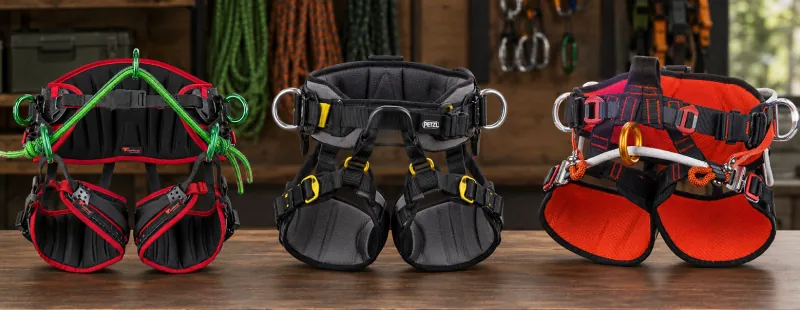
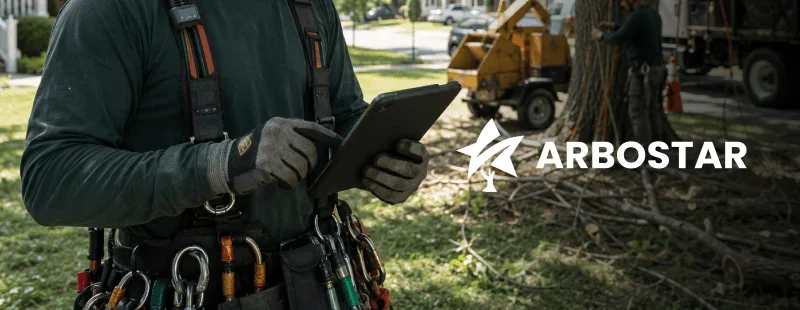
More crews does not just mean more chainsaws and chippers – it means more handoffs, more inspections and more maintenance events to track. A workable process assigns each piece of equipment to a crew or employee, keeps inspection records, logs defects the moment they are spotted, pulls unsafe equipment out of service immediately, schedules preventive maintenance instead of waiting for a breakdown, tracks anything shared between crews, confirms the crew using a machine is actually trained on it, and avoids double-booking the same piece of gear on two jobs at once.
A short equipment readiness checklist before a crew leaves the yard – fuel, PPE, chainsaw chain, rigging gear, first aid kit – catches most problems before they turn into a job-site delay.
This is one area where centralized ArboStar Equipment Management Software earns its keep: it gives office and field teams the same real-time view of what is assigned, inspected and due for service, instead of relying on a whiteboard or someone's memory.
Schedule Work Based on Safe Capacity
There is theoretical capacity – what the calendar could technically fit – and there is safe operational capacity, which accounts for crew competency, job complexity, travel time, required equipment, available daylight, weather, setup and cleanup, emergency work, maintenance downtime, and plain fatigue after a stretch of overtime.
There is no single utilization number that fits every company, since it depends heavily on service mix and crew structure, but a schedule with zero slack tends to produce the same result everywhere: rushed jobs. Sending the wrong crew to the wrong job creates operational and safety risk at the same time, since a crew stretched past its skill level is also a crew more likely to cut a corner it shouldn't.
Owners learning how to manage multiple tree crews often run into the same recurring conflicts – patterns covered in more detail in this breakdown of scheduling problems tree service companies face as they grow.
Track Metrics That Do Not Reward Unsafe Speed
Judging a crew purely on how many jobs it finished in a day quietly rewards cutting corners. A more honest scorecard – the kind that solid tree service business management depends on – tracks job duration variance, estimated versus actual labor hours, overtime, rework, property-damage incidents, near misses, incomplete job briefings, equipment defects, maintenance backlog, training completion, customer complaints, and gross profit by job type.
Near-miss reporting deserves a specific note: it works best as a learning tool, not a trigger for automatic discipline. A crew that reports a close call so the next one does not happen is doing exactly what the business needs; punishing that instinct just teaches people to stop reporting.
A Safe Scaling Roadmap for Tree Care Companies
There is no single formula every growing tree service company has to follow, but a rough sequence tends to hold up across most operations moving from solo work to multiple crews. Treat it as a conceptual roadmap, not a rigid industry standard.
| Stage | Focus | Key milestone |
|---|---|---|
| Solo operator | Documenting core processes | Lead-to-invoice workflow written down |
| First hire | Defining one clear role | Responsibilities and training recorded |
| First independent crew | Crew leadership | A qualified crew leader running jobs solo |
| 2–3 crews | Standardized safety systems | Every crew follows the same job-briefing process |
| 3–5 crews | Equipment and scheduling controls | Assignment, inspection and safe-capacity scheduling in place |
Companies that have already moved beyond the early growth stage may face a different set of operational challenges as they approach ten or more crews – a scenario covered separately in why growth breaks tree care businesses after ten crews.
How Software Supports Safer Growth
None of these systems have to live on paper. Centralized tree service business software can help by keeping job notes and site photos in one place, assigning employees and equipment to specific jobs, showing crew availability at a glance, tracking training records, passing information between office and field teams without a game of phone tag, logging actual labor time, cutting down on scheduling conflicts, and keeping one shared history for every customer and every job.
This is where a platform like ArboStar fits in – not as a replacement for training or supervision, but as the connective tissue between them. It is worth being clear-eyed about the limits, though: software can support consistent processes and documentation, but it does not replace training, qualified supervision or professional judgment. A tool only works as well as the process behind it.
For companies expanding into new regions as they grow, the operational picture gets more complex again – a topic covered in managing multi-city tree care operations.
Final Checklist Before Adding Another Crew
-
Roles and responsibilities are documented
-
A qualified crew leader is ready
-
Training and competencies are recorded
-
Job briefings follow one repeatable process
-
Equipment is assigned, inspected and maintained
-
Scheduling accounts for skills and job complexity
-
Emergency and stop-work procedures are understood
-
The business tracks profit, workload and safety indicators
-
Field and office teams work from one source of job information
-
The owner can step away without operations becoming unsafe or chaotic
Conclusion
Healthy growth was never about squeezing in the most crews or chasing the fastest revenue line. A tree care company is ready to grow when its people can do the work safely and profitably without the owner standing over every job – that is the real answer to how to grow a tree service business, as opposed to just growing it fast. Systems, training and clearly defined roles are what make that possible; headcount alone only adds risk. Get the order right, and adding a second, third or fifth crew stops feeling like a gamble and starts feeling like the next logical step.
See how ArboStar helps growing tree care companies coordinate crews, equipment, schedules and job information in one system. Book a demo.
FAQ
How do you scale a tree service business?
Start by stabilizing demand and cash flow, then document how the business actually operates. From there, develop qualified crew leaders, standardize training, and only add crews and equipment once those systems are in place.
When should a tree service hire its first employee?
Once workload is steady, pricing fully covers the cost of an employee, the role has a clear definition, and an onboarding and supervision process is ready – not simply the moment there is more work than one person can handle.
How do you manage multiple tree crews?
Through clearly defined roles, qualified crew leaders, centralized scheduling, standardized job records, equipment tracking, and regular performance reviews that weigh safety alongside output.
What safety systems should be in place before adding another crew?
A repeatable job briefing and hazard assessment process, documented training records, routine equipment inspections, clear emergency procedures, defined stop-work authority, and a system for reporting incidents and near misses.
What metrics should a growing tree care business track?
Lead and sales metrics, labor hours, job profitability, overtime, rework, equipment downtime, training completion, and both incidents and near misses – not just completed jobs per day.
See how ArboStar can run your tree care business
Quoting, scheduling, crews and invoicing in one place. Book a short demo and see it with your own jobs.