

Best Tree Inventory Software in 2026: A Practical Guide for Tree Care Businesses
Every tree you inspect is a data point: species, DBH, condition, location, the date it last got looked at. Lose track of those points and you are quoting jobs from memory, missing re-inspections, and explaining to a client why the maple you flagged last spring came down on their garage. The best tree inventory software in 2026 turns that scattered field knowledge into a map you can act on, and the right choice depends heavily on whether you run a commercial tree care company or manage a municipal urban forest.
This guide breaks down the platforms worth looking at, what actually separates them, and how to match a tool to how your crews already work.
What Tree Inventory Software Actually Does
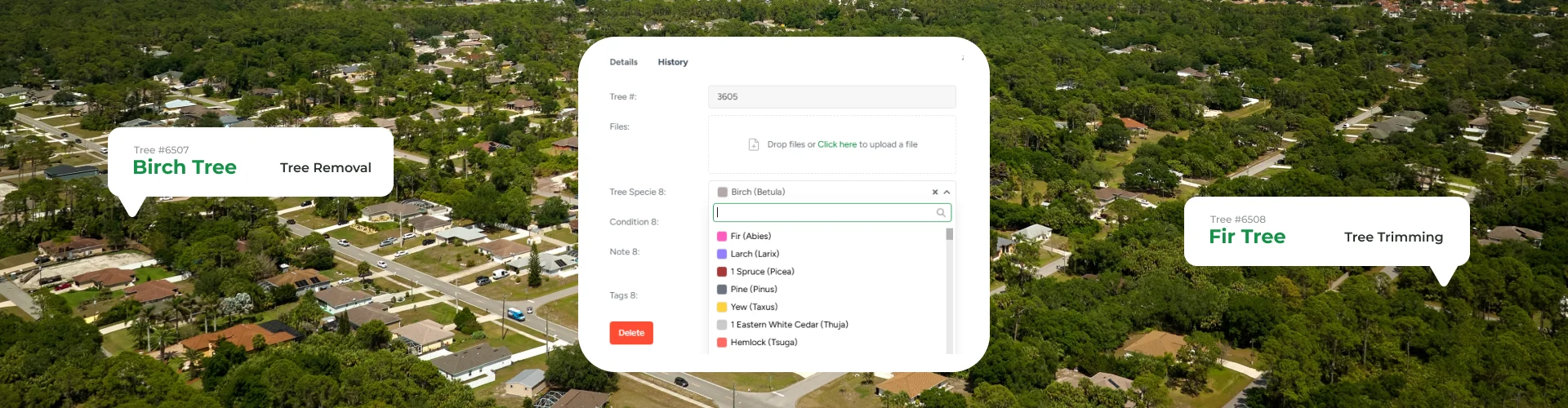
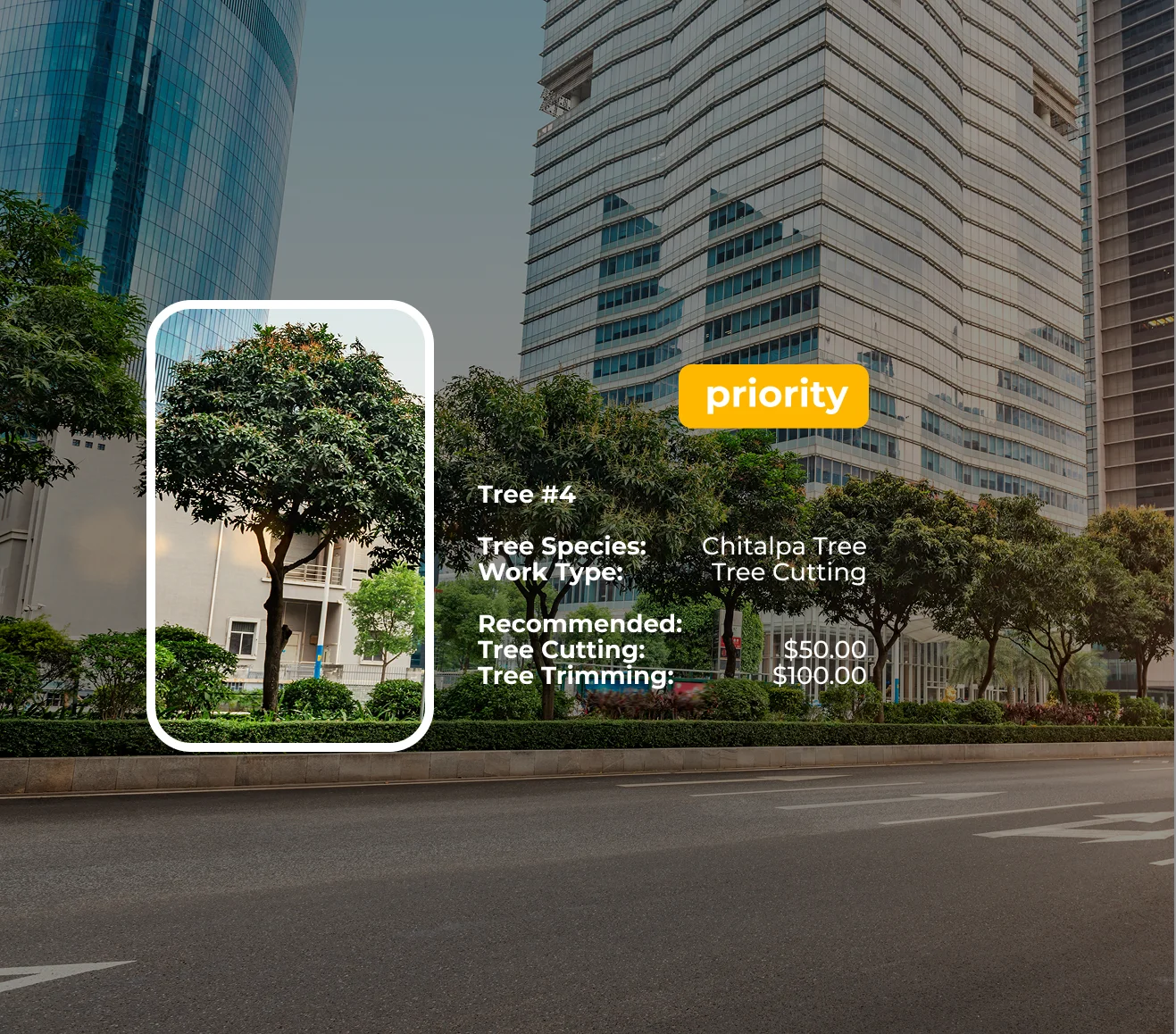
At its core, tree inventory software is a database of individual trees tied to their location on a map. Each record holds the attributes an arborist cares about: species, diameter at breast height (DBH), height, canopy spread, health rating, and any risk factors flagged during inspection. Modern platforms let a technician capture all of that on a phone or tablet in the field, drop a GPS pin, attach photos, and sync it to a central map the whole team can see.
The value shows up later. When a storm rolls through, you can pull every high-risk tree in the affected zone. When a client asks what you recommended two years ago, the record is there. And when a TRAQ-qualified assessor needs to schedule re-inspections, the software surfaces which trees are due instead of leaving it to a spreadsheet nobody updated. For urban forestry programs, that same dataset feeds canopy analysis and long-term planting plans.

Two Kinds of Tools, and Why It Matters
Most buyers get tripped up because “tree inventory software” describes two genuinely different categories of product, and picking from the wrong one wastes money.
Dedicated inventory and GIS platforms, think TreePlotter or the USDA's i-Tree Suite, were built for municipalities, consultants, and urban forestry departments. They are excellent at mapping thousands of public trees, running canopy studies, and integrating with enterprise GIS systems like ESRI. What they generally do not do is run a business. There is no estimating, no invoicing, no crew scheduling.
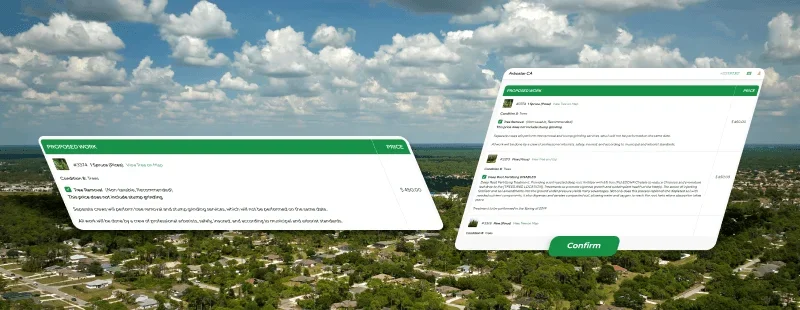
Business management platforms, where ArboStar and SingleOps sit, treat the tree inventory as one module inside a full operating system for a tree care company. The inventory connects directly to estimates, work orders, the live job map, invoicing, and crew scheduling. For a commercial operator, that connection is the whole point: an inspection in the field can become a quote without anyone re-typing the tree's details.
If you are a city forester, a dedicated GIS tool is probably your answer. If you run crews and send invoices, an all-in-one platform will save you far more time than a standalone inventory ever could.
How We Compared Them
Rather than rank features in a vacuum, the comparison below weighs the things that decide whether software actually gets used day to day:
-
Mapping and GPS: how precisely trees are placed, and whether the map is genuinely usable in the field
-
Tree data capture: species, DBH, height, health, and custom fields for your own inspection forms
-
Risk assessment: support for TRAQ-style evaluations and structured condition tracking
-
Offline field use: whether crews can collect data with no signal and sync later
-
Reporting: client-ready reports and exports for permits or council submissions
-
Business integration: whether inventory data flows into estimating, scheduling, and invoicing
-
Pricing model: subscription tiers, per-user costs, or free public tools
The Best Tree Inventory Software in 2026
Here is how the leading options stack up before we get into each one.
| Platform | Best for | Business tools included | Offline field app | Starting price |
|---|---|---|---|---|
| ArboStar | Tree care businesses wanting one system | Yes (full CRM, estimating, scheduling) | Yes | Custom quote |
| TreePlotter INVENTORY | Municipal & consulting GIS | No | Yes | Custom quote |
| i-Tree Suite | Free canopy & benefit analysis | No | Limited | Free |
| SingleOps | Green-industry business management | Yes | Yes | Custom quote |
| TreeKeeper | Urban forestry programs | No | Yes | Custom quote |
| Jobber | Small crews on a budget | Partial (general field service) | Yes | ~$39/mo |
Arbostar: Best All-In-One For Tree Care Businesses
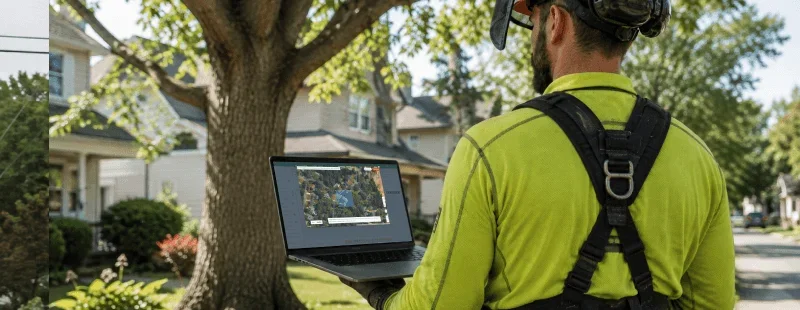
ArboStar is built specifically for tree service companies, and the tree inventory lives inside a platform that also handles sales, estimating, scheduling, accounting, and fleet tracking. A crew maps a tree in the field, tags its species and condition, and that record is immediately available to the office for a follow-up estimate or a recurring maintenance plan. Because inspections happen where signal is unreliable, the mobile app keeps working through offline functionality and syncs once a connection returns.
The trade-off is that ArboStar is a commitment. It replaces the patchwork of separate apps most companies limp along with, so it makes the most sense for operators serious about running the whole business from one place rather than buying a standalone inventory tool. Pricing is quote-based and scales with company size.
What does your CRM actually cost you?
ArboStar users report measurable results – not just features.
TreePlotter INVENTORY: Best for Municipal GIS
Made by PlanIT Geo, TreePlotter INVENTORY is a browser-based GIS platform aimed squarely at cities, consultants, and urban forestry teams. It handles large public-tree datasets well, plays nicely with ESRI and existing municipal GIS, and supports detailed risk and condition attributes. For a commercial contractor it is overkill in some areas and missing the business side entirely (there is no estimating or invoicing), but for asset-management work at the municipal level it is a category leader.
i-Tree Suite: Best Free Option
i-Tree is a free set of tools from the USDA Forest Service, and it remains the go-to for quantifying the environmental and economic benefits of trees: stormwater interception, carbon storage, air-quality value. It is genuinely free, which is rare in this space. What it is not is a day-to-day operational inventory with a slick mobile app or job workflows; it is an analysis toolkit. Many organizations use i-Tree alongside a commercial platform rather than instead of one.
SingleOps: Established Business Management Alternative
SingleOps serves the broader green industry (tree care, landscaping, lawn care) with CRM, estimating, and scheduling in one system, plus inventory and mapping features. It is a credible all-in-one option and a common name in ArboStar's competitive set. Companies that live entirely in tree care sometimes find its arborist-specific depth thinner than a tree-focused platform, so it is worth demoing both if you are weighing a full-business switch.
TreeKeeper: Best For Urban Forestry Programs
TreeKeeper, from Davey Resource Group, is another municipal-leaning platform focused on public tree management, work order tracking, and community engagement tools like public-facing tree maps. It is a solid choice for a parks department or urban forestry program that needs to manage a public canopy and report to stakeholders, rather than for a private contractor chasing quotes.
Jobber: Best Lightweight Entry
Jobber is general field-service software, not arborist-specific, but small tree care crews often start there because it is inexpensive and easy to learn. You get scheduling, quoting, and invoicing, and you can log basic property and job details. What you do not get is a real tree inventory with species-level records, DBH tracking, or TRAQ-style risk fields. It is a reasonable on-ramp for a one- or two-crew operation that will likely outgrow it.
How to Choose the Right Platform for Your Operation
Start with one question: are you managing an urban forest or a business? A municipality or consultant collecting public-tree data leans toward TreePlotter, TreeKeeper, or i-Tree, where GIS depth and canopy analysis matter more than invoicing. A commercial company that inspects, quotes, and services trees for paying clients gets far more from a platform where the inventory feeds the rest of operations.
From there, three things separate the finalists. Check that the field app truly works offline, because a tool that stalls the moment your tech loses signal in a back yard will quietly go unused. Confirm the tree data model fits your inspection forms. If you can't record DBH, health class, and custom notes the way your assessors already think, adoption suffers. And weigh integration honestly: standalone inventory data that nobody connects to estimates or scheduling tends to rot. The fewer times someone re-types the same tree's details, the more the software earns its cost.
Whatever you shortlist, book a live demo with your own scenario in hand: a real property, a real inspection, a real quote, and watch how many steps it takes to get from field to invoice.
From Inspection to Invoice, in One Flow
Walk through your own property, your own inspection, your own quote – and see how few steps it takes to get from field data to a finished invoice
Frequently Asked Questions about Tree Inventory Software
What is tree inventory software and why do I need it?
It is a mapped database of individual trees, each with attributes like species, DBH, height, condition, and location. Tree care businesses use it to track assets, schedule re-inspections, quote work accurately, and defend risk decisions with a documented history instead of relying on memory or scattered spreadsheets.
Is i-Tree Suite really free?
Yes. i-Tree is developed by the USDA Forest Service and its tools are free to use. It is built for quantifying tree benefits and running canopy analysis rather than for running day-to-day business operations, so most companies pair it with a commercial platform rather than relying on it alone.
Which is better for a small tree care business versus a municipality?
A small commercial business is usually better served by an all-in-one platform like ArboStar or SingleOps, where the inventory connects to estimating and scheduling. Municipalities and urban forestry programs typically favor dedicated GIS tools like TreePlotter or TreeKeeper for large public datasets and canopy reporting.
How much does ArboStar cost?
ArboStar uses custom, quote-based pricing that scales with the size of your operation and the modules you need. You can see current options and request figures on the ArboStar pricing page.
Can crews collect tree data offline in the field?
The better platforms support offline data capture. A technician can record trees, photos, and GPS points with no signal, and the app syncs everything once a connection returns. This matters for tree work, where inspections often happen in areas with poor coverage.
Want to see how a tree inventory works when it is wired into estimating, scheduling, and invoicing? Book an ArboStar demo and walk through your own inspection-to-invoice flow.