



Tree Inventory Software Compared:
Which One Fits a Commercial Tree Care Business?
A sourced look at TreeKeeper, TreePlotter INVENTORY and JOBS, PlanIT Geo and i-Tree. What each is genuinely best at, what each vendor actually publishes on price, and when a commercial tree care business needs more than an inventory.

Short Answer (So You Don’t Waste Time)

Inventory tools catalog trees. ArboStar catalogs trees and runs the company that maintains them. That is the whole comparison in one line, and both halves are legitimate work.
If you run a municipal urban forestry program, TreeKeeper and TreePlotter are frequently the right answer. They are purpose-built, mature, and they integrate with the asset and 311 systems a city already runs. You are not billing per job, so a CRM would be dead weight.
If you are a commercial operator selling removals, pruning and maintenance, the inventory is where the work starts. You also need tree mapping that feeds quotes, schedules, crews and invoices - and that is what ArboStar is, running on the same tree care CRM record from first lead to paid invoice.
Start With Who You Are, Not With The Feature List
These products look similar in a search result and are built for three different jobs. Find the row that describes you and the shortlist gets very short.
Profile 1
You run a public urban forestry program
A city, town, park district, campus or cemetery. You are responsible for a population of public trees, you report to council or a grant body, and you are not invoicing anyone for the work.
Shortlist: TreeKeeper or TreePlotter INVENTORY. A CRM and an invoicing module would be dead weight you still pay for.
Profile 2
You are a consulting arborist selling inventories
The inventory is the deliverable. You survey someone else's trees, assess condition and risk, and hand over data and a report. Field speed and defensible methodology are the whole product.
Shortlist: TreePlotter INVENTORY, or i-Tree plus ArcGIS Field Maps if you have GIS skills in-house and prefer to build it.
Profile 3
You are a commercial tree care contractor
You sell removals, pruning and maintenance. The inventory is where the work starts, not where it ends: it has to turn into a quote, a scheduled crew, a completed job and a paid invoice.
Shortlist: ArboStar, or TreePlotter JOBS if you want mapping and jobs only and will run sales and reporting elsewhere.
The Full Comparison
Compiled from each vendor's own documentation in August 2026. Where a vendor does not document a capability we mark it "not listed" rather than claim it is missing.
Swipe the table sideways to compare all five →
| Capability | TreeKeeperDavey Resource Group | TreePlotter INVENTORYPlanIT Geo | TreePlotter JOBSPlanIT Geo | i-TreeUSDA Forest Service | ArboStarTree care operations |
|---|---|---|---|---|---|
| Inventory and field data | |||||
| GIS tree inventory and mapping | Yes | Yes | Tree maps per job site | Analysis only, you supply the data | Yes |
| Mobile field collection | Yes | Yes, any device | Yes | No | Yes |
| Works offline in the field | Not listed | Yes, online or offline | Not listed | Desktop tool | Yes, whole job not just tree data |
| Per-tree history, photos, documents | Yes | Yes | Yes | No | Yes |
| Unlimited users on the plan | Tiered by users | Yes, unlimited access | Not published | Free for everyone | Licence based, volume discounts |
| Analysis, compliance and reporting | |||||
| i-Tree eco-benefit values | Public benefits portal | Live i-Tree benefits API | Not listed | This is the source engine | Not the focus |
| Tree risk assessment and appraisal | Inspection and work records | Add-on modules | Not listed | No | Condition and risk fields per tree |
| Municipal system integrations 311, Cartegraph, Cityworks |
Yes | ESRI and GIS oriented | No | No | No, different buyer |
| Reporting on the trees | Yes | Configurable queries | Job oriented | Yes, peer reviewed | Yes |
| Reporting on the business margin, crew cost, ad spend |
No | No | Job costing | No | Business Intelligence module |
| Running a commercial tree care business | |||||
| CRM and lead management | Not listed | Not listed | Customer database | No | Yes, lead to close |
| Estimating and proposals | Not listed | Not listed | Yes, map based estimates | No | Yes |
| Invoicing and payments | Not listed | Not listed | Invoices, QuickBooks Online | No | Yes |
| Work orders | Municipal service requests | Add-on module | Yes | No | Yes, commercial crew dispatch |
| Crew scheduling and routing | Work planning | Not listed | Job scheduling | No | Yes, with route optimization |
| Live crew and equipment tracking | No | No | Not listed | No | Live job map |
| Equipment and fleet management | Not listed | Park assets, not fleet | Not listed | No | Yes |
| HR, timesheets and payroll | Not listed | Not listed | Not listed | No | Yes |
| Commercials | |||||
| Pricing published by the vendor | Yes, tiered | No, quote only | No, quote only | Free | Yes, entry price |
| Entry price | From $3,600 USD / year | Not published | Not published | $0 | From $149 USD / month |
| Primary buyer | Cities, parks, campuses | Government, consultants, nonprofits | Tree care companies | Anyone | Commercial tree care companies |
Yes — documented by the vendor
Partial — limited, or in a separate module
Not listed — not documented by the vendor
Sources: Davey TreeKeeper, PlanIT Geo TreePlotter, TreePlotter JOBS, i-Tree, ArboStar pricing. Checked August 2026. Vendors change their products, so confirm anything decision-critical in writing before you sign.
What Each Tool Actually Does
The honest version, including the part most comparison pages get wrong.
TreeKeeper
Davey Resource Group
One of the oldest products in the niche and still the default for a lot of North American cities. Davey describes it as designed by urban foresters for urban foresters, and the pedigree is real: customisable asset inventories, work planning, call tracking, printer-friendly work order generation, comprehensive reporting, and integrations into the systems a city already runs, including 311 request systems, Cartegraph and Cityworks.
- Best at
- Deep municipal inventory with public-sector integrations
- Built for
- Cities, parks departments, universities, cemeteries
- Pricing
- Published tiers from $3,600 USD/year, $8,000 for midsized cities, larger programs on request
- Where it stops
- Davey's feature page does not list CRM, estimating or invoicing
Verdict: if you are a public program, this is a legitimate first choice and the published pricing is a genuine advantage. If you are a contractor, the half of the job that earns money happens somewhere else.
TreePlotter INVENTORY
PlanIT Geo
TreeKeeper's closest direct competitor and the stronger product if GIS is the point. Web-based, works on any device, collects data online or offline with sync, and gives unlimited user access rather than charging per seat. It was the first third-party platform to implement the live i-Tree benefits API, so ecosystem values come from the i-Tree engine itself rather than a stale lookup table. Risk assessment, appraisal and work order management are available as add-on modules.
- Best at
- Web GIS inventory, unlimited users, genuine offline collection
- Built for
- Government, consulting arborists, universities, nonprofits
- Pricing
- Not published. Third-party directories quote figures that contradict each other, so get a written quote
- Where it stops
- No CRM, estimating or invoicing in INVENTORY itself, that lives in JOBS
Verdict: the best pure inventory on this list for most buyers. If that is the decision in front of you, read ArboStar vs TreePlotter next.
TreePlotter JOBS
PlanIT Geo
This is the one most comparison pages miss, including an earlier version of this one. PlanIT Geo also sells a separate product aimed squarely at contractors. Its own terms of use describe it as "a web-based software platform for managing and sharing tree maps, estimates, work orders, and invoices online for tree care companies," and it has a QuickBooks Online integration. It is a real commercial tool, not a municipal inventory with a job tab bolted on.
- Best at
- Map-based estimates a customer can approve, tied to jobs and invoices
- Built for
- Small and mid-sized tree care companies
- Pricing
- Not published by PlanIT Geo
- Where it stops
- Sales pipeline, equipment, HR and company-level financial reporting are not documented
Verdict: the closest thing on this list to a genuine alternative to ArboStar for a contractor. The honest split is scope: JOBS covers map, estimate, job, invoice. ArboStar covers that plus sales, crews, equipment, HR and the profitability reporting on top.
i-Tree, and building it yourself
USDA Forest Service / Esri
i-Tree is free, peer-reviewed and made by the USDA Forest Service. It is not a field app and not a database you run your program on: it takes inventory or plot-sample data you already have and turns it into defensible numbers for carbon, air quality, stormwater and energy. It is the engine the paid tools quote, not a competitor to them. The genuine DIY route is Esri's Tree Management solution on ArcGIS Field Maps, which gives online and offline collection and dashboards, but it is a configuration rather than a product, and it needs GIS skills on staff to stand up and keep running.
- Best at
- Free, credible ecosystem-benefit numbers for a grant or a council report
- Built for
- Anyone, from students to large programs
- Pricing
- i-Tree is free. ArcGIS is licensed separately per organisation
- Where it stops
- No CRM, estimating, invoicing, scheduling or dispatch in either
Verdict: if the deliverable is a report and you have the skills, this combination is hard to beat on price. If the deliverable is a business that runs itself, it is the wrong tool.
Where ArboStar Fits, And Where It Does Not
We would rather you buy the right thing than churn in six months.
ArboStar is probably wrong for you if
You are a municipal urban forestry program. You need 311, Cartegraph or Cityworks integration, a public tree-benefits portal, and canopy analysis for a council report, and you are not billing anyone per job. TreeKeeper and TreePlotter are built for exactly that and we are not. Buy one of those.
You are a consulting arborist whose product is the inventory itself, and your buyers want i-Tree eco-benefit outputs and canopy assessments. TreePlotter INVENTORY is the better fit.
ArboStar is built for you if
You sell and deliver tree work commercially. The tree data matters, but so does everything downstream of it: the lead that came in from Google, the estimate that has to go out today, the crew and chipper that have to be in the right place tomorrow, the invoice that has to get paid, and the question of which services actually made money last quarter.
That is the difference in one line. Inventory tools catalog trees. ArboStar catalogs trees and runs the company that maintains them, on tree mapping that feeds quotes, schedules, crews and invoices.
Get the Strategy Your Competitors Don’t Have
While most CRMs just help you manage jobs, growth comes from consistent lead generation. We created a practical guide for tree care companies:
“Tree Care Marketing Playbook 2026”
How to get calls for
$15–$30
instead of
$100+

How to rank
#1
in your area using
Google Business Profile

How to automate reviews and build
a 5-star
reputation

How to scale
Google Ads and SEO
without wasting budget
What ArboStar Actually Helps You Do
ArboStar connects your office, crews, and finances in one system. No spreadsheets. No disconnected tools. No blind spots.
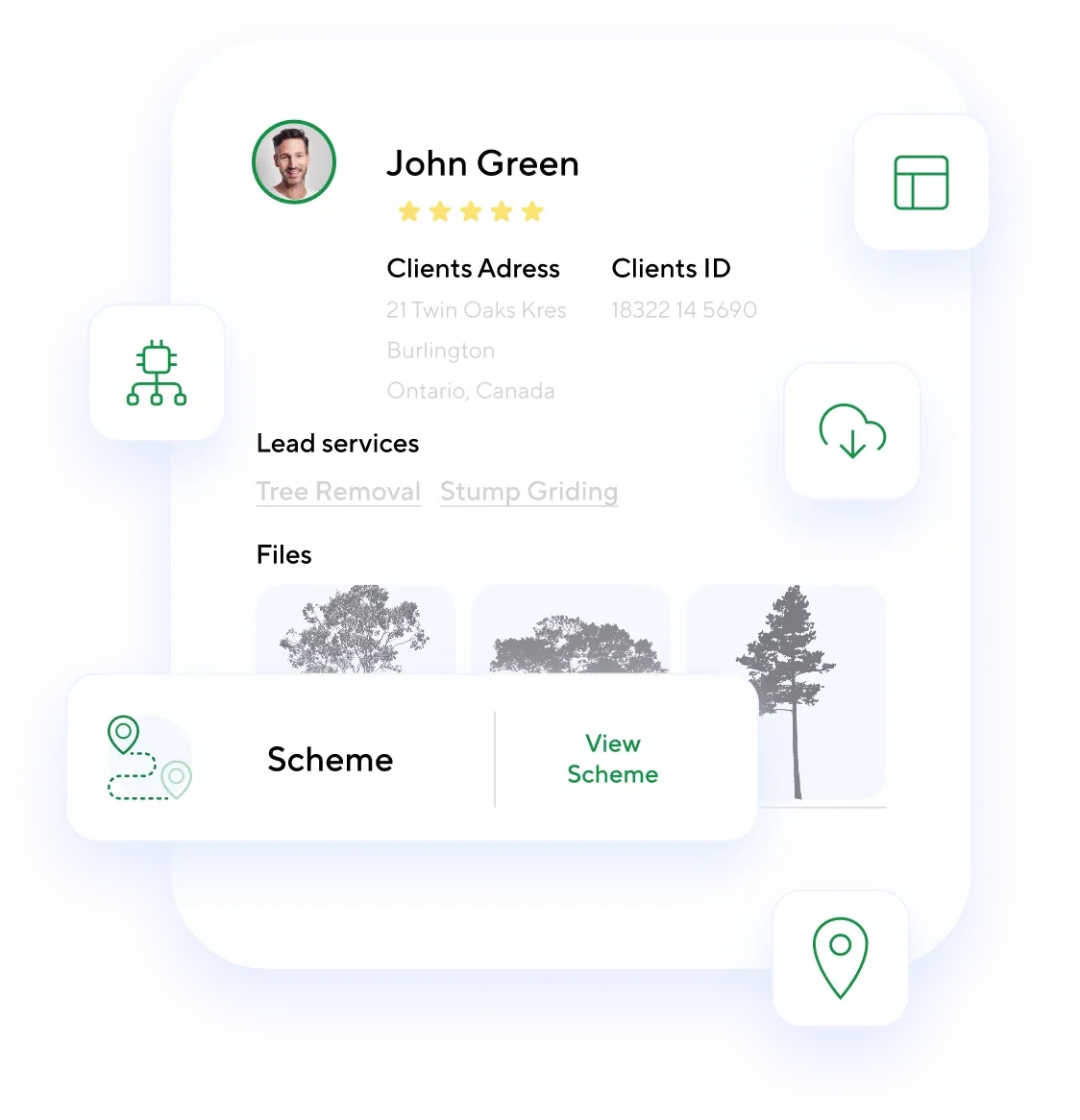
Track every tree (history, health, risk, photos).
Schedule crews with route optimization.
Track profitability by job, crew, and service.
Create estimates, invoices, and reports in one workflow.
See real business performance in real time.
Real Clients Stories






Explore Our Platform in Action
Watch the video and find out how ArboStar can streamline your tree care business! See How It Works
Switch to ArboStar Risk-Free
VIP Onboarding Package
Full Data Migration
Early access to RAI (the first AI crew in the industry)
No disruption to your operations
FAQ
Tree inventory software catalogs trees. ArboStar catalogs trees and runs the company that maintains them. TreeKeeper and TreePlotter are built to hold species, condition, risk and location data for an urban forest, and they are good at it. ArboStar holds the same tree data and then attaches quoting, scheduling, crews, equipment, invoicing and reporting to it, because a commercial operator has to sell and deliver the work, not only record it.
Two of them are genuine options. TreeKeeper and TreePlotter INVENTORY are built for municipal urban forestry programs, so they do not attempt CRM, estimating, invoicing or payroll, and for a city that is a deliberate design choice rather than a gap. PlanIT Geo does also sell a contractor product, TreePlotter JOBS, which handles map-based estimates, work orders and invoices with a QuickBooks Online integration, so it belongs on a contractor's shortlist. ArboStar goes wider than JOBS by adding sales pipeline, crew and equipment management, HR and company profitability reporting on top of the same tree data.
No, and the distinction matters when you are comparing quotes. PlanIT Geo sells TreePlotter INVENTORY, PARKS and CANOPY to urban forestry programs, and sells TreePlotter JOBS separately to tree care companies. JOBS has its own brand, its own terms of use and its own support portal, and PlanIT Geo describes it as a platform for managing tree maps, estimates, work orders and invoices for tree care companies. If someone tells you TreePlotter cannot quote or invoice, they are describing INVENTORY, not JOBS.
They offer strong reporting about trees: canopy analysis, ecosystem benefits, i-Tree compatibility, inspection and risk history. What they do not offer is business intelligence about the company, which is the question a commercial owner is asking. ArboStar reports on crew efficiency, job and service profitability, advertising return and sales performance alongside the tree data.
Inventory platforms use GPS to place trees accurately on a map. They do not track crews, because their users are not dispatching crews. ArboStar uses GPS for both, mapping the trees and showing crews, vehicles, equipment and active jobs on one live job map so a dispatcher can move the right crew and the right kit to the next job.
Offline collection is a genuine strength of the inventory tools. TreePlotter states data collection works online or offline with sync, which matters for foresters working in low-signal areas. ArboStar has a dedicated offline module that covers the whole job, so a crew can work through the schedule, notes and job records as well as the tree data, and everything syncs when signal returns.
Yes, and it is often an addition rather than a replacement. ArboStar includes free data migration, setup and training, with no setup fees, and most companies are running in two to four weeks. Existing tree records, sites and clients come across into a platform that also handles the quoting and the money.
ArboStar provides live support with an average response time under 5 minutes, with onboarding and training included. The inventory vendors sell into public-sector procurement, where support and service levels are typically negotiated per contract rather than published, so ask for the specifics in writing before you sign.