

As an arborist, you know the drill – juggling jobs in the field, keeping your crew safe, and keeping clients happy… all with a small team and not enough hours in the day. Automating things like scheduling, invoices, or route planning can really help: it can cut admin work by up to 70% and let your crew get almost 30% more done. If you want to take on more jobs, spend less time waiting around, and keep your service top-notch, automation is a smart way to grow your business without burning out you or your team.
Why Automation Is Key to Scaling a Tree Care Business
Tree care companies that stick to manual processes eventually hit a wall. Paperwork piles up, scheduling gets messy, and client follow-ups slip – adding more crews just makes the chaos worse.
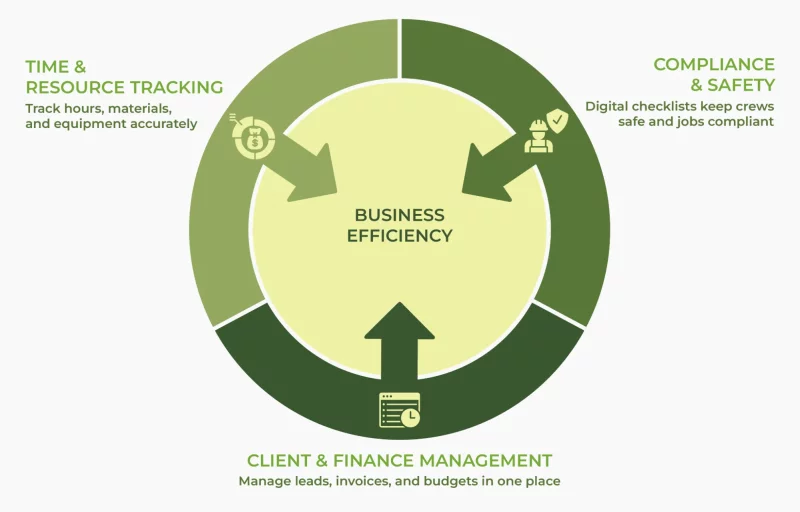
Automation fixes this by turning scattered tasks into organized systems:
-
Compliance & Safety: Digital checklists keep crews safe and jobs compliant
-
Time & Resource Tracking: Track hours, materials, and equipment accurately
-
Client & Finance Management: Manage leads, invoices, and budgets in one place
With automation, you can grow your business, take on more jobs, and keep service quality high – all without hiring extra admin staff.

Streamline Operations with Field Management Software
Integrated Field Management Software (FMS) acts as the backbone of a growing tree care business. It connects estimating, job completion, and payment to reduce delays and boost efficiency and cash flow.
Automate Scheduling and Dispatch
Keeping track of routes and crews manually can slow things down. Modern software does the hard work for you – it plans the best routes, matches crews to jobs by location and type, and cuts fuel, wear on vehicles, and overtime. GPS dispatch gives you live traffic updates and alerts, so you never miss a stop or call. All that saved time? You can spend it growing your business, talking to clients, and planning your next jobs.
Automate Billing and Invoicing
A strong FMS speeds up the move from completed work to payment. When billing links directly to job management, invoices are created instantly once crews finish a task, and customers can pay on any device. Automating invoicing cuts errors and admin costs, dropping processing expenses from about $30 to $5. Late-payment reminders can also shorten collection times by up to 18 days, boosting cash flow.
Track and Monitor Performance
Integrated software makes it easy to see what’s happening across your whole business and make smarter decisions. Tools like Arborgold track job costs in real time, showing which jobs make money and helping set accurate prices. GPS and time-tracking keep tabs on crews, log hours, and send alerts if vehicles or equipment move outside set zones. Automated maintenance and inventory updates help avoid downtime and keep your team safe.
Improve On-Site Workflows
Mobile apps make life on the job a lot easier. Crews can see job details, schedules, and safety info instantly. Digital reporting cuts down on paperwork, keeps things accurate, and lets techs focus on the work that matters. You can even handle invoices and collect signatures on-site, which makes customers happier and speeds up payments.
Automate Marketing and Sales for Faster Growth
The tree care business grows, and word-of-mouth alone isn’t enough. Automation creates a steady flow of qualified leads, manages them effectively, and expands market reach in a consistent, controlled way.
CRM Integration
A green industry tree service CRM like ArboStar centralizes client data, estimates, service records, and communications – essential for managing multiple crews or locations. It ensures consistent, accurate quotes with preset pricing and supports targeted marketing through tracked service history, boosting retention and reviews.
AI Chatbots and Lead Qualification
AI chatbots do more than just provide 24/7 support – they help sort out leads instantly. They can answer basic questions, check if a job is in your service area, and make sure requests fit what you offer. By filtering out the low-value leads, your sales team can focus on the jobs that really matter, helping you book more work and grow your business online.
Review and Referral Automation
Keeping your reputation strong is key to growing your business, and automation makes it easier. After a job, the system can automatically ask for reviews, helping you get more positive ratings fast. It can also spot happy clients in your CRM and send them referral requests, keeping new business coming in without extra effort.

Optimize Labor and Equipment with Automation
Automation also improves field operations, targeting the two biggest costs in tree care: skilled labor and heavy equipment.
Autonomous Equipment
Robots and autonomous equipment can help when crews are short and make dangerous tasks safer. They take care of repetitive or risky work, so arborists can focus on the tricky, high-value jobs. Examples include robotic mowers like Vitirover and forestry machines like AORO, which use AI, GPS, and sensors to navigate, spot logs, and keep working without breaks – boosting productivity.
Automated Inventory Management
Tracking tools and materials shouldn’t slow you down. Automated inventory systems keep tabs on stock, equipment, and tool locations. You get alerts when supplies run low or maintenance is due, so jobs stay on schedule. Crews can even check inventory from their phones before heading out, making sure nothing gets left behind.
Smart Workforce Allocation
Modern scheduling software does more than plan routes. It automatically matches crews to jobs based on location, type, and skills, so the right people handle the tricky tasks. Cloud-based systems let managers update schedules on the fly, cutting delays and keeping work running smoothly.
How Automation Impacts Profitability
Automation can make your tree care business more profitable. It cuts admin work, plans routes, and speeds up invoicing – letting crews do more jobs and get paid faster, sometimes bringing huge returns in the first year.
Key areas where tree care automation drives profit in arboristics include:
-
Route and crew optimization – reduces fuel costs and travel time.
-
Automated invoicing and payments – accelerates cash flow.
-
Job costing and resource tracking – improves pricing accuracy and profit margins.
-
Mobile apps for crews – increase productivity and reduce errors.
CRM-based lead management – maximizes conversion and customer retention.
Is a Tree Care Business Scalable?
Advanced systems help boost profitability by focusing on high-margin services like Plant Health Care (PHC), which often deliver 30–50% margins. Automation simplifies renewals and scheduling, making recurring contracts easier to manage and allowing businesses to prioritize profitable services over low-margin work.
This quantified financial impact of integrated digital systems is summarized below:
| Automated function | Primary financial benefit | Benchmark improvement / savings |
|---|---|---|
| Accounts payable (AP) / billing | Reduced labor & error costs | Cost per invoice reduced from ~$30 to ~$5 |
| Financial process automation (general) | Overall ROI within first year | Median ROI of 150%, potentially up to 300% |
| Route optimization / scheduling | Reduced operational expenses | Significant decrease in fuel, maintenance, and overtime labor costs |
| Cash flow management | Accelerated collections | Collections accelerated by up to 18 days |
| Customer reviews / referrals | Enhanced reputation & new leads | Google reviews increased from 15 to ~500 via tree care automation |
The easiest way to grow your tree care business is with tech that standardizes work. Automation handles estimates, schedules, and invoices, keeps quality consistent, and cuts admin time so you can grow without the headaches.
How to Start Implementing Automation in Your Tree Care Business
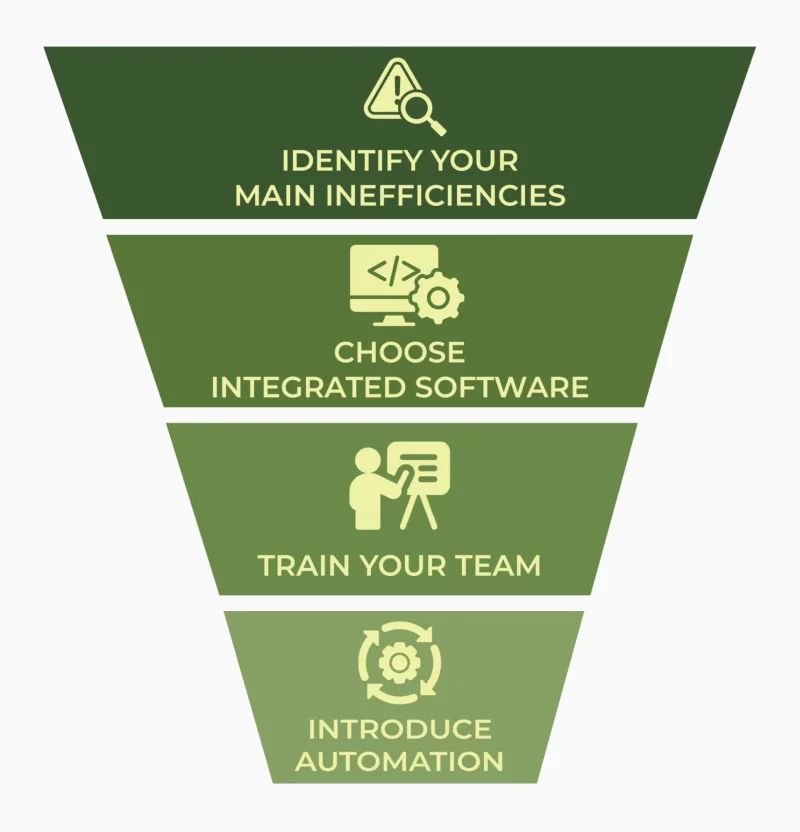
A strategic approach is essential when implementing automation, focusing on incremental steps to achieve early wins and ensure team adoption.
-
Identify your main inefficiencies – like scheduling, invoicing, or client communication – and target the tasks that cause the most delays or lost revenue. Prioritize high-impact fixes such as automated invoicing or automated scheduling.
-
Choose integrated field management software that connects with your CRM and accounting tools like Arbostar. It should include mobile access, GPS tracking, and digital forms.
-
Train your team with role-specific guidance and hands-on practice. Appoint peer champions and monitor adoption closely.
-
Introduce automation step by step. Start with core tools for estimating and invoicing, then expand to dispatch and mobile work orders. Such platforms combine lead management and crew scheduling in one place.
FAQ: Tree Care Automation and Growth
How profitable is a tree service business with automation?
Top tree care companies can reach profit margins of 20% or more. Automation supports this by optimizing high-margin services like PHC (30–50%) and emergency work (25–40%). Tools such as route optimization, automated invoicing, and cost tracking help sustain and grow these margins.
How can automation help generate more tree service leads?
Automation enhances lead generation and customer value. AI chatbots qualify prospects instantly, while automated reviews, referrals, and CRM campaigns boost reputation and drive repeat business.
How does automation affect business valuation?
Automation raises business valuation by standardizing operations and reducing dependence on individuals. Investors favor data-driven systems that lower risk, improve transparency, and enable scalable, sustainable growth.
Is landscaping and tree care a scalable business?
Landscaping and tree care businesses scale best through strategic technology. Integrated FMS and tree service CRM tools simplify scheduling, resources, and cash flow, enabling growth across multiple crews and locations without added overhead.
Final Thoughts: Grow Smarter, Scale Faster
Landscaping and tree care businesses can scale effectively with strategic technology use. Growth means expanding clients and service areas without increasing administrative overhead. Integrated FMS and CRM tools streamline scheduling, resource tracking, cash flow forecasting, and contract management. These systems enable sustainable expansion from single-crew operations to multi-location enterprises.