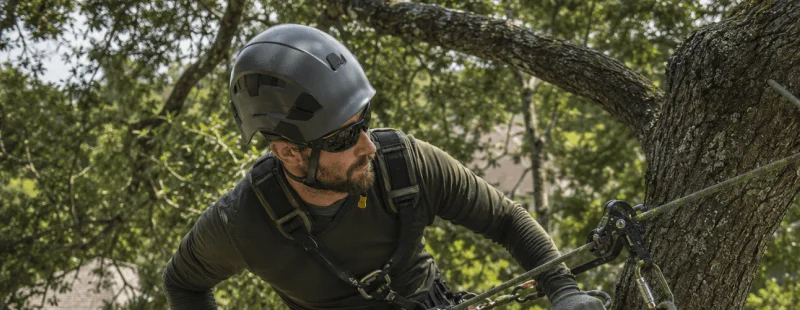


Best Arborist Helmets: How to Choose the Right Head Protection for Tree Work
Quick Summary: An arborist helmet is required gear for anyone working aloft in a tree. Look for helmets that meet ANSI Z89.1 (US/Canada) or EN 12492 (EU/UK), ideally both. The models tree care crews buy most often are the Pfanner Protos Integral, Petzl Vertex Vent, and KASK Zenith X2. A construction hard hat does not meet the impact or retention requirements for climbing. When comparing helmets, focus on ventilation, mounting points for hearing and face protection, and whether the helmet is rated for climbing or ground work only.
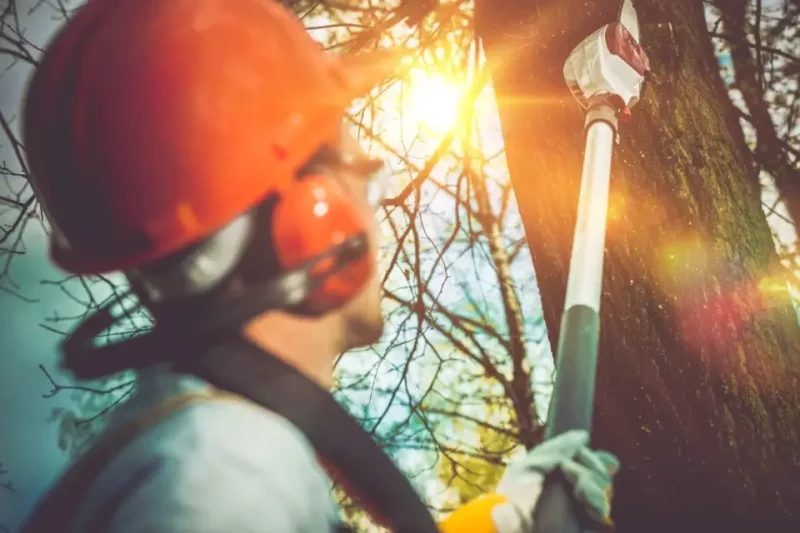
Why a Standard Hard Hat Is Not Enough for Tree Work
A construction hard hat is built for one direction of impact: straight down, from a falling object. That’s what ANSI Type I and most Class G/E hard hats are designed and tested for. Tree work doesn’t produce that kind of hazard alone. A climber working in the canopy can take a hit from the side when a branch swings back, or from a falling limb while positioned off to one angle rather than directly underneath.
Hard hats also typically lack a chin strap, or have one that isn’t rated to keep the helmet on during a fall or a sudden jolt. For anyone tied in and moving through a canopy, a helmet that comes off on the way down defeats the purpose of wearing it. This is the core reason the industry treats “arborist helmet” as its own category rather than a subtype of hard hat: it has to stay on the head through lateral impacts as well as vertical ones, and it has to stay on during the exact moment things go wrong.
Ground crew work is a different risk profile. A ground worker standing under a tree while a climber is aloft faces mostly the falling-object hazard a standard hard hat is designed for. That distinction matters when you’re deciding what to buy for different roles on a crew, which we cover further down.
Safety Standards: What the Certifications Actually Mean
Two standards come up constantly in arborist helmet listings, and they don’t test for the same thing.
ANSI Z89.1 (United States and Canada) classifies industrial head protection by impact type and electrical rating.
-
Type I helmets protect against impact to the top of the head only.
-
Type II helmets protect against impact to the top and sides, which is the category climbing helmets fall into.
-
Class E helmets are tested for high-voltage electrical insulation; Class C helmets have no electrical rating at all.
-
Class G sits in between, offering a lower-voltage rating.
For anyone working near overhead power lines, or on municipal contracts where that’s a possibility, Class E matters as much as the impact rating.
EN 12492 (Europe and UK) takes a different approach, testing impact resistance from the front, back, sides, and top, along with penetration resistance and chin strap retention force. It’s the standard most climbing-specific helmets are built around, including ones sold in North America, because it directly addresses the lateral-impact gap in ANSI Type I.
In practice, the helmets tree care professionals actually climb in are usually certified to both standards, or to EN 12492 plus ANSI Type II. If a helmet is only rated ANSI Type I with no EN 12492 equivalent, it’s a signal that it’s meant for ground work rather than climbing.
Key Features to Look For in an Arborist Helmet
Beyond certification, a few practical features separate a helmet that works all day from one that gets left in the truck.
- Ventilation. Climbing in summer heat with a sealed helmet gets uncomfortable fast, and discomfort is what leads to helmets being worn incorrectly or not at all. Vented shells or adjustable vents matter more than they might seem on paper.
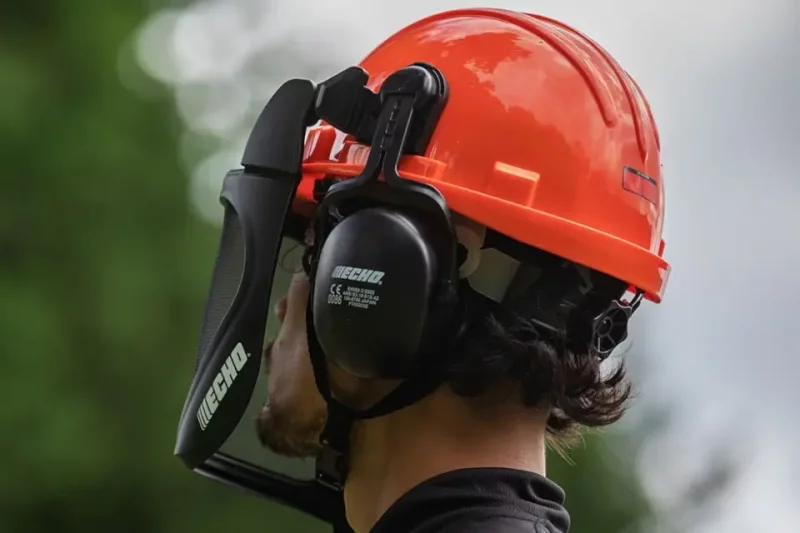
- Accessory mounting points. Ear defenders and a face shield or mesh visor need somewhere to attach. Slotted rails are the common standard, but not every rail fits every accessory, so checking compatibility before buying separate pieces from separate brands saves a return shipment later.
- Impact absorption system. Manufacturers take different approaches here. Some rely on the shell itself deforming to absorb energy. Others use EPS foam liners similar to a bicycle helmet. Newer designs add a second material layer, such as Koroyd, aimed specifically at reducing rotational forces linked to concussion. None of these is objectively better in every situation; they trade off differently on weight, single-impact versus repeated-impact durability, and cost.
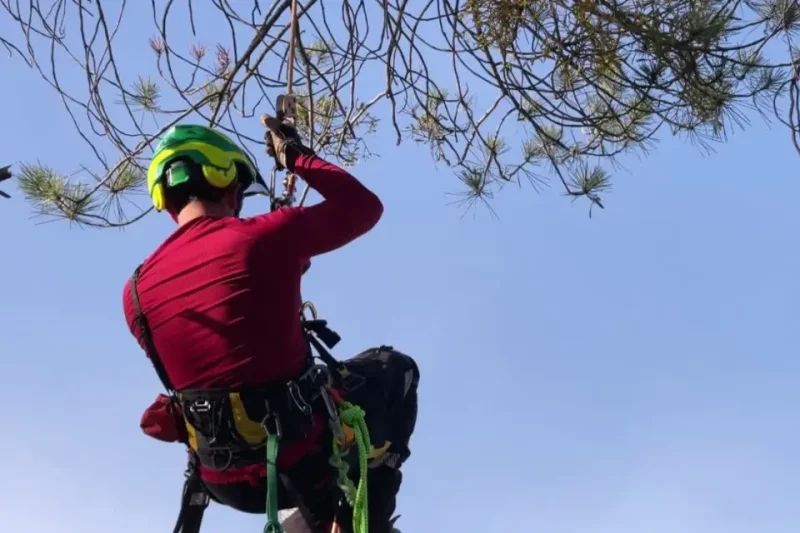
- Chin strap. For climbing, a four-point chin strap rated to hold the helmet on during a fall is non-negotiable. This is one of the clearest differences between a helmet built for tree work and a general-purpose hard hat.
- Weight and profile. A helmet that sits low and close to the head causes fewer branch snags and less neck fatigue over a long day aloft. This becomes more noticeable the longer the shift and the denser the canopy.
Top Arborist Helmets in 2026
The models below show up consistently in professional gear catalogs and are worth comparing directly against each other rather than buying on brand reputation alone. Specifications and pricing change over time and vary by retailer, so check the manufacturer’s current listing or a dedicated supplier like WesSpur or SherrillTree before ordering.
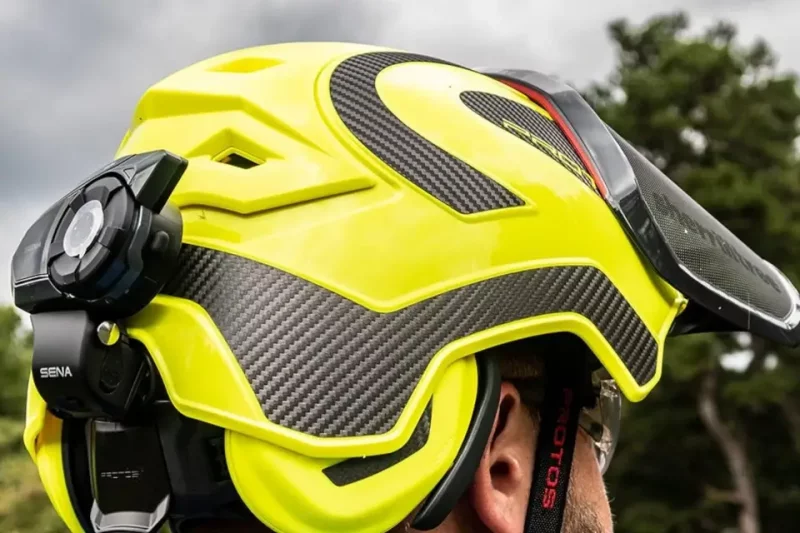
Pfanner Protos Integral
The Protos Integral is built as a complete system rather than a helmet you add accessories to later. Ear defenders, a face shield, and the shell are designed together from the start, which keeps the fit consistent and avoids the compatibility guesswork that comes with mixing brands. It suits climbers who want full head, ear, and face protection out of the box without assembling it themselves. The tradeoff is less flexibility if you want to swap in a different visor or hearing protection down the line.
Petzl Vertex Vent
The Vertex Vent is one of the longest-standing names in the category, using a shell-deformation system to absorb impact. It has wide compatibility with third-party ear defenders and face shields, which makes it a flexible starting point for crews who want to build their own combination rather than buy an all-in-one system. Ventilation is a strong point, which helps in warmer climates or peak summer months.
KASK Zenith X2
The Zenith X2 uses an EPS foam liner and carries a Class E electrical rating, which puts it in a different category from the two above for anyone doing utility line clearance or municipal tree work near power infrastructure. Crews working under or near overhead lines should treat the electrical rating as a primary factor rather than an afterthought when comparing helmets.
Petzl Strato
The Strato is Petzl’s lighter option, using a two-part protection system rather than the single molded shell found on the Vertex Vent. Climbers who spend long hours aloft and feel the weight of a full-day helmet by the afternoon tend to gravitate toward it. It gives up some of the accessory ecosystem the Vertex Vent has built up over the years in exchange for reduced weight.
Studson
Studson is a newer entrant built around a Koroyd insert layered with EPS foam, aimed at reducing rotational impact forces linked to concussion risk, an approach borrowed from bicycle and motorsport helmet design. For crews prioritizing head injury research over legacy brand familiarity, it’s worth a look, though its track record in tree care specifically is shorter than Petzl’s or KASK’s.
Climbing Helmet vs. Ground Crew Helmet: Do You Need Different Gear?
Not every role on a crew needs the same helmet, but there’s a case for buying the same one anyway.
Climbers need a chin strap, Type II or EN 12492 lateral protection, and ideally an electrical rating if the job is anywhere near power lines. This isn’t optional. Ground crew members working under a climber face a narrower risk, mostly falling debris, and a Type I ANSI helmet can technically meet that requirement on paper.
In practice, many tree care businesses standardize on one helmet spec for the whole crew rather than running two different tiers of protection. It simplifies training, since everyone learns the same fit and adjustment process. It also simplifies PPE tracking: one model, one set of replacement intervals, one supplier relationship. If your business already documents PPE issuance for audits or insurance purposes, a single standard is far easier to keep current than a mixed fleet of helmet types.
Buying Helmets for Your Tree Care Crew
A few things to check before placing an order for more than one or two helmets:
Sizing runs differently across brands, so measure head circumference for each crew member rather than guessing from shirt size or past experience with a different manufacturer’s helmet. Confirm accessory compatibility if you’re buying ear defenders or face shields separately from the shell; rail systems aren’t universal. Plan for replacement: most manufacturers recommend replacing a helmet after any impact strong enough to matter, and on a fixed schedule regardless of visible damage, typically every three to five years depending on the model and how it’s been stored.
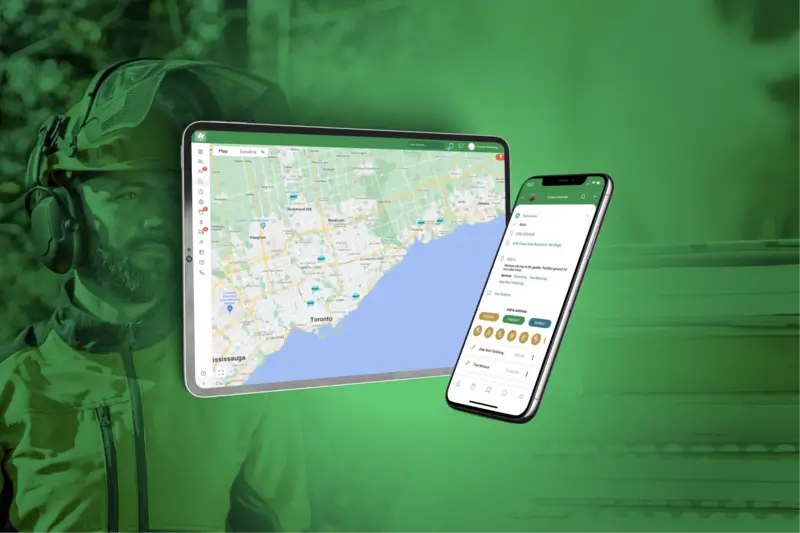
That replacement schedule is also where a lot of small tree care businesses lose track of things. If you’re managing PPE for more than a couple of employees, keeping a record of who was issued what, on what date, and when it’s due for replacement, becomes its own administrative job. ArboStar lets you log equipment issuance per employee and flag upcoming replacement dates alongside the rest of your crew and job records, so helmet tracking doesn’t live in a separate spreadsheet from everything else you’re already managing.
Conclusion
Choosing an arborist helmet comes down to matching the certification to the job: Type II or EN 12492 for anyone climbing, Class E if there’s any chance of working near power lines, and a chin strap rated to hold through a fall rather than just to keep the helmet from blowing off in the wind. From there, the differences between the Protos Integral, Vertex Vent, Zenith X2, Strato, and Studson are mostly about weight, ventilation, and whether you want an all-in-one system or a build-your-own setup. Whichever you choose for your crew, tracking issuance and replacement dates is easier when it’s part of the same system you’re already using to run jobs. See how ArboStar handles PPE tracking alongside scheduling and crew records with a short demo.
FAQ
Is a regular construction hard hat okay for tree climbing?
No. A hard hat is built for straight-down impact only and typically lacks a chin strap rated to keep it on during a fall. Climbing helmets need to protect against lateral impacts and stay on the head through a fall, not just resist a falling object from above.
What’s the difference between ANSI Z89.1 and EN 12492?
ANSI Z89.1 (US/Canada) classifies helmets by impact type (Type I vs Type II) and electrical rating (Class C, G, or E). EN 12492 (EU/UK) tests impact resistance from the front, back, sides, and top, plus chin strap retention. Most climbing helmets sold in North America are certified to EN 12492, ANSI Type II, or both.
Do ground crew members need the same helmet as climbers?
Not strictly. Ground crew face mainly a falling-object risk that a Type I hard hat can cover, while climbers need Type II or EN 12492 lateral protection and a rated chin strap. That said, many tree care businesses standardize on one helmet spec for the whole crew to simplify training and PPE tracking.
How often should an arborist helmet be replaced?
Most manufacturers recommend replacement after any impact strong enough to matter, and on a fixed schedule regardless of visible damage, typically every three to five years depending on the model and how it’s been stored.
What are the top arborist helmet picks for 2026?
The Pfanner Protos Integral, Petzl Vertex Vent, KASK Zenith X2, Petzl Strato, and Studson all show up consistently in professional gear catalogs, each with different tradeoffs around weight, ventilation, electrical rating, and whether it’s an all-in-one system or a build-your-own setup.
How can a tree care business keep track of helmet and PPE replacement dates?
ArboStar lets you log equipment issuance per employee and flag upcoming replacement dates alongside the rest of your crew and job records, so PPE tracking doesn’t have to live in a separate spreadsheet.