

In 2026, you need more than good crews and solid equipment to keep things running smoothly. Costs keep rising, workers are harder to find, and customers expect quick updates. The software you use can either help you stay on track or slow you down.
Arborgold has been a reliable choice for years, especially for estimates and reporting. But for many teams, it now feels slow or harder than it needs to be. Long setup times, field apps that don’t always work, and missing modern features push you to look for better options.
That’s why we will break down the best Arborgold alternatives so you can spend less time on paperwork and more time on the job.
Why Tree Care Companies Look for Arborgold Alternatives
Arborgold played a key role in shaping arborist software, but many companies now find it harder to keep up with how they work today. As your business grows and customer expectations change, you start to look for tools that feel faster, simpler, and more flexible – especially in the field.
Common reasons companies begin searching for Arborgold alternatives include:
-
Complex, legacy interface. You may find the system heavy or overbuilt for lean teams, with too many steps for everyday tasks like estimates or job updates.
-
Limited customer communication tools. Clients expect quick updates, online approvals, and self-service options. Older systems often lack smooth, built-in workflows for this.
-
Smarter scheduling and routing needs. Rising fuel costs make efficient routing critical. Many teams now want AI-assisted tree care scheduling software to cut drive time and costs.
-
Slow setup and scaling challenges. Long onboarding and training periods create friction when you hire new staff or grow quickly.
-
Mobile-first field requirements. Crews need apps that work offline, upload clear photos, and stay reliable on remote job sites.
Missing or weak integrations. You likely rely on tools like QuickBooks Online, marketing platforms, or GIS mapping, and limited native integrations can become a deal-breaker.
What to Look for in Tree Care Software Like Arborgold
When you compare tree care software similar to Arborgold, you focus on tools that match real-world arborist workflows. The right system helps you price jobs accurately, manage crews and equipment, communicate clearly with customers, and get paid faster – without adding unnecessary complexity.
Below is a quick breakdown of the core features to look for and why they matter.
| Feature | Why it matters for your business |
|---|---|
| Tree-specific estimating | You can add detailed tree inventory items directly to estimates, including species, size, and work scope (e.g., Tree #1: White Oak – pruning per ANSI A300), which keeps bids accurate and professional. |
| Scheduling & dispatch | Drag-and-drop scheduling lets you manage multi-day jobs, assign crews, and plan equipment like bucket trucks or cranes without confusion. |
| CRM & customer communication | Automated “on-my-way” texts, reminders, and follow-up emails help you respond faster and improve close rates with less admin work. |
| Mobile crew app | Digital work orders with site maps, hazard notes (risk assessment), and photo capture give crews clear direction and provide documentation for liability protection. |
| Job costing & profitability | Real-time tracking of labor hours versus estimates helps you see which jobs stay profitable and where adjustments are needed. |
| Invoicing & payments | Built-in card processing or tap-to-pay options allow you to collect payment on-site and improve cash flow. |
Top Arborgold Alternatives for Tree Care Businesses
If Arborgold feels slow or complex, you’re not alone. This article breaks down the top Arborgold alternatives for tree care businesses looking for simpler, more modern tools.
ArboStar (Best Specialized Software for Arborists)
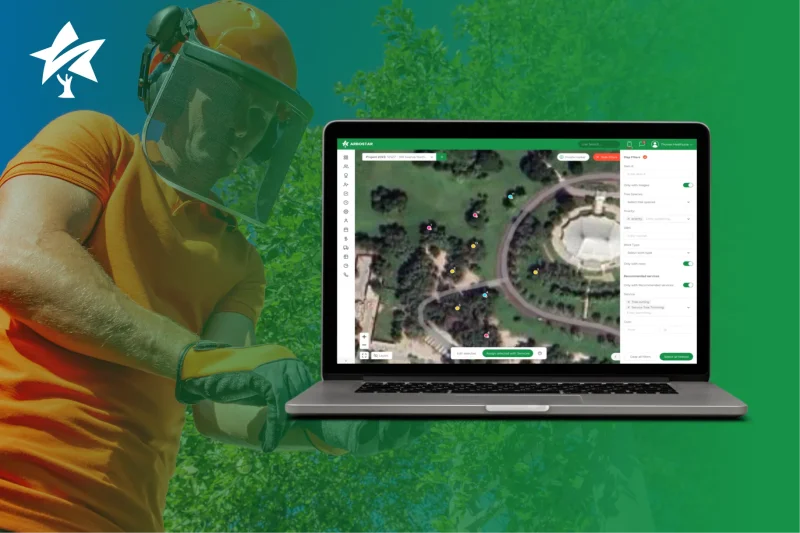
ArboStar, as an Arborgold competitor, stands out as a true specialist, built specifically for the tree care industry rather than adapted from general field service software for arborists. If you handle complex jobs, detailed inventories, and strict safety standards, this platform focuses on the tools you actually use every day.
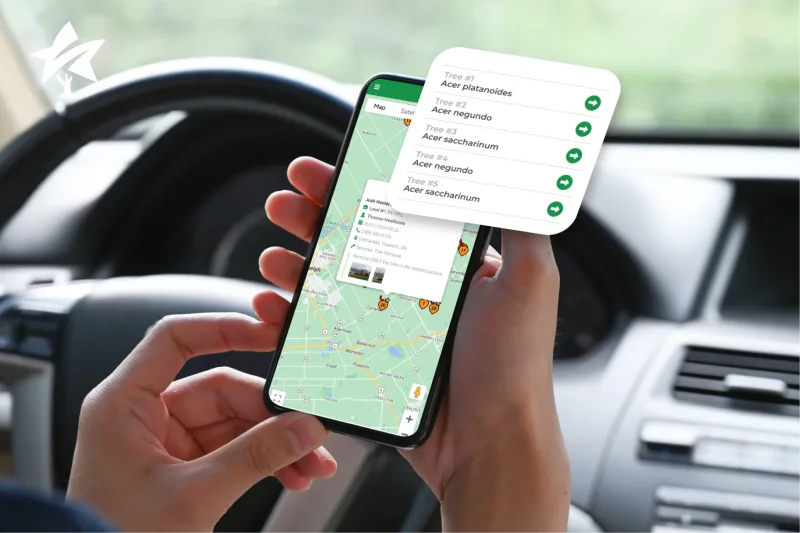
One of its strongest features is visual tree inventory. You can map individual trees using GIS tools, track their condition over time, and keep a clear history for each property. This makes planning, reporting, and long-term client and crew management tree care solutions much easier, especially for municipalities or large estates.
ArboStar also includes core business tools like CRM, GPS-based fleet tracking, and safety compliance features designed around ISA standards. Everything works together as a centralized system, giving you clear oversight across crews, equipment, and jobs.
This software fits best if you run a mid-to-large tree care company, typically with over $1M in annual revenue, and need a powerful command center rather than a lightweight tool.
Pros of ArboStar
-
True arborist focus – designed specifically for tree care, not repurposed from landscaping or general tree service management software.
-
Detailed GIS tree mapping – еrack every tree’s health, history, and treatment directly on property maps.
-
Comprehensive safety tracking – built-in compliance tools aligned with ISA standards, including crew certifications and hazard documentation.
-
Integrated fleet management – GPS tracking of trucks and equipment for better dispatch, routing, and utilization insights.
-
Customizable reports – generate detailed, tree-specific reports for clients, municipalities, or insurance purposes.
-
Scalable for large operations – handles thousands of jobs and multiple crews without slowing down.
Workflow automation – automates follow-ups, inspections, and maintenance schedules tailored to tree care operations.
Jobber
Jobber, software like Arborgold, is often seen as one of the easiest platforms to use among service business tools. It is not built specifically for arborists, but it focuses on the core tasks of running a service company, such as handling leads, sending quotes, scheduling work, and collecting payments.
Teams usually get started quickly, and the interface feels straightforward compared to more complex systems like Arborgold. Customers can approve quotes, pay invoices, and request new work online, while crews use the mobile app to track time, upload photos, and collect payments on-site. Recent updates also added AI-assisted routing and voice-based note entry for field staff.
Key considerations when evaluating Jobber include:
-
Fast setup and learning curve – many companies can configure the system and begin using it within a single day, with minimal training required.
-
Customer self-service tools – clients can manage quotes, payments, and service requests through an online portal without phone calls.
-
Mobile app – crews can clock in, document work with photos, and accept tap-to-pay payments directly in the field.
-
New 2026 features – AI-assisted routing and hands-free voice notes support more efficient field operations.
-
Limited tree-specific functionality – the platform does not offer GIS tree mapping or long-term plant health tracking, and treats work as general jobs.
-
Basic job costing – labor and materials are tracked at a high level, with limited detail for specialized equipment or complex projects.
-
Pricing and integrations – per-user pricing can increase costs as teams grow, and some users experience occasional QuickBooks Online sync issues.
SingleOps
SingleOps is software built for the green industry, with tools that support the operational side of tree care work. It is often used by companies that manage complex jobs and longer-term service programs.
Key points companies often consider include:
-
Recurring and multi-stage workflows – supports plant health care programs and linked jobs, such as scheduling follow-up services automatically after a removal.
-
Job-level cost tracking – tracks labor, equipment, and material costs against individual jobs to show profitability while work is in progress.
-
Tree inventory tools – allows users to map trees, log species, size, and condition, and build proposals directly from inventory data.
-
Structured digital proposals – provides interactive quotes where customers can review details and select optional services.
-
Setup and learning effort – a wide feature set means onboarding and training often take more time than simpler platforms.
-
Mobile app reliability – performance can vary in low-connectivity areas, with offline use not always seamless.
-
Support response variability – some users report slower technical support after the initial onboarding phase.
-
Pricing and contract terms – higher monthly costs and longer contracts can reduce flexibility as team size changes.
Housecall Pro
Housecall Pro is a field service management platform mainly used by general home service businesses. It covers basic admin tasks from booking to job completion.
Core functionality:
-
Booking and scheduling – central calendar with online booking for customers
-
Dispatching – real-time team tracking and office-to-field communication
-
Payments – invoicing and mobile payments at the job site
The platform is suitable for general residential services, such as HVAC or plumbing. However, it is less ideal for arborists because it lacks features like tree inventory or GIS mapping, plant health care tracking, and advanced tree estimating software needed for complex tree work.
RealGreen (WorkWave)
RealGreen, part of WorkWave, is a CRM and operations platform designed for high-volume service businesses. It integrates back-office operations with broader business processes and is often used in the tree care industry for maintenance and Plant Health Care (PHC) services.
Key features:
-
Marketing automation – supports lead generation, direct mail campaigns, referral tracking, and customer history management.
-
CRM for large databases – handles high volumes of customer information efficiently.
-
Recurring service management – manages multi-visit contracts and seasonal applications.
-
Routing and dispatch – optimizes high-density routes for fertilization or pest control programs.
-
Measurement and estimating tools – includes property measurement and automated service estimates.
Kickserv
Kickserv is a cloud-based field service management (FSM) and CRM platform used by small to mid-sized service providers. It supports job coordination, field operations, and basic customer and billing workflows for mobile teams.
Key features:
-
Scheduling and dispatch – uses a drag-and-drop calendar and dispatch map to assign jobs based on availability and location.
-
Mobile access – provides iOS and Android apps for viewing job details, accessing property maps, tracking time, uploading photos, and collecting digital signatures.
-
Invoicing and payments – allows estimates to be converted into invoices and supports payment collection, with integration to QuickBooks for financial data syncing.
-
Ease of setup – designed with a simple interface that requires limited training, suitable for teams moving from manual processes.
-
Small-team scalability – offers tiered plans, including a limited free option for very small teams, with basic functionality.
-
General service flexibility – built for multiple home service industries, making it adaptable to standard tree removal and trimming workflows, though it lacks specialized arborist tools such as tree inventory management.
Crew Control
Crew Control, developed by Aspire, is a field service management platform used by small to mid-sized contractors, including landscaping and residential tree care businesses. It is commonly adopted by teams moving away from manual or spreadsheet-based workflows toward a centralized digital system.
Key features:
-
Drag-and-drop scheduling – allows managers to assign and adjust jobs quickly, supporting schedule changes caused by weather or urgent service requests.
-
Route optimization – uses mapping tools to sequence jobs in a way that reduces drive time between sites.
-
Mobile connectivity – provides crew leaders with access to schedules and property details on mobile devices.
-
Real-time status tracking – shows when crews start and complete jobs, offering visibility into daily progress.
-
Integrated time tracking – records labor hours through the mobile interface for payroll and job cost tracking.
-
On-site administrative tools – enables crews to create basic estimates and collect digital signatures or payments while on location.
Synchroteam
Synchroteam is a cloud-based field service management (FSM) platform used by organizations with mobile workforces. It supports the coordination of field activities from job creation through completion and invoicing, with a strong emphasis on mobile use.
Key features:
-
Visual scheduling – provides drag-and-drop calendar views showing technician availability across different time ranges.
-
Automated scheduling assistance – suggests job time slots based on travel distance and technician skills.
-
Shared job pool – allows unassigned tasks to be placed in a queue that technicians can claim when available.
-
Mobile application – serves as the primary tool for field staff on iOS and Android devices.
-
Offline access – enables technicians to view job details and complete forms without an internet connection, syncing data later.
-
Time and activity tracking – supports clock-in/out, travel time logging, GPS navigation, and on-site photo and signature capture.
-
Customizable reporting – allows managers to create tailored reports and checklists using a visual editor.
General industry adaptability – designed for a wide range of field service industries and does not include tree-specific features such as arboricultural inventories or GIS-based plant mapping.
Comparison Table: Arborgold vs Leading Alternatives
| Feature | Arborgold | SingleOps | ArboStar | Jobber |
|---|---|---|---|---|
| Primary focus | Tree, lawn, & landscape | Tree care & landscaping | Full-suite tree field management | General home services |
| Tree inventory | Advanced: GIS mapping, health history, & species tracking. | Standard: property-based inventory and tagging. | Advanced: real-time GPS mapping & safety tracking. | None: general notes or custom fields only. |
| Job costing | Deep: includes indirect costs, equipment, & overhead. | Moderate: focuses on direct labor and materials. | Comprehensive: integrated with fleet & payroll. | Basic: simple margin tracking. |
| Learning curve | Moderate/Steep: robust features require training. | Moderate: intuitive but highly specialized. | Steep: very high-tech; all-in-one complexity. | Low: easy to set up and use immediately. |
| Mobile capability | Full field app for estimates & work orders. | Mobile-web focused with strong field tools. | Strong app including VoIP & fleet tracking. | Industry-leading user experience for crews. |
| Ideal for | Established, mid-to-large tree care operations. | Growth-focused teams with maintenance focus. | Large enterprises seeking 100% digital automation. | Small teams/startups needing simplicity. |
How to Choose the Right Arborgold Alternative for Your Tree Care Business
Replacing Arborgold requires selecting software that fits how your tree care business operates day to day. Because tree work includes biological growth, safety risks, and specialized equipment, general-purpose CRM systems often do not meet all operational needs.
Steps to evaluate a replacement platform:
-
Define your core workflow. Identify where your business spends most of its time, such as sales and estimating, recurring Plant Health Care work, or crew scheduling and logistics. The software should be designed around that primary workflow.
-
Confirm required arborist features. Check whether the platform supports tree-level records, location or GIS-style tracking, measurement-based estimating (for example, DBH), and offline use for job sites with limited connectivity.
-
Match complexity to team size. Consider how much system complexity your team can realistically use. Smaller teams usually need simple tools with short learning curves, while larger operations may require advanced reporting, job costing, and integrated systems.
-
Review data migration details. Ask how existing Arborgold data will be transferred and what information will carry over. Make sure tree histories, notes, and location data remain properly connected rather than being stored as general comments.
Why ArboStar Is a Strong Arborgold Alternative for Arborists
If Arborgold feels outdated or disconnected, there are modern alternatives designed specifically for professional tree care. Unlike general home service platforms, some arboricultural tools focus on the specific needs of arboriculture, where heavy equipment, safety, and complex job details are part of daily operations.
Built for Real-World Tree Operations
These systems handle more than just jobs – they support actual tree care. You can calculate quotes based on tree size, species, and crew hours, and keep detailed records for each tree, including GPS location, multi-year health histories, photographs, and pruning notes.
Interactive Map and Real-Time Visibility
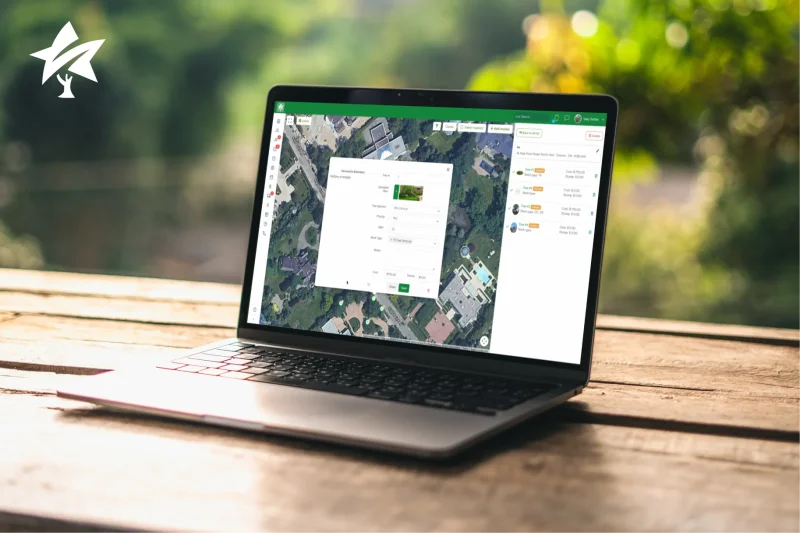
Interactive map views act like a live command center, showing where crews and equipment are in real time, highlighting clusters of leads, and tracking the progress of ongoing jobs across your service area.
All-in-One Platform
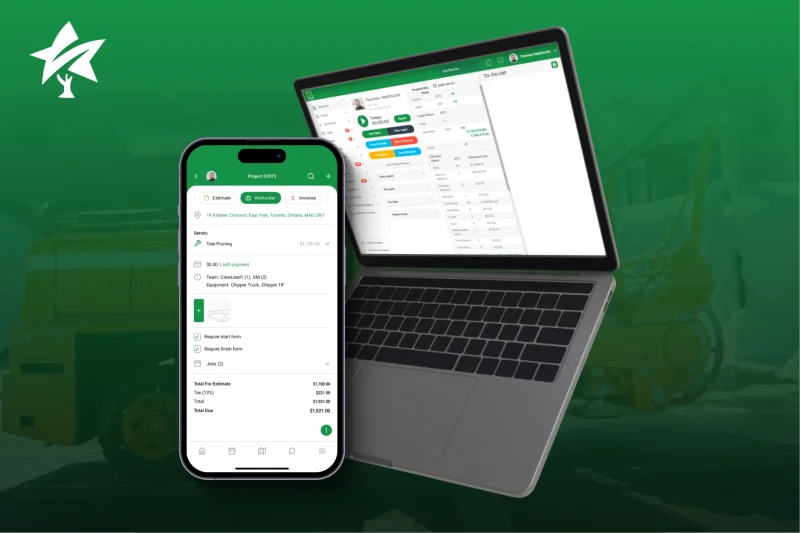
These tools combine multiple functions in one place. Communication features let you call and text clients while automatically logging interactions. Fleet and equipment tracking helps prevent breakdowns, and financial integrations ensure field data flows smoothly into payroll and accounting systems.
Built to Scale
Designed to grow with your business, these platforms provide insights on advertising ROI, crew efficiency, and other analytics to support informed decisions. The goal is to spend less time on admin work and more time on actual tree care.
See how ArboStar can run your tree care business
Quoting, scheduling, crews and invoicing in one place. Book a short demo and see it with your own jobs.